Quick answer
To use a 36cm stainless steel wok on induction, preheat slowly on medium-low heat, perform the water droplet test, then add oil and cook in batches to avoid overcrowding.
Why induction requires a different approach than gas
Induction cooktops heat the pan base directly, not the air around it. A 36cm wok has a large flat base that matches induction zones well, but the sides stay cooler. This means you need to preheat thoroughly and adjust your cooking technique to avoid cold spots or sticking. Unlike gas, you cannot tilt the wok to control flame—so you must rely on even heat distribution and proper oil management.
Understanding your RACO Steel Essentials wok's construction
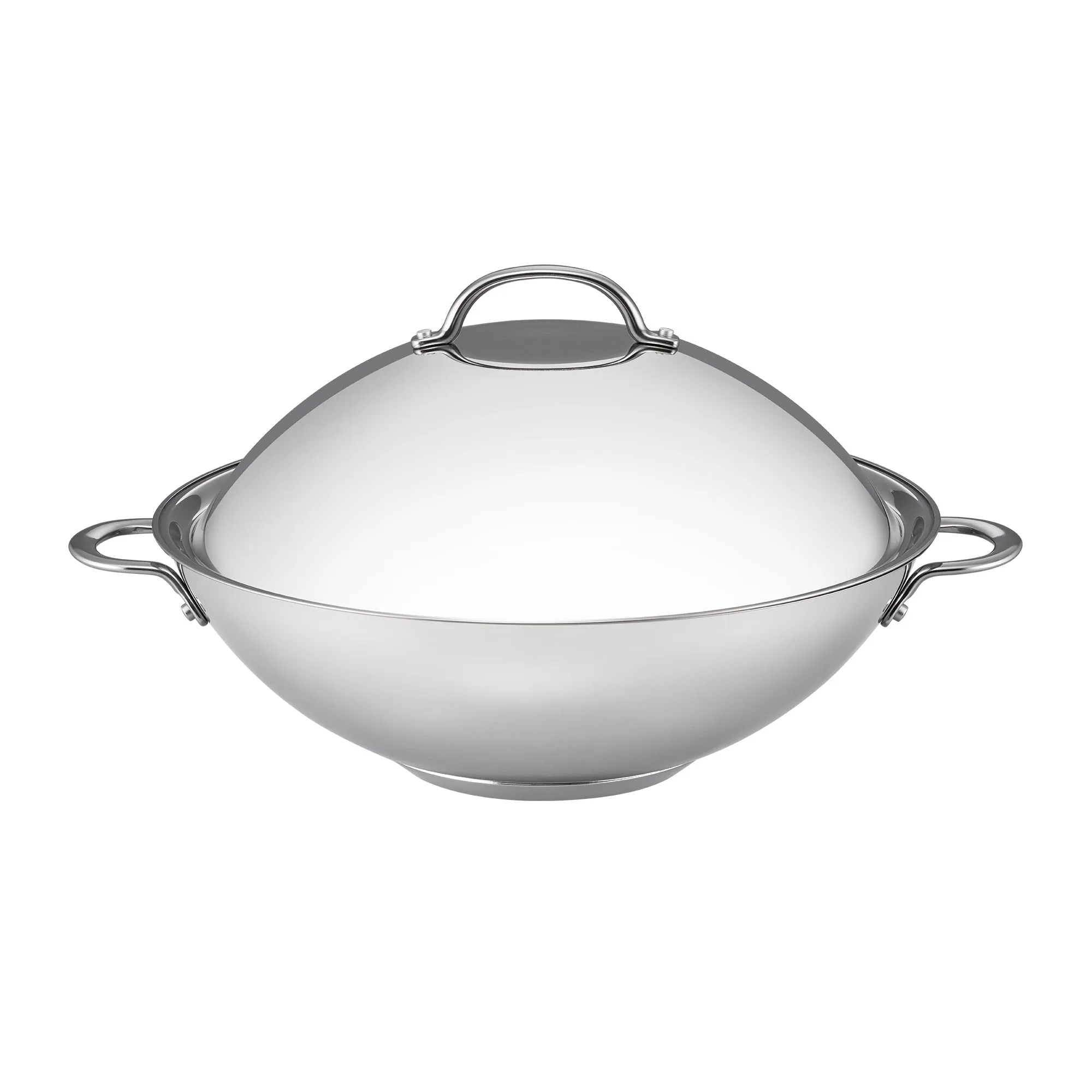
Your RACO Steel Essentials wok is made from premium stainless steel with a heavy-gauge base that ensures even heat distribution. The scratch-resistant sunrayed interior helps food release more easily than a standard polished surface. However, stainless steel is not non-stick—you need to season it and use the right oil temperature to prevent sticking.
Step-by-step guide to using your 36cm stainless steel wok on induction
- Step 1: Season the wok before first use: Wash the wok with warm soapy water, dry thoroughly, then heat it on medium-low until a few drops of water sizzle and evaporate. Add a teaspoon of high-smoke-point oil (like avocado or grapeseed) and rub it over the interior surface with a paper towel. Let it cool. This creates a thin protective layer that improves release over time. Common mistake: skipping seasoning leads to more sticking on first use. Repeat seasoning after washing if food starts sticking.
- Step 2: Preheat slowly on medium-low heat: Place the wok on the induction zone that matches its base diameter (often the largest zone). Set heat to medium-low (4-5 out of 10) and wait 2-3 minutes. Do not crank to high—stainless steel needs gradual heating to avoid warping and to allow the base to expand evenly. Checkpoint: after 2 minutes, flick a few drops of water onto the wok. If they dance and form beads (Leidenfrost effect), the wok is at the right temperature. If they evaporate instantly, it's too hot; if they sit still, it's too cold.
- Step 3: Perform the water droplet test before adding oil: Sprinkle a few drops of water onto the hot wok. If they form a single dancing bead, the surface is at the ideal temperature (around 180-200°C / 350-400°F). Immediately add your cooking oil—about 1-2 tablespoons for stir-frying. Swirl the oil to coat the base and lower sides. Common mistake: adding oil before the wok is hot enough causes food to stick. Wait for the dancing water bead before adding oil.
- Step 4: Cook in small batches to maintain heat: Add ingredients in small portions (no more than 2-3 cups at a time for a 36cm wok). Overcrowding drops the temperature below the Leidenfrost point, causing food to steam instead of sear and stick to the surface. Stir frequently but not constantly—give food contact time to develop color. Checkpoint: if you see liquid pooling instead of sizzling, remove some ingredients and let the wok reheat before continuing.
- Step 5: Clean and dry immediately after cooking: After cooking, remove food residue. For stuck-on bits, add a little water to the hot wok and deglaze with a wooden spatula. Wash with mild soap and a non-abrasive sponge. Dry immediately with a towel and heat on low for 30 seconds to remove moisture. Apply a thin layer of oil to prevent water spots and maintain the seasoning. Common mistake: letting the wok air-dry or soaking it causes water spots and rust on the rim. Always dry and oil after washing.
Product facts
-
RACO Steel Essentials Stainless Steel Induction Covered Wok 36cm: Crafted from premium stainless steel with a heavy-gauge base for even heat distribution and a scratch-resistant sunrayed interior. The heavy-gauge base helps the wok perform well on induction by distributing heat evenly across the large 36cm surface, reducing hot spots that can cause burning or sticking.
RACO Steel Essentials Stainless Steel Induction Covered Wok 36cm