What the 5 ml Delivery Syringe Offers for Irrigation
The 5 ml Delivery Syringe from Ultradent is designed with flanges positioned for optimum control and leverage, making it a practical tool for endodontic irrigation. While the supplied catalog confirms its intended use for dental professionals, the exact irrigation protocol—such as needle depth, flow rate, or irrigant volume—is not specified. This guide focuses on what the catalog supports and how to apply that information in a clinical setting.
Catalog Evidence for the 5 ml Delivery Syringe
-
5 ml Delivery Syringe: DENTAL PROFESSIONALS: Our 5 ml Delivery Syringe has flanges positioned for optimum control and leverage. The flange design directly influences grip and maneuverability during irrigation, which is critical for precise delivery of irrigants into root canals.
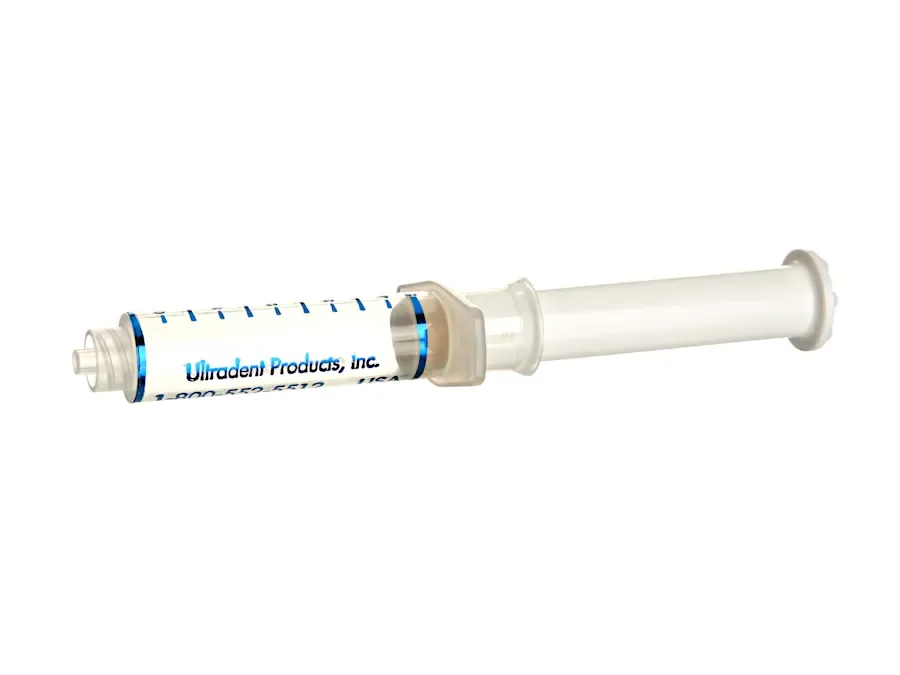
5 ml Delivery Syringe
Using the Syringe for Endodontic Irrigation
Although the catalog does not provide step-by-step irrigation instructions, the syringe's design supports a general technique that aligns with common endodontic practice. Use these steps as a framework, and always follow your own clinical protocol or manufacturer guidelines for specific irrigants.
- 1. Prepare the syringe and irrigant: Select the appropriate irrigant (e.g., sodium hypochlorite, EDTA) and draw it into the 5 ml syringe. The syringe's capacity is suitable for single-tooth irrigation without frequent refills.
- 2. Position the syringe for control: Grasp the syringe by the flanges, which are designed for optimum control and leverage. This grip allows you to apply steady, even pressure during irrigation.
- 3. Insert the tip into the canal: Use a suitable irrigation tip (not included) that fits the syringe's luer lock or slip tip connection. Insert the tip into the root canal without binding, leaving space for backflow.
- 4. Deliver the irrigant slowly: Depress the plunger smoothly to avoid excessive pressure that could force irrigant beyond the apex. The 5 ml volume gives you time to control the flow.
- 5. Withdraw and repeat as needed: Withdraw the tip while still depressing slightly to clear the canal. Repeat with fresh irrigant until the canal is clean, then dispose of the single-use syringe properly.
Where the Catalog Evidence Guides Your Technique
The supplied catalog confirms the syringe's flange design for control and leverage, but it does not specify needle gauge, irrigation pressure, or safety precautions. These details are left to the clinician's judgment and existing protocols. For example, using a side-vented needle to reduce apical pressure is a common safety measure not addressed here. Always refer to your dental school training or current endodontic guidelines for complete irrigation safety.
What the Catalog Does Not Cover
The catalog does not provide instructions for attaching irrigation tips, recommended flow rates, or compatibility with specific irrigants. It also does not include care or cleaning steps for the syringe. As with any single-use device, discard after one patient use to maintain sterility. If you need detailed irrigation protocols, consult your preferred endodontic textbook or the irrigant manufacturer's instructions.