Quick Answer
Use a clay bar after washing to lift bonded contaminants from the paint surface, restoring a smooth feel before waxing or polishing.
Why Clay Bar Treatment Matters
Even after a thorough wash, your car's paint can still feel rough due to embedded contaminants like industrial fallout, tree sap, or road tar. A clay bar physically lifts these particles without scratching, leaving the surface glassy smooth and ready for wax, sealant, or polish.
Skipping this step means you'll seal contaminants under your wax, reducing gloss and durability. Clay barring is a critical prep step for any paint correction or protection routine.
Choosing the Right Clay Bar
Clay bars come in different grades: fine, medium, and heavy. For most maintenance details, a fine-grade clay is safe and effective. If your car has severe contamination—like overspray or stubborn grime that regular clay won't touch—a heavy-duty option is needed.
The Heavy Duty Clay Bar from Chemical Guys is designed for severely neglected vehicles. It extracts dirt and removes embedded grime when other clay bars fail, resulting in total decontamination and restored paint. However, it is more aggressive, so use extra lubrication and test on a small area first.
Step-by-Step Clay Bar Process
- Wash and Dry the Car: Start with a clean surface. Wash the car thoroughly using a pH-neutral car shampoo to remove loose dirt and grime. Dry the vehicle completely. Clay barring a dirty surface can grind particles into the paint, causing scratches.
- Prepare the Clay and Lubricant: Knead the clay bar into a flat disc about the size of your palm. Spray a generous amount of clay lubricant (or a mix of water and car shampoo) onto a small section of the paint. Never use a dry clay bar on paint. Insufficient lubrication can cause marring.
- Glide the Clay Bar Over the Paint: Gently glide the clay bar back and forth over the lubricated section using light pressure. Listen for a smooth sound as the clay picks up contaminants. Lift the clay frequently to check for embedded debris. If the clay feels rough or drags, stop and add more lubricant. Contaminants embedded in the clay can scratch the paint.
- Wipe Away Residue: Use a clean microfiber towel to wipe off the lubricant residue immediately after claying each section. Inspect the area for smoothness by feeling it with your fingers. Leaving lubricant to dry can leave streaks or haze on the paint.
- Knead and Continue: Knead the clay bar to expose a fresh surface every few passes. Continue claying one panel at a time until the entire car feels smooth. Drop the clay bar on the ground? Discard it. Dirt picked up from the ground will scratch your paint.
- Apply Wax or Sealant: After claying, the paint is fully decontaminated and ready for protection. Apply a coat of wax, sealant, or ceramic coating to lock in the smooth finish. Claying strips any existing wax, so always reapply protection afterward.
Product Facts
-
Heavy Duty Clay Bar: The Heavy Duty Clay Bar extracts dirt and removes embedded grime and debris when all other clay bars fail, resulting in total decontamination, restored paint, and a smooth finish on severely neglected vehicles. If your paint feels rough after washing and a fine clay bar doesn't help, this heavy-duty option can still salvage the surface without resorting to wet sanding.
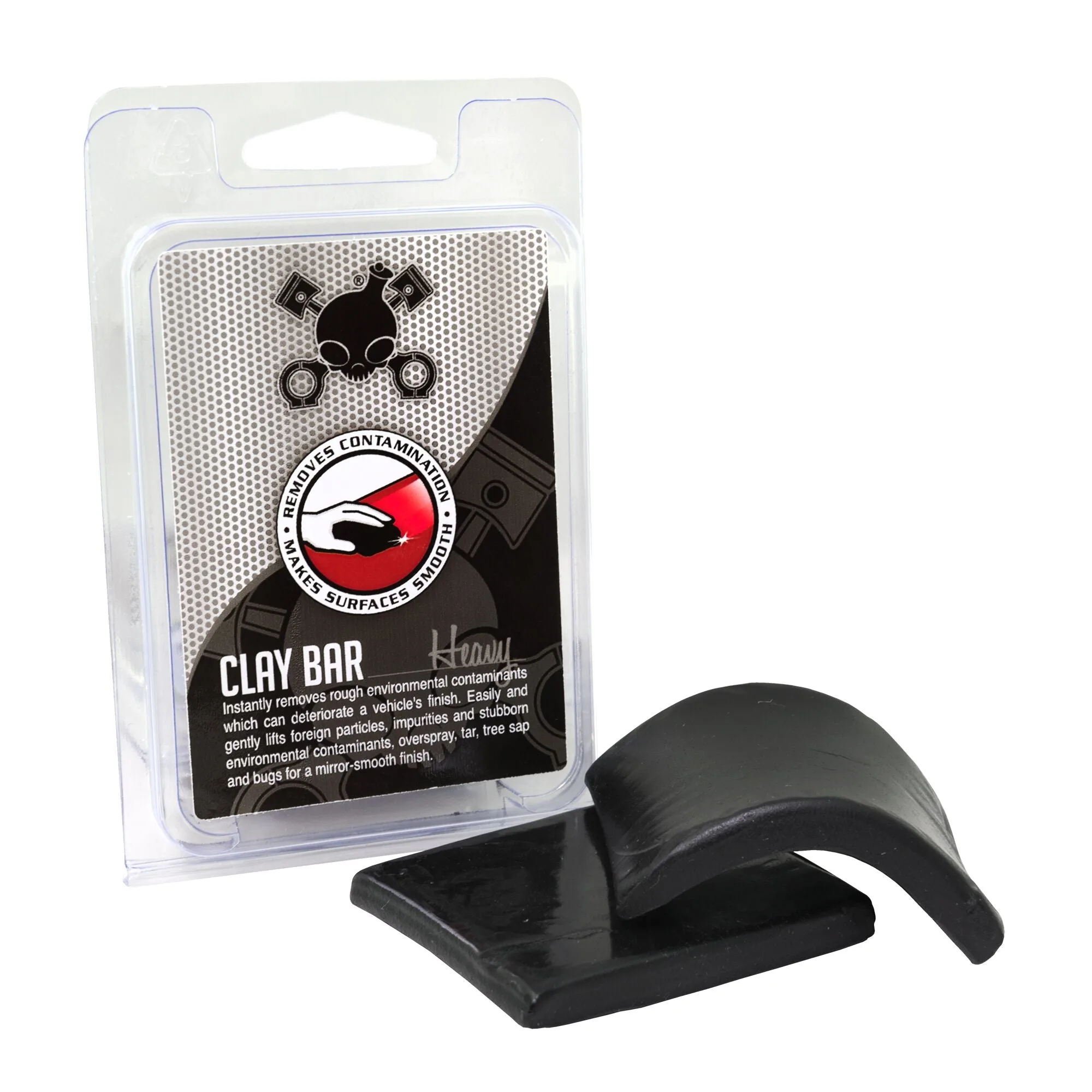
Heavy Duty Clay Bar