Quick answer
To open a bottle cleanly, cut the foil below the lip, center the spiral on the cork, turn until one full turn of the spiral remains visible, then lever the cork out in two stages. A lever corkscrew such as the Oeno Motion Trésor makes this repeatable because the handle stays vertical and the body braces against the bottle. The most common mistake is angling the spiral, which tears the cork.
What you need before you start
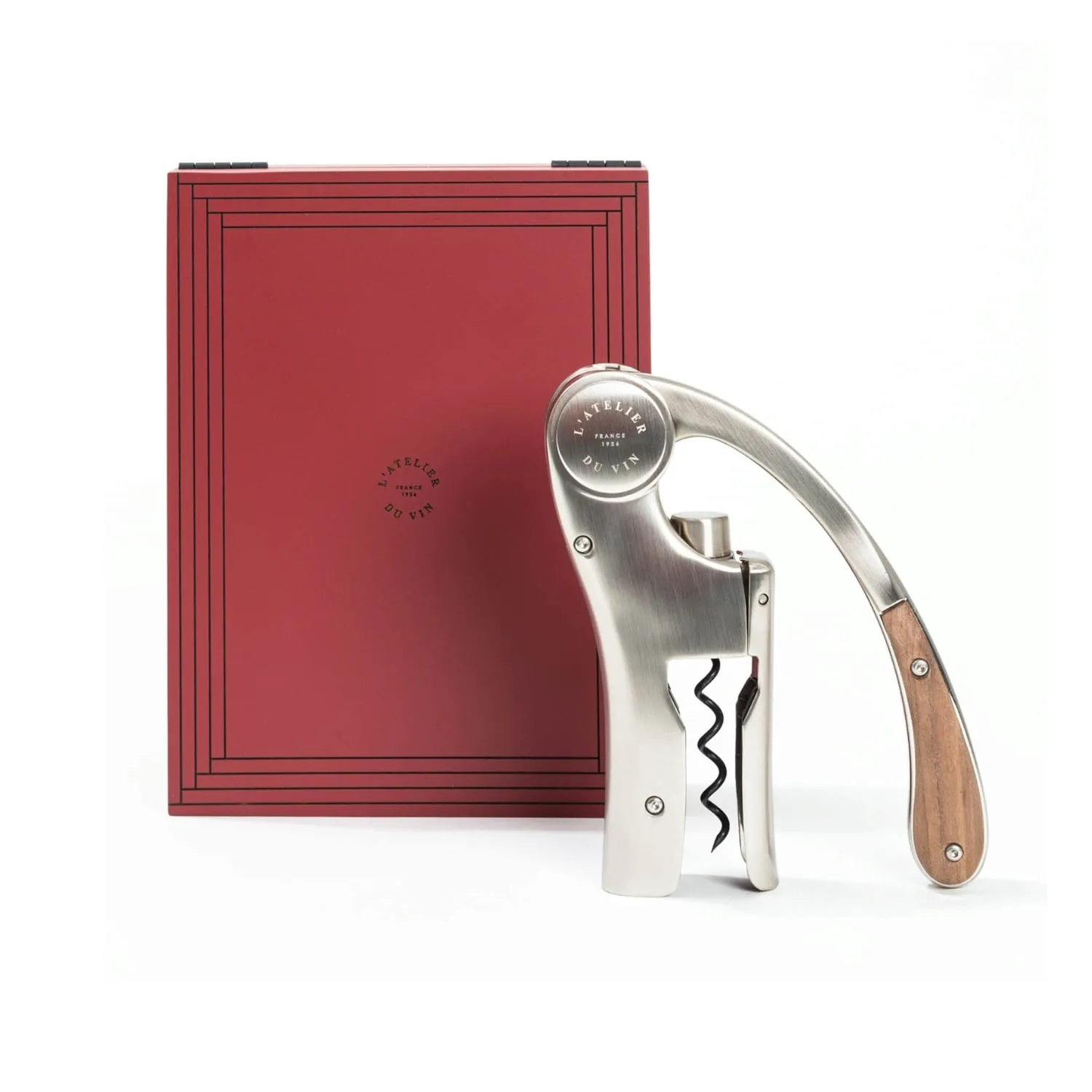
A lever corkscrew with an integrated foil cutter covers the whole job in one tool, so you are not hunting for a separate blade. The Oeno Motion Trésor combines a solid walnut and metal lever body, a foil cutter, and a high-precision spiral, which is why it suits both a Tuesday night bottle and a table of guests. If you use a waiter's friend instead, keep a folded cloth nearby for drips and a small plate for the cork.
- Lever corkscrew or waiter's friend
- Foil cutter or small knife
- Clean cloth for the bottle neck
- A stable, non-slip surface
Why lever corkscrews reduce broken corks
A waiter's friend relies on your wrist and a hinge point, so the pull is rarely straight. A lever model keeps the spiral aligned with the bottle neck and transfers force through the handle, which is the main reason it opens wine easily without shredding the cork. The tradeoff is size: a lever corkscrew is bulkier to store than a pocket waiter's friend, so it lives in a drawer or on a bar cart rather than in a picnic bag.
How to clean and store the tool
Wipe the spiral with a damp cloth after use and dry it immediately; wine residue and moisture are what dull the metal over time. Do not put a walnut-handled corkscrew in water, because the wood will swell and the lever action will stiffen. Store it closed, with the spiral retracted, so the tip does not catch on other utensils.
Steps to open a bottle with a lever corkscrew
- Cut the foil below the lip: Use the integrated foil cutter or a small knife to score the capsule just under the bottle lip, then lift the top cap away. Cut below the lip, not at the very top, so no foil touches the wine as you pour. Checkpoint: the cork should be fully exposed, with no foil fragment left on the rim.
- Center the spiral on the cork: Hold the bottle steady and place the tip of the spiral on the exact center of the cork. Keep the tool vertical as you begin to turn. If the spiral enters at an angle, it will exit the side of the cork and crumble it. Mistake to avoid: starting off-center because the bottle is tilted.
- Turn until one spiral turn remains: Rotate the handle clockwise until only about one full turn of the spiral is still visible above the cork. Going deeper can push cork fragments into the wine; stopping short gives the lever nothing to grip. Checkpoint: the spiral should feel firmly seated, not loose.
- Lever the cork out in two stages: Rest the tool's body on the bottle rim, then press the handle down to lift the cork partway. Reset the lever to its second position and press again to ease the cork fully out. Pulling in one long motion is what snaps dry corks. Mistake to avoid: yanking the handle upward instead of pressing it down.
- Release the cork and wipe the neck: Turn the handle counterclockwise to release the cork from the spiral, then wipe the bottle neck with a cloth. Any cork dust left on the rim will end up in the first glass you pour. Next step: pour a small taste first, then serve.
Product facts
- L'ATELIER DU VIN - Corkscrew box Oeno Motion Trésor: The Oeno Motion Trésor by L'Atelier du Vin is a wine-opening set in a wooden case, built around the Oeno Motion lever corkscrew in solid walnut and metal, with an integrated foil cutter and a high-precision spiral. One tool handles foil and cork, so you can open a bottle without switching implements mid-pour.
- COOK & SHARE Bamboo - Wine cooler: The Cook & Share Bamboo wine cooler is made from stainless steel with a bamboo veneer and has double-walled insulation plus a handle. If you open a bottle before guests arrive, the cooler keeps it at temperature while you work, and the handle makes it easy to move from kitchen to table.
- CUTIPOL Goa Specials - Butter knife marble black horn: The Cutipol Goa Specials butter knife in marble black horn is designed for spreading, with a form that stays discreet on the table. A butter knife is the right tool for cheese and bread served alongside wine, so you are not reaching for the corkscrew blade again.