Quick Answer
Start with a stable, anti-slip seesaw, teach your dog to walk across it slowly, and use high-value rewards to build confidence before adding motion.
Why the seesaw is different from other agility obstacles
Unlike jumps or tunnels, a seesaw moves under your dog's paws. That motion can be unnerving at first, so your job is to help your dog feel the board is predictable, not scary. The key is to break the skill into tiny pieces and never rush the tipping point.
A solid, stable base matters as much as your training technique. A wobbly or slippery board will set back your dog's confidence, so check the surface and traction before you begin.
Choosing a seesaw that supports safe training
Look for a seesaw with high traction and anti-slip features so your dog's paws stay planted, especially when the board tilts. Fir wood construction is a good sign because it's outdoor-friendly and easy to maintain, which means you can practice in the yard without worrying about wear.
Also consider the size relative to your dog. The seesaw should be wide enough for your dog's paws and low enough that the pivot point isn't intimidating. If you're unsure, measure your dog's length and compare it to the board's dimensions.
Step-by-Step Seesaw Training
- Step 1: Introduce the seesaw while it's flat: Place the seesaw on level ground so it doesn't tip. Let your dog sniff it and walk across freely. Reward every step with treats and praise. Keep sessions short and positive. If your dog hesitates, don't force it—just toss a treat on the board and let them explore at their own pace.
- Step 2: Teach the pause at the pivot point: As your dog walks across, stop them at the center where the board will tip. Use a 'wait' cue and reward them for standing still. This builds the habit of pausing, which is part of the seesaw performance. Common mistake: letting your dog rush past the pivot. Slow down and reward the pause before moving on.
- Step 3: Add gentle motion: Hold the board steady with your foot or hand and allow it to tip slowly as your dog steps past the center. Keep the movement controlled. Reward your dog for staying calm as the board tilts. Checkpoint: If your dog jumps off, go back to Step 2 and practice more pauses before trying motion again.
- Step 4: Practice full crossings: Once your dog is comfortable with the tip, let them walk the full length without your help. Use a release word like 'okay' as they step off. Gradually increase speed and add a cue like 'seesaw' before they start. Common mistake: expecting a fast performance too soon. Keep sessions varied and end on a success.
- Step 5: Proof with distractions: Practice in different locations and with mild distractions, like a toy nearby. This helps your dog generalize the skill and stay focused during real agility runs. Checkpoint: If your dog gets distracted, reduce the distraction level and rebuild focus before adding more.
Training gear that helps
-
Wooden Dog Agility Seesaw for Dog Training Exercise, 71 W X 12" H: This wooden seesaw is made with fir wood and includes high traction and an anti-slip surface. The anti-slip surface helps your dog keep footing while the board tips, so you can focus on teaching confidence instead of worrying about slips.
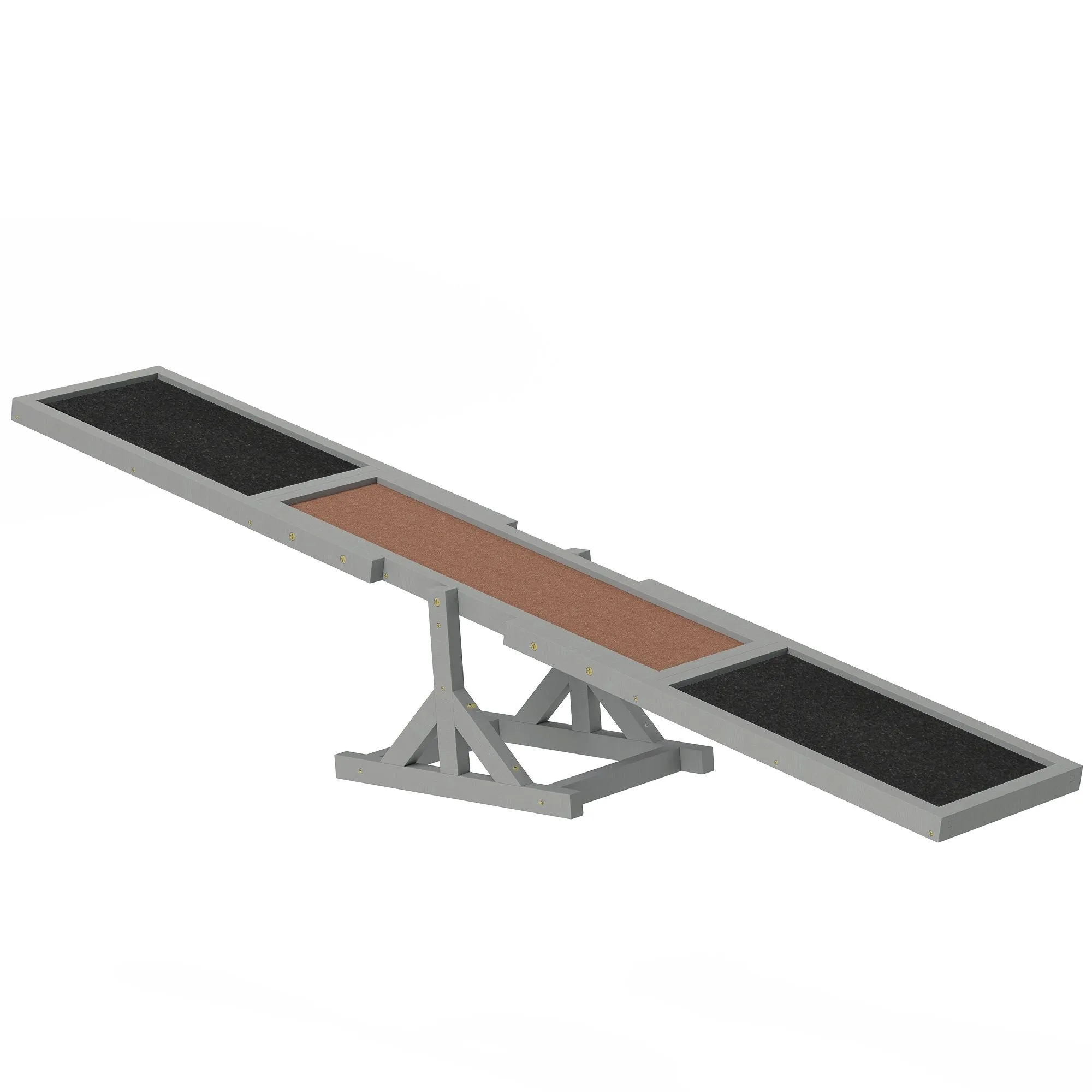
Wooden Dog Agility Seesaw for Dog Training Exercise, 71 W X 12" H
-
Dog Agility Equipment Wooden Seesaw White for Training and Exercise: This white wooden seesaw also uses fir wood and features high traction and an anti-slip design. The consistent traction gives your dog a secure surface for repeated practice, which is essential for building muscle memory.
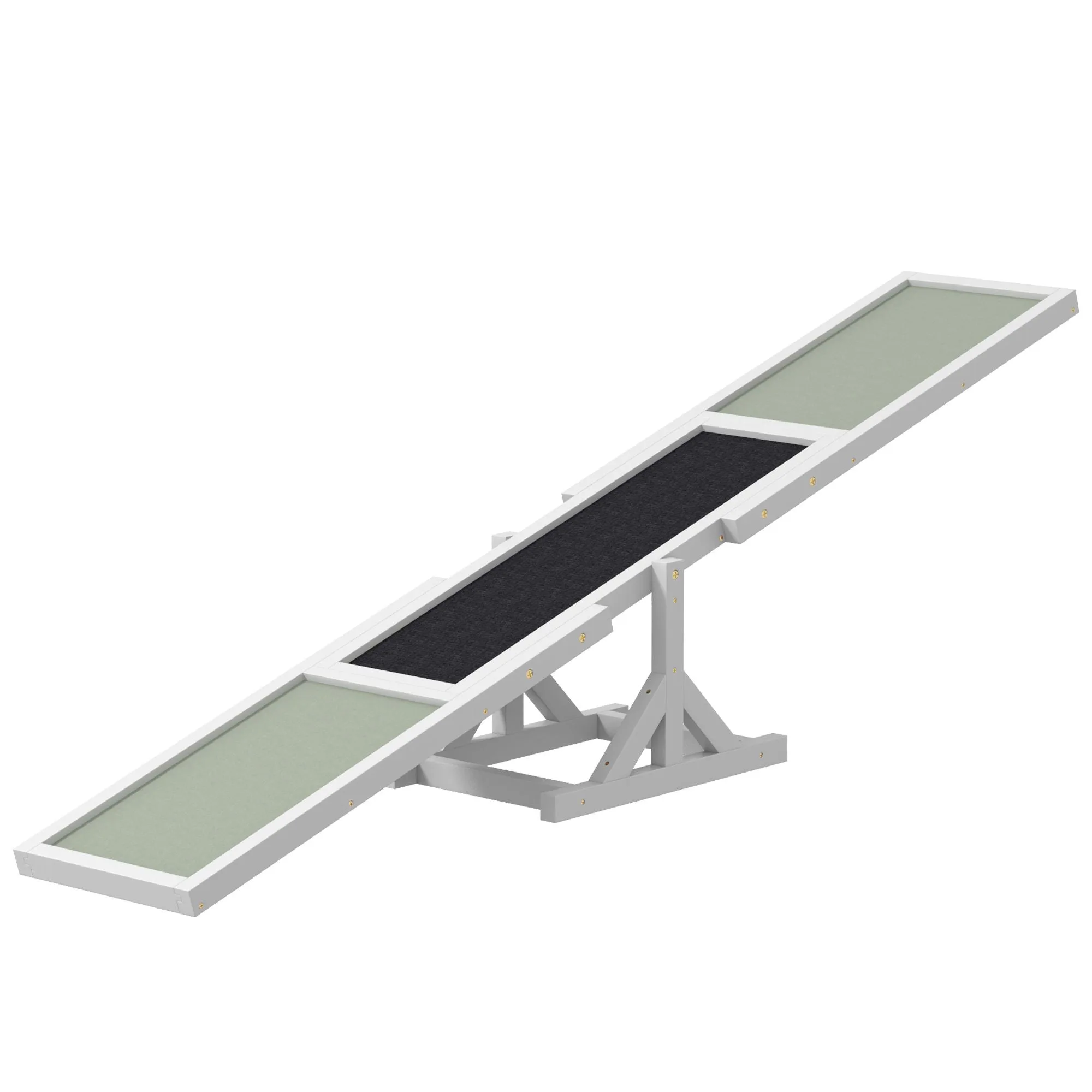
Dog Agility Equipment Wooden Seesaw White for Training and Exercise