Quick answer
A hay manger keeps hay off the ground, reduces waste, and encourages natural foraging. Install it at the right height and fill it loosely so your small pet can pull out pieces easily.
Why use a hay manger instead of floor feeding
Hay left on the cage floor quickly gets soiled with urine and bedding, leading to waste and potential health issues. A hay manger elevates the hay, keeping it dry and clean, which mimics how small animals would find fresh grass above ground in the wild. It also encourages natural pulling and foraging behavior, which is mentally enriching.
Choosing the right location in the habitat
Place the hay manger near a resting area or a spot your pet already visits often. Avoid placing it directly under a water bottle or near the litter corner, as moisture and waste will spoil the hay quickly. For multi-pet habitats, consider adding two mangers to reduce competition.
Step-by-step guide to using a hay manger
- Choose the right manger for your habitat: Select a hay manger that fits securely on the side of your cage or habitat. The Tiny Paws Small Hay Manger is designed to attach easily to most setups, including Habitat Castle configurations. Make sure the openings are large enough for your pet to pull hay through but small enough to prevent them from climbing inside. Check that the manger attaches firmly and doesn't tip when your pet pulls hay.
- Mount it at the correct height: Attach the manger so the bottom sits at your pet's shoulder height or slightly lower. For rabbits and guinea pigs, this usually means 4–6 inches off the floor. Too high and they can't reach; too low and hay may fall out or get soiled. Use the side clips or hooks provided with your manger. A common mistake is mounting too high. Your pet should be able to nibble comfortably without stretching.
- Fill with fresh hay, not packed tight: Loosely fill the manger with a generous handful of hay. Do not compress it—small animals need to be able to pull individual strands out. Overfilling can cause hay to spill or block access. Refill daily, removing any leftover damp or soiled hay first. If your pet ignores the manger, try offering a small amount of hay inside at first to encourage exploration.
- Monitor and clean regularly: Check the manger daily for soiled or wet hay and remove it. Every week, take the manger off the cage and wash it with warm, pet-safe soap and water. Rinse thoroughly and let it dry completely before reattaching. This prevents mold and bacteria buildup. A dirty manger can cause respiratory issues. Clean it as often as you would a food bowl.
Recommended product
-
Tiny Paws - Small Hay Manger For Habitats: Designed to hold your furry friend’s favorite hay, our Small Hay Manger for Habitats encourages playful foraging, keeping hay fresh and off the ground. Specifically crafted in our workshop to seamlessly integrate with any Habitat Castle setup. This manger attaches easily to the side of a cage, making feeding time both fun and functional while keeping hay clean and accessible.
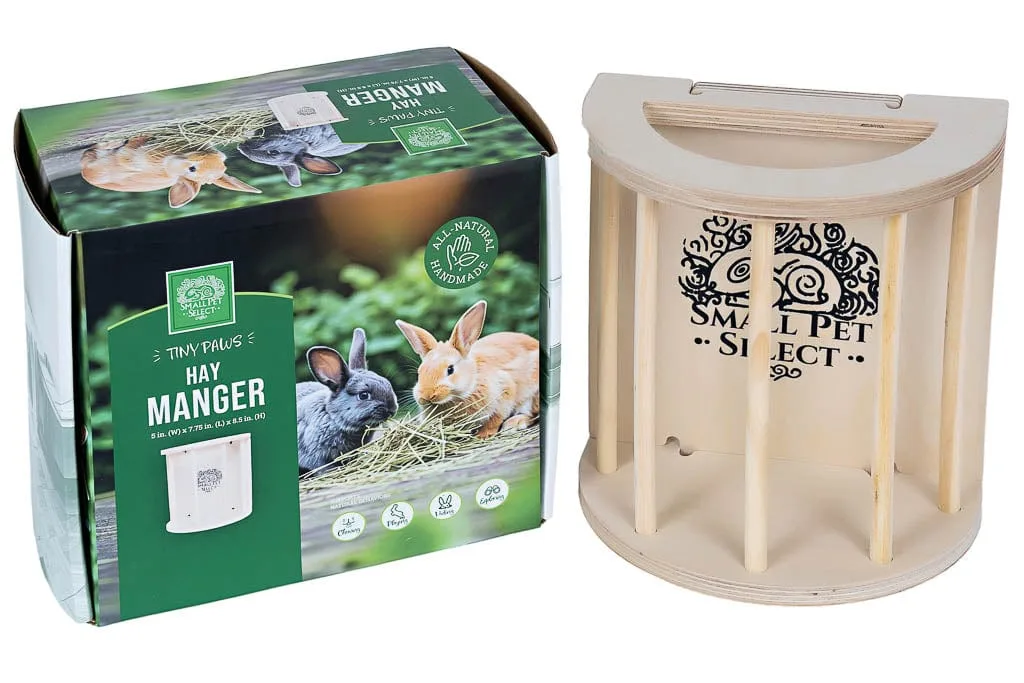
Tiny Paws - Small Hay Manger For Habitats