Start with the Right Mindset
Using a leather bullwhip is a skill that demands respect and practice. The Wild Gent Brown Leather Bullwhip is described as 'not for the faint of heart' and designed for advanced players. As a beginner, your first step is to understand that this tool can deliver powerful blows, so safety and control are paramount.
Before you even think about using it with a partner, you should practice alone to develop accuracy and control. This guide will walk you through the fundamental handling techniques and safety considerations, based on the product's design and general bullwhip principles.
Grip and Stance Fundamentals
A proper grip is the foundation of safe bullwhip handling. The Wild Gent bullwhip features a 'firm textured handle that enhances its grip,' which helps you maintain control during swings. Hold the handle firmly but not rigidly; your grip should be secure enough to prevent slipping but relaxed enough to allow a fluid motion.
Your stance matters too. Stand with your feet shoulder-width apart, knees slightly bent, and keep your body relaxed. This stable base allows you to generate power from your whole body rather than just your arm, which improves control and reduces fatigue.
The Basic Swing and Practice
Start with a simple overhead or side swing, focusing on smooth acceleration and a controlled follow-through. The goal is to make the whip 'crack' at the end of the motion, which happens when the tip breaks the sound barrier. This requires practice to achieve consistently.
Begin with slow, deliberate movements to feel the whip's weight and balance. The Wild Gent bullwhip is 'lightweight for effortless swings,' which makes it easier to control as you learn. As you gain confidence, gradually increase your speed and power.
Always practice in an open area with plenty of clearance—at least twice the length of the whip in all directions. The Wild Gent bullwhip is 75cm long, so you need a space of at least 1.5 meters in every direction. Avoid practicing near people, animals, or fragile objects.
Safety Considerations for Partner Play
When you're ready to use the bullwhip with a partner, communication and consent are non-negotiable. Discuss boundaries, safe words, and the exact areas of the body that are off-limits. The bullwhip is designed to deliver 'powerful blows' and 'optimal stings,' so it's crucial to start with very light taps to gauge sensation and tolerance.
Aim for fleshy areas like the buttocks or thighs, and always avoid the head, neck, spine, and joints. The pointed leather tip can cause sharp stings, so be especially careful with it. Never use the whip on a partner who is restrained or unable to move away, as this increases the risk of unintended injury.
Remember, the Wild Gent bullwhip is marketed for advanced players. As a beginner, you should not attempt complex or high-impact techniques until you have mastered the basics and built a high level of control.
Wild Gent Bullwhip: Key Features
-
Wild Gent: Brown Leather Bullwhip: Hand-braided with the finest lamb leather, this is a luxury bondage accessory. The quality of the leather affects the whip's flexibility and feel, which influences how it handles and how it feels on impact.
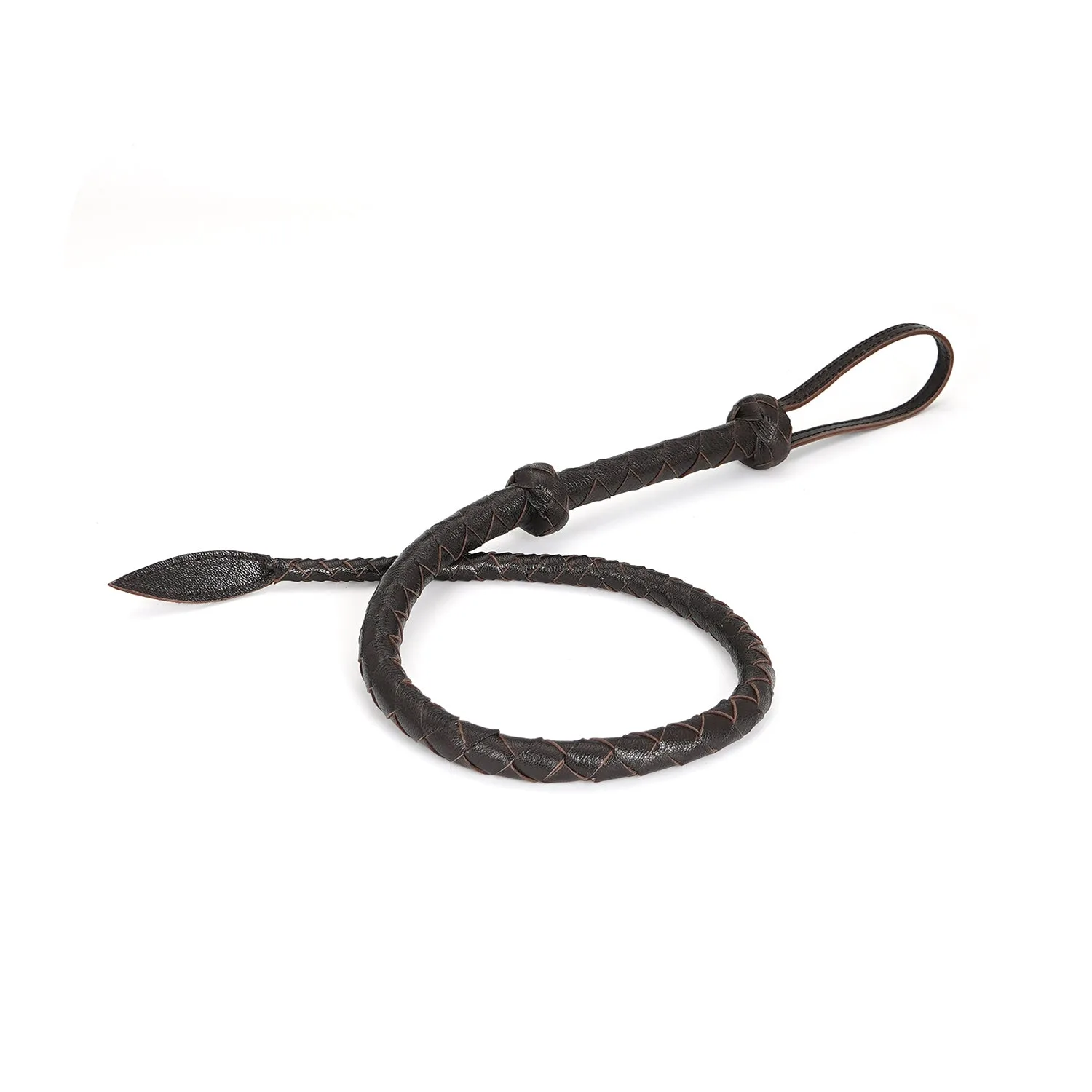
Wild Gent: Brown Leather Bullwhip
-
Wild Gent: Brown Leather Bullwhip: Sporting a pointed leather tip designed for optimal stings. The pointed tip concentrates the impact, creating a sharp sting. This is a key factor in safety and sensation, so beginners must be aware of its effects.
-
Wild Gent: Brown Leather Bullwhip: The whip features a firm textured handle that enhances its grip for confident swings and sharp smacks. A secure grip is essential for control, reducing the risk of the whip slipping from your hand during a swing.
-
Wild Gent: Brown Leather Bullwhip: Length: 75cm. The length determines the whip's reach and the space you need for practice. Knowing this helps you choose an appropriate practice area.
What the Catalog Doesn't Specify
The catalog does not provide specific instructions on how to perform a whip crack or detailed safety protocols. It does not mention recommended distances, target areas, or partner safety guidelines. This guide offers general principles, but for advanced techniques, consider seeking instruction from an experienced practitioner or a professional BDSM educator.
Additionally, the catalog does not specify whether the whip is suitable for outdoor use or how it holds up in various weather conditions. As with any leather product, it's wise to avoid excessive moisture and store it properly. The whip has a 'leather loop at the handle, allowing you to hang it up for easy storage,' which helps maintain its shape and condition.