Quick answer
A lick mat helps calm and entertain your cat by encouraging slow, repetitive licking. Spread a thin layer of wet food or a hydrating gel onto the mat, let your cat explore it at their own pace, and supervise the first few sessions to ensure they lick rather than bite the texture.
Why a lick mat works for calming and enrichment
Licking is a natural, self-soothing behavior for cats. A lick mat mimics the texture of grooming or lapping up food, which can lower stress after a vet visit, during travel, or when introducing a new pet. It also slows down fast eaters, reducing the risk of vomiting or bloat.
Unlike puzzle feeders that require pawing or batting, a lick mat is purely tongue-based. This makes it ideal for senior cats, cats with dental issues, or any cat that needs a low-effort enrichment activity.
Choosing the right spread and texture
The mat's texture determines how much your cat can lick off. A fishscale or bumpy surface holds more spread than a flat one. Start with a thin layer of pâté-style wet food, pureed treats, or a hydrating broth. Avoid chunky foods that might get stuck or frustrate your cat.
If your cat is new to lick mats, use a high-value spread like tuna puree or chicken pâté to build positive association. Once they are comfortable, you can rotate spreads to keep the activity novel.
Step-by-step guide to using a lick mat
- Prepare the mat and spread: Wash the lick mat with warm soapy water and rinse thoroughly. Spread a thin, even layer of wet food or puree across the textured surface. Avoid overloading—cats can get frustrated if the food is too thick. A thin layer encourages licking; thick layers may cause your cat to give up or try to bite the mat.
- Introduce the mat to your cat: Place the mat on a flat, non-slip surface (like a tile floor or a silicone placemat). Let your cat sniff and investigate. If they hesitate, dab a tiny bit of spread on the edge so they can taste it without committing to the whole mat. Never force your cat's face onto the mat. Let them approach at their own pace.
- Supervise the first few sessions: Stay nearby while your cat licks. Some cats may try to bite or scratch the mat, which can damage it or cause ingestion of small pieces. Gently redirect to licking by smearing more spread on the surface. If your cat bites the mat repeatedly, remove it and try again later with a different spread. Not all cats take to lick mats immediately.
- Clean the mat after each use: Rinse the mat under warm water to remove leftover food, then scrub with a soft brush and mild dish soap. Let it air dry completely before storing. Leftover food can harbor bacteria and cause odors. Most lick mats are dishwasher-safe (top rack). Check the manufacturer's instructions to be sure.
Product spotlight
-
LickiMat® Catster™: The LickiMat® Catster™ features a fishscale texture with an integrated hydration well, designed for serving pâté, purees, or wet food alongside cat milk or broths. The hydration well lets you add a liquid treat (like broth or cat milk) alongside the spread, increasing hydration and extending licking time without making a mess.
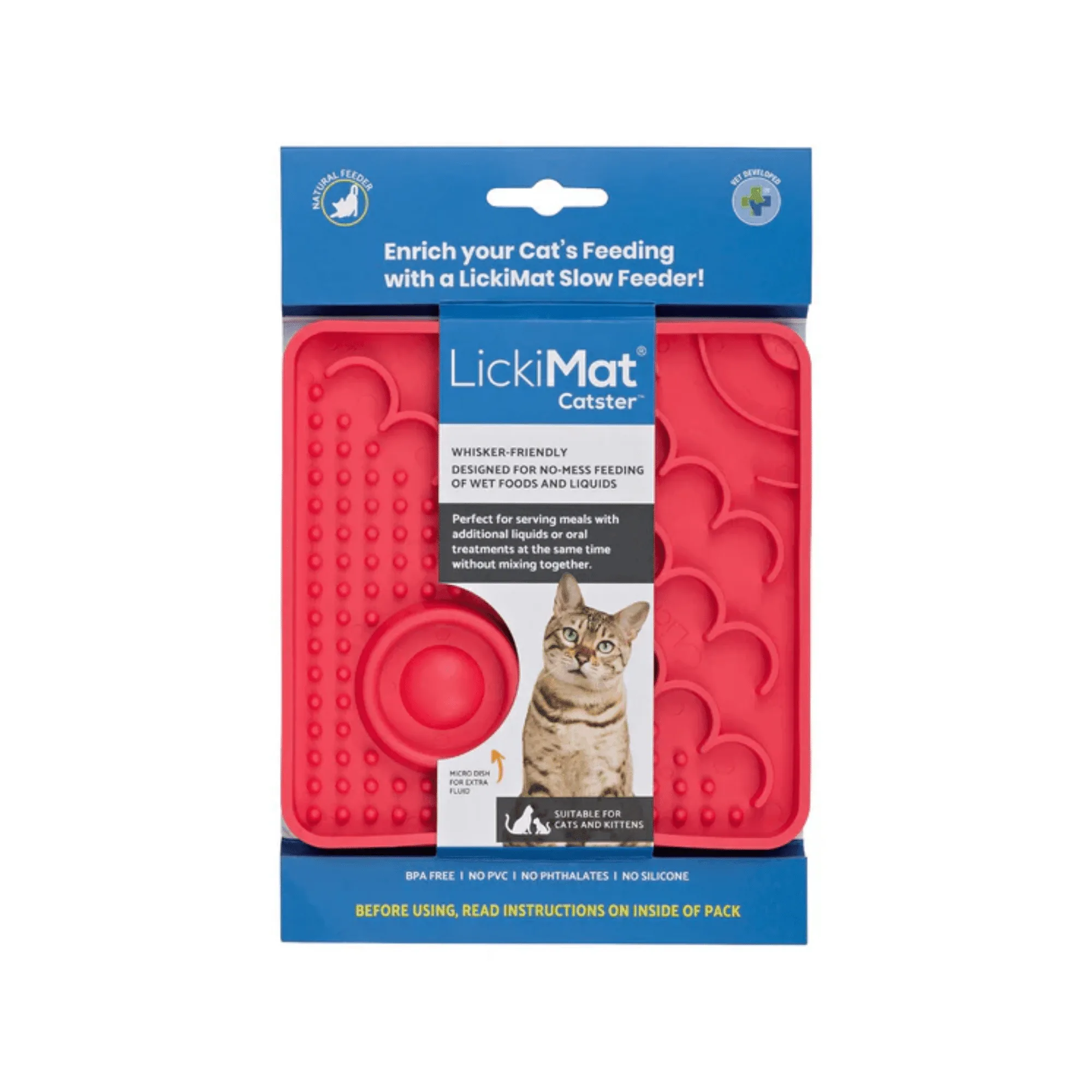
LickiMat® Catster™