What a Nail Setter Does for Your Woodworking
A nail setter helps you drive nails flush with the surface of your workpiece without leaving hammer marks or dents. Instead of holding a small nail between your fingers and risking a missed strike, you can use a tool that holds the nail magnetically and lets you set it precisely.
The Excel Blades Nail Setter (model 90002) is designed for this exact task. It works with soft woods, plastics, foams, and rubber, making it useful for a range of projects from furniture assembly to model building.
Product Evidence: Excel Blades Nail Setter
-
Nail Setter: The Nail Setter features an adjustable spring-loaded shaft and a magnetic tip to hold onto nails before setting. The magnetic tip keeps the nail stable while you position it, and the spring-loaded shaft controls the depth of the set, reducing the risk of over-driving.
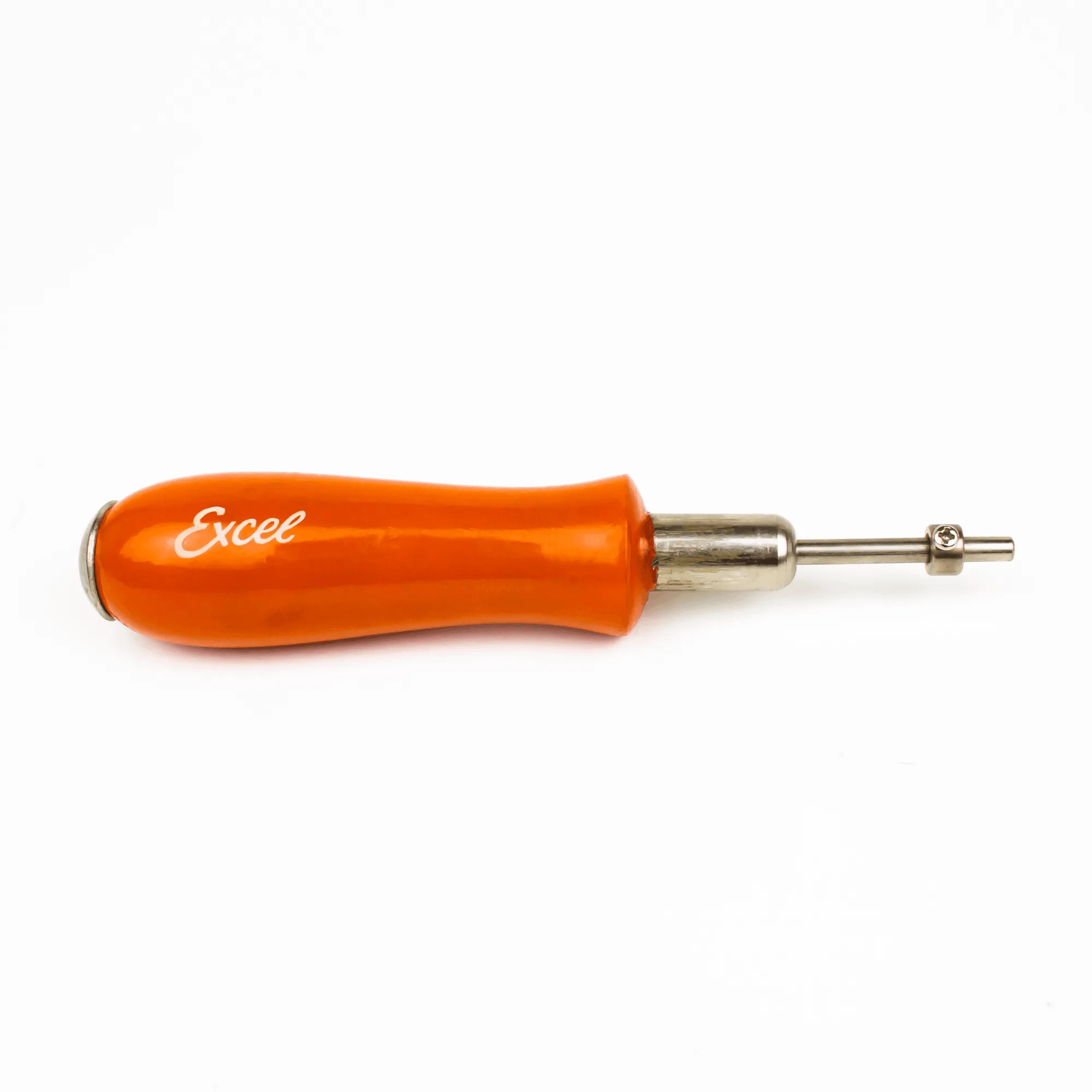
Nail Setter
-
Nail Setter: Includes (1) Nail Setter with a .125in–.32cm shaft diameter. This shaft size is suitable for small finishing nails and brads commonly used in woodworking and craft projects.
-
Nail Setter: Designed to protect wood surfaces from hammer marks and dents. The nail setter keeps the hammer strike away from the wood surface, so you avoid cosmetic damage that would require extra sanding or filler.
How to Use the Nail Setter
Using the nail setter is straightforward, but a few steps help you get consistent results.
- 1. Prepare the nail and workpiece: Drive the nail partway into the wood using a hammer, leaving the head slightly above the surface. This gives the nail setter something to grip.
- 2. Position the nail setter: Place the magnetic tip of the nail setter over the nail head. The magnet will hold the nail in place, freeing your fingers from the striking zone.
- 3. Adjust the spring-loaded shaft: The adjustable shaft lets you control how deep the nail will be set. For a flush finish, set the depth so the nail head sits just below or level with the wood surface.
- 4. Strike the nail setter: Tap the top of the nail setter with a hammer. The spring absorbs some of the impact, and the shaft drives the nail to the preset depth. Because the tool transfers the force directly to the nail, the wood surface stays unmarked.
- 5. Repeat as needed: For multiple nails, re-adjust the depth setting if you change nail size or material. The tool is designed to replace the need to hold nails by hand, so you can work faster and more safely.
Materials That Work Well
The nail setter is intended for soft woods, plastics, foams, and rubber. These materials are forgiving enough that the spring-loaded action can set nails without splitting or cracking. Harder woods may require pre-drilling pilot holes, though the supplied information does not specify a maximum hardness.
For delicate materials like thin plastic sheets or soft foam, the adjustable depth helps you avoid driving the nail too deep. Start with a shallow setting and increase it gradually.
Safety and Handling Notes
The Excel Blades Nail Setter includes a California Prop 65 warning for lead. Wash hands after handling and avoid ingestion. The tool is made of nickel, which is durable but not recommended for use in environments where lead exposure is a concern.
Always wear safety glasses when hammering. The spring-loaded shaft can cause the tool to kick back if the nail is not aligned properly. Keep your fingers clear of the striking area.