Quick Answer
Position the nursing pillow around your waist so it supports your baby at breast or bottle height, then adjust the angle and your baby's latch for a relaxed feeding session.
Why a Nursing Pillow Helps
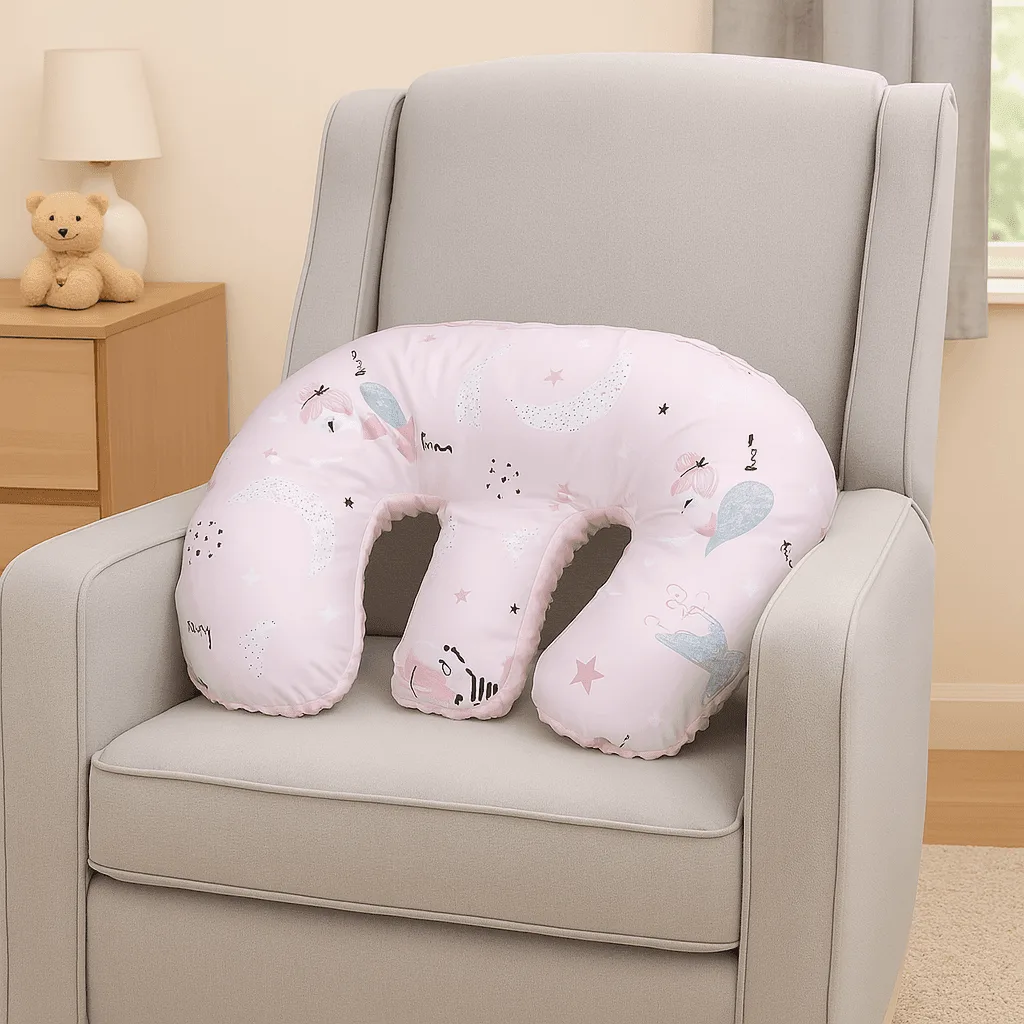
A nursing pillow lifts your baby to the correct height, so you don't have to hunch or strain your shoulders, neck, or arms. This makes feeding more comfortable and helps your baby maintain a good latch. The right pillow also frees one of your hands to adjust your baby's position or hold a bottle.
Choosing the Right Fill
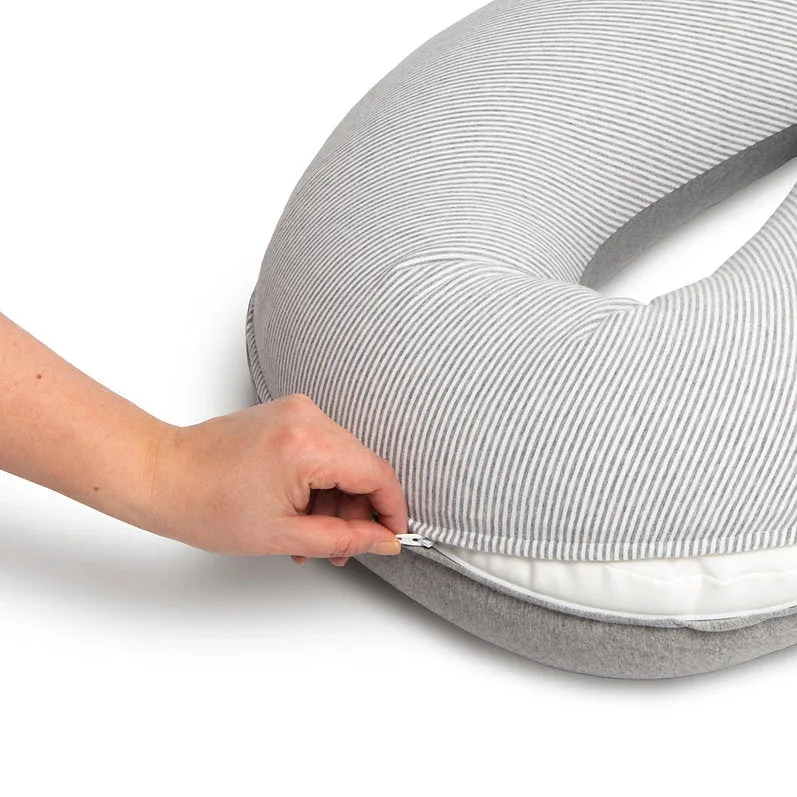
Nursing pillows come with different fills, each affecting support and breathability. Kapok fibers, for example, are naturally hypoallergenic and breathable, making them a good choice for sensitive babies or warmer climates. The pillow's firmness should keep its shape without flattening under your baby's weight.
Step-by-Step: How to Use a Nursing Pillow
- 1. Position the pillow around your waist: Place the pillow so it wraps around your midsection, with the curved side facing your belly. Adjust it so the top of the pillow sits just below your chest. Common mistake: placing the pillow too high or too low, which forces you to lean forward or hunch. The pillow should feel snug but not tight; you should be able to sit upright without leaning.
- 2. Lay your baby on the pillow: Gently place your baby on their side, facing you, with their tummy against your body. Their nose should be level with your nipple (or bottle nipple). Their head, neck, and spine should form a straight line. Common mistake: letting the baby lie flat on their back, which makes swallowing harder. Your baby's ear, shoulder, and hip should be aligned.
- 3. Adjust the angle and support: Tuck the pillow's ends under your arms for extra stability. If needed, add a small rolled towel under the pillow to raise your baby higher. For bottle-feeding, keep the bottle horizontal to control the flow. Common mistake: over-tightening the pillow, which can push your baby too close. You should be able to see your baby's nose and feel their latch without straining your neck.
- 4. Check your own posture: Sit back in a chair with your feet flat on the floor. Your back should be straight, and your shoulders relaxed. The pillow does the lifting, so your arms should rest lightly on the pillow, not hold your baby's weight. Common mistake: slouching forward to check the latch. Use a footstool if your feet don't reach the floor to keep your pelvis stable.
Product Highlight
-
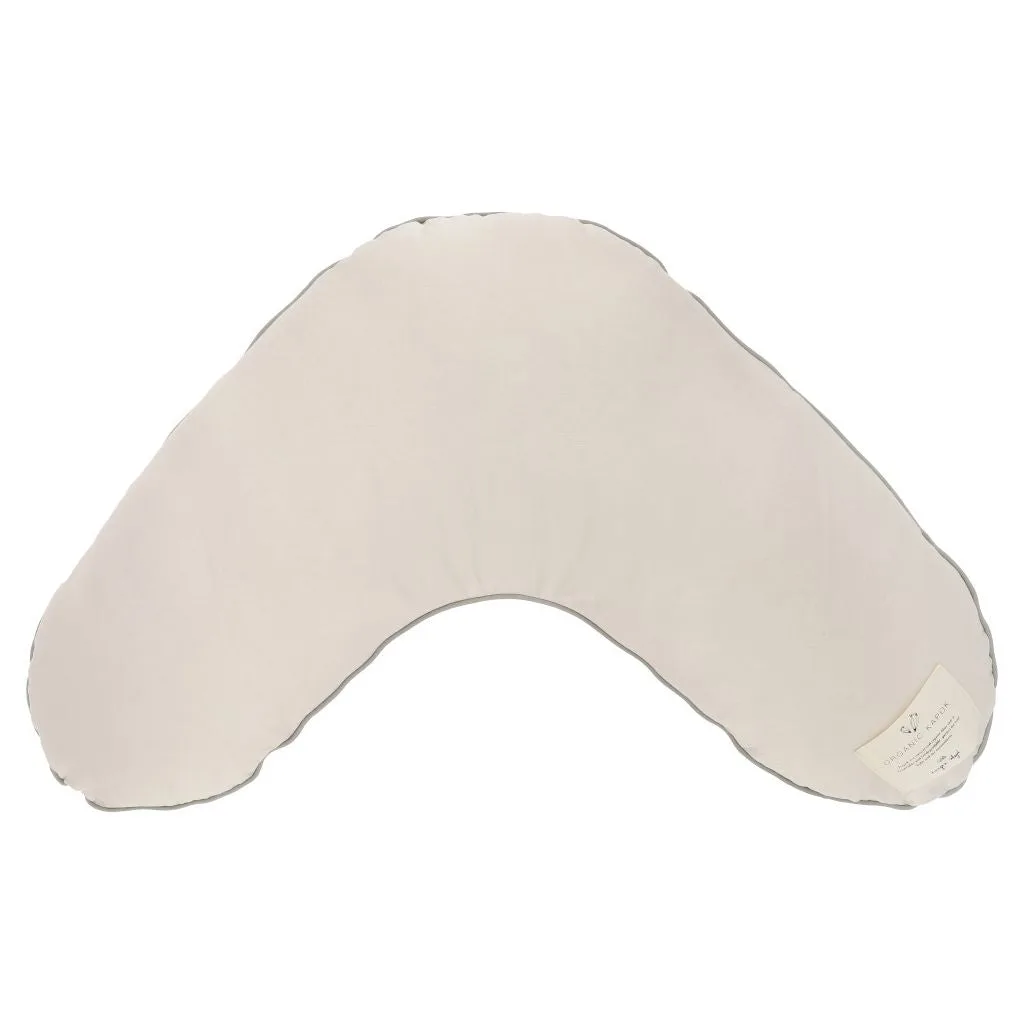
KAPOK NURSERY PILLOW - nature: Filled with 100% kapok fibers, the pillow is breathable, hypoallergenic, and naturally resistant to dust mites. This makes it a safe, comfortable choice for babies with allergies or sensitive skin, and the breathable fill helps prevent overheating during longer feeds.
KAPOK NURSERY PILLOW - nature