What a Sensory Table Offers Your Child
A sensory table gives young children a dedicated space to explore textures, pour, scoop, and sort. Designed for ages 1 to 6, the Sensory Table from Woodandhearts comes as a complete set with two stools, making it easy for little ones to sit and engage at their own pace. The natural wood and white finish fits into most playrooms without clashing with existing decor.
The table includes two removable plastic bins that can be filled with a variety of materials. This makes setup and cleanup straightforward, letting you rotate activities quickly to keep your child interested.
What Comes with the Sensory Table
-
Sensory Table: The set includes a Sensory Table for Kids and two stools, in natural wood and white finish. You don't need to buy seating separately. The two stools mean siblings or playmates can join in, supporting social play.
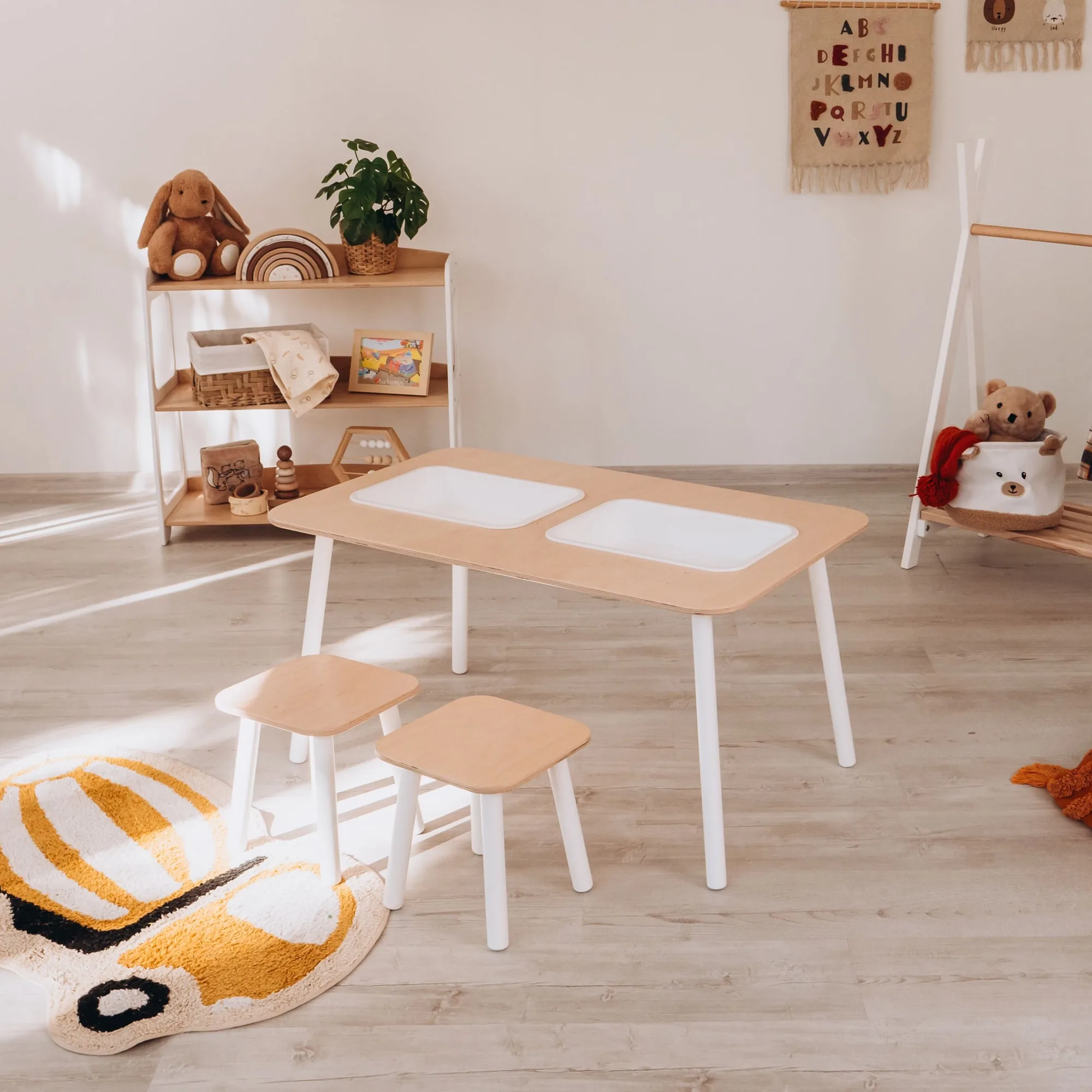
Sensory Table
-
Sensory Table: The table features two bins made of durable, high-quality plastic that are easy to clean and remove. Easy-to-clean bins let you switch from sand to water to rice without cross-contamination. Removable bins also make it simple to empty and store materials.
Getting Started with Sensory Play
Place the Sensory Table on a flat, stable surface. The included stools provide comfortable seating, but children can also stand if they prefer. Start with one or two materials in the bins — too many options at once can overwhelm a young child.
Good first choices include dry rice, playdough, or large scoops and containers. Let your child explore freely without directing the activity. The Montessori-inspired design encourages concentration and fine motor development through self-directed play.
Sensory Table Activity Ideas
The two bins let you set up contrasting activities side by side. Here are a few ideas that work with the Sensory Table's design:
- Sorting Games: Place mixed objects like colored pom-poms or large beads in one bin. Provide small cups or tongs so your child can sort by color or size into the second bin.
- Sculpting and Molding: Fill one bin with playdough. Add safe tools like a plastic rolling pin or cookie cutters. The table's surface gives your child a firm area to press and shape.
- Texture Exploration: Use dry materials like sand, colored rice, or pasta in one bin and a wet material like instant snow or water in the other. The contrast helps children notice differences in texture and behavior.
Keeping Play Engaging and Safe
Rotate materials every few days to maintain novelty. Because the bins are easy to clean, you can switch from dry to wet play without much effort. Always supervise young children during sensory play, especially when using small objects or any material that could be a choking hazard.
The Sensory Table itself is crafted from birch plywood and solid beech wood with hand-sanded corners, so the table is smooth to the touch. The plastic bins wipe clean with a damp cloth. Avoid leaving water or wet materials in the bins for extended periods to keep the wood frame in good condition.