Quick Answer
A snare pole lets you safely contain a dog from a distance without physical contact. The key is to loop the cable around the dog's neck or body, then lock the twist control to maintain gentle pressure while you secure the animal.
When to Use a Snare Pole for Dogs
A snare pole is a professional restraint tool for situations where a dog is fearful, aggressive, or injured and cannot be approached safely. It is not a substitute for a leash or everyday handling. Use it only when you need to capture a loose dog or restrain one during transport or medical care.
The KVP Snarem E-J Snare Pole 5′ is a lightweight aluminum pole with a flexible aircraft cable and twist-lock control. Its 5-foot reach keeps you at a safe distance while you work.
How to Use a Snare Pole for Dog Containment
- Prepare the snare loop: Hold the pole with the cable loop hanging loose. Adjust the loop size to be slightly larger than the dog's neck or body. For most dogs, aim for a loop about 10–12 inches in diameter. A loop that is too small may not slip over the head; one that is too large can catch on legs or objects. Common mistake: making the loop too small. Always err on the larger side; you can tighten it quickly once it is in place.
- Approach the dog calmly: Move slowly and speak in a low, calm voice. Keep the pole pointed away from the dog until you are ready. Do not swing the pole or make sudden movements, as this can startle the dog and cause it to flee or become defensive. Checkpoint: If the dog is highly agitated, consider using a barrier or second person to guide it into a corner before attempting capture.
- Guide the loop over the dog's head: From the side or behind, gently guide the loop over the dog's head and down to the neck. For a body catch, slip the loop over the dog's torso just behind the front legs. Avoid catching the loop on ears, collar, or limbs. Common mistake: trying to loop from the front. The dog can see the pole and may back away. Approach from the side or rear when possible.
- Tighten the cable with the twist lock: Once the loop is in position, twist the control handle to tighten the cable until it makes firm contact with the dog's neck or body. Do not overtighten—the goal is to prevent escape, not to choke or injure the animal. The cable should be snug enough that the dog cannot slip out, but you should still be able to slide a finger between the cable and the dog's fur. Checkpoint: If the dog is coughing or pawing at its neck, the loop is too tight. Loosen immediately and reposition.
- Maintain steady pressure and move the dog: Keep the pole at a 45-degree angle to the ground and apply light, steady tension. Guide the dog toward a crate, vehicle, or secure enclosure. Do not lift the dog by the pole—the cable is not designed for full weight support. For small dogs, you may support the body with your other hand once the dog is calm. Common mistake: jerking or pulling the pole. Smooth, continuous pressure keeps the dog calm and reduces the risk of injury.
- Release the dog safely: Once the dog is secured in a crate or enclosure, untwist the lock to loosen the cable. Gently slide the loop off the dog's head or body. Do not yank the loop off, as this can cause friction burns or panic. Praise the dog and offer a treat if appropriate. Checkpoint: Always have the enclosure door closed or blocked before releasing the loop—if the dog bolts, you will need to start over.
Product Facts
-
KVP Snarem E-J Animal Snare Pole 5′: The KVP Snarem E-J Snare Pole 5′ features a lightweight aluminum shaft, flexible aircraft cable, and easy twist-lock control. The aluminum shaft reduces arm fatigue during extended holds, and the twist-lock lets you tighten or release the loop with one hand while keeping the other hand free.
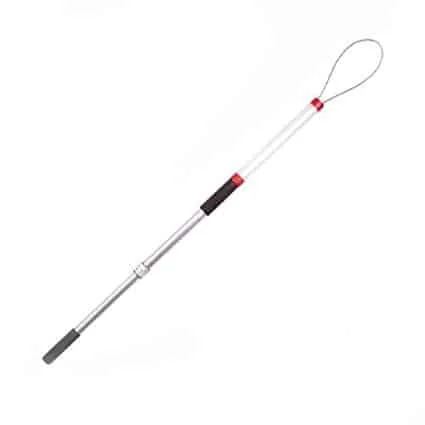
KVP Snarem E-J Animal Snare Pole 5′