Quick answer
Use the Suunto Clipper compass by setting the declination, orienting the map, and following a bearing. Its compact clip-on design makes it ideal for ultralight backpacking.
Why the Suunto Clipper Works for Backpacking
The Suunto Clipper is pre-calibrated for the northern hemisphere and functions in extreme conditions, even underwater. Its small size and clip make it easy to attach to a pack strap or zipper pull for quick access without adding weight.
Limitations to Know
Because it lacks a baseplate and sighting mirror, the Clipper is best for basic navigation rather than precise map work. You'll need a separate map and a clear understanding of bearings to get the most out of it.
How to Navigate with the Suunto Clipper
- Attach and orient the compass: Clip the Suunto Clipper to a pack strap or key ring so it lies flat. Hold it level in front of you, with the direction-of-travel arrow pointing away from your body. Common mistake: holding the compass at an angle. Keep it level to allow the needle to swing freely.
- Set your bearing on the map: Place your map on a flat surface. Align the compass edge along your intended route from point A to B. Rotate the compass dial until the orienting lines match the map's north-south grid lines. Remember: the Clipper's dial rotates, but it has no baseplate. Use a straight edge or map corner for alignment.
- Follow the bearing: Hold the compass level in your hand. Turn your body until the red end of the needle aligns with the orienting arrow inside the dial. Walk straight ahead in the direction of the travel arrow. Checkpoint: keep the needle aligned as you walk. If it drifts, stop and reorient before continuing.
- Adjust for declination (if needed): Find your local declination from a map or online. Add or subtract the declination from your bearing before setting the dial. The Clipper does not have a declination adjustment, so do this manually. Common mistake: forgetting declination. Even a few degrees off can lead you far off trail over distance.
- Navigate in low light or underwater: The compass glows in low light, so you can read it at dusk or in rain. It works underwater, making it useful for wet conditions or stream crossings. No extra steps needed—just keep it dry and accessible when not in use.
Product Fact
-
Suunto Clipper Compact Compass: This mini compass includes a clip that easily goes onto gear. You can attach it to a backpack strap or jacket zipper for hands-free access on the trail.
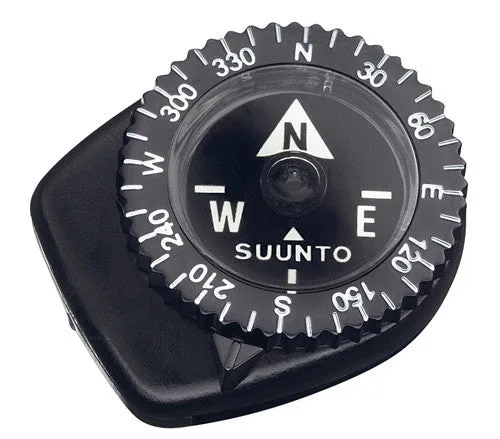
Suunto Clipper Compact Compass