Why tongue cleaning matters for fresher breath
Bacteria and food debris accumulate on the tongue's surface, especially toward the back. A tongue scraper physically removes this buildup, which is a direct cause of bad breath. Unlike brushing, which mainly cleans teeth, scraping targets the coating that harbors odor-causing microbes.
How to use a tongue scraper in three steps
Use your tongue scraper once daily, ideally in the morning before eating or drinking. The routine takes under a minute.
- Position the scraper: Hold the stainless steel scraper by both ends. Place the curved edge at the back of your tongue, as far back as is comfortable without gagging.
- Scrape forward with light pressure: Pull the scraper forward along the tongue's surface in one smooth stroke. Rinse the scraper under warm water after each pass to remove debris.
- Repeat until clean: Repeat the forward strokes, slightly overlapping each pass to cover the entire tongue. Two to five strokes are usually enough. Rinse your mouth when finished.
What the Tongue Scraper - 2 Pack offers
-
Tongue Scraper - 2 Pack: This stainless steel tool clears away buildup and bacteria for a cleaner, healthier mouth. Stainless steel is non-porous and easy to clean, making it a hygienic choice for daily tongue cleaning. The set of two lets you keep one at home and one in your travel bag.
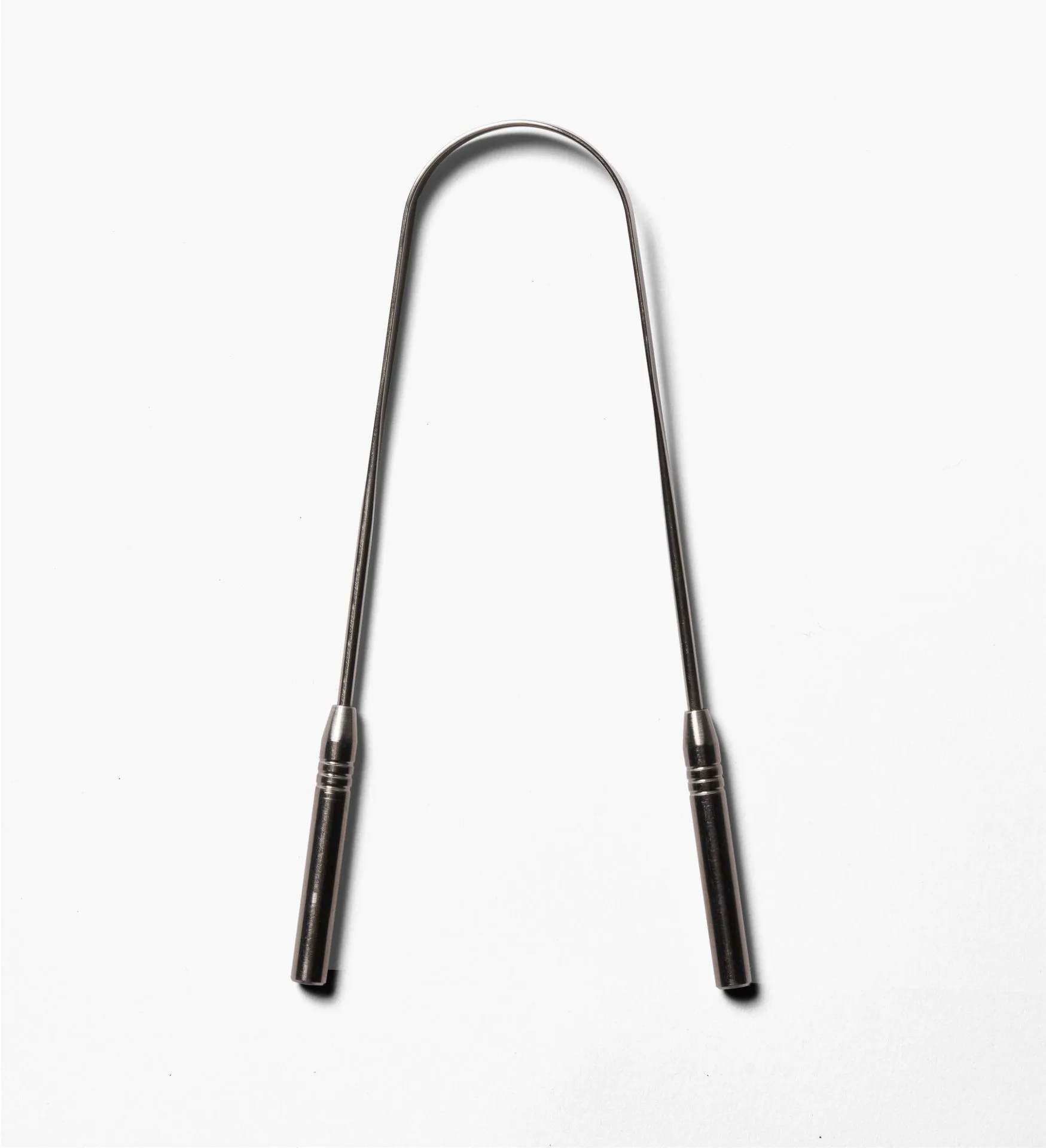
Tongue Scraper - 2 Pack
Care and hygiene tips for your scraper
Rinse the scraper with warm water after each use. The supplied information does not confirm specific sanitizing instructions, so air-drying on a clean surface is a sensible default. Avoid sharing your scraper with others to prevent bacterial transfer.
What tongue scraping can and cannot do
Regular scraping reduces the bacteria load on the tongue, which helps freshen breath. It does not replace brushing or flossing, nor does it treat underlying medical causes of halitosis. For best results, combine tongue scraping with a complete oral care routine.