Quick answer
Use a wooden toy plane like the Le Toy Van Wooden Toy Plane as a prop for open-ended pretend play—create airport scenes, flight missions, or travel stories that build language and motor skills.
Why a wooden toy plane works for open-ended play
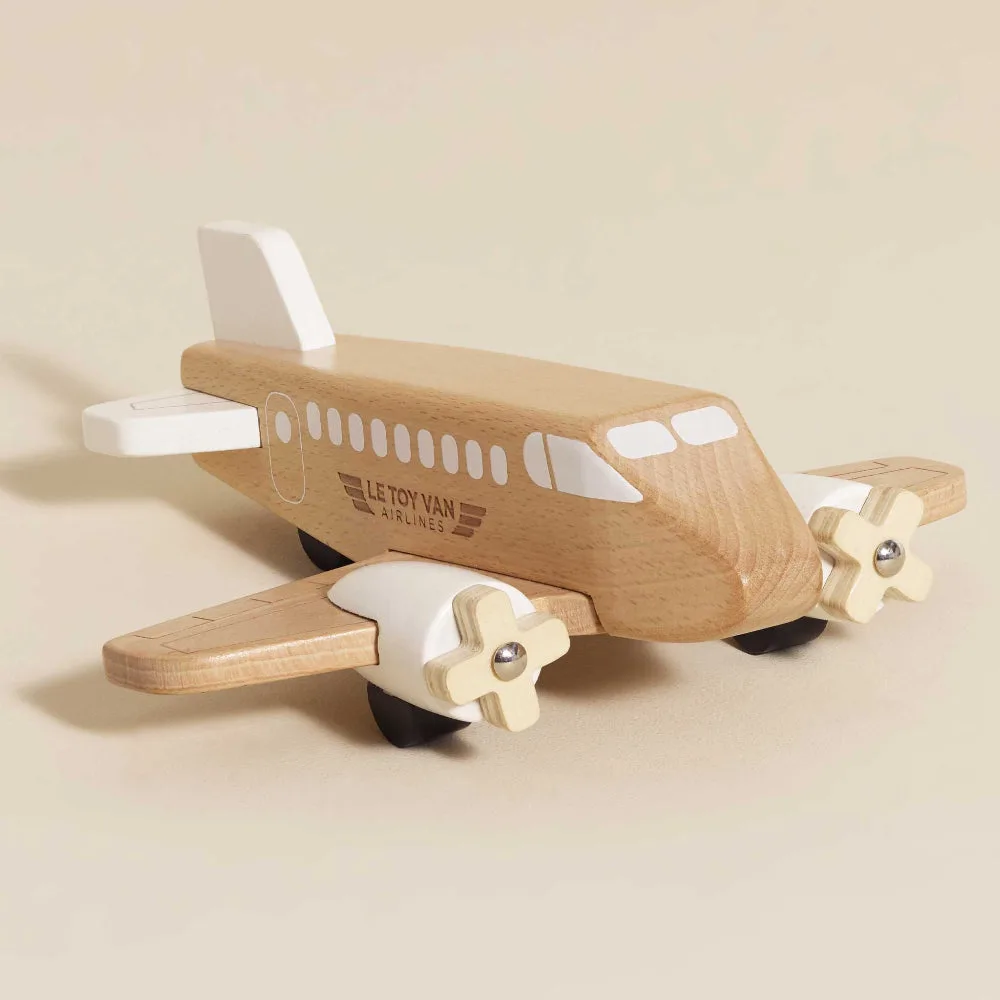
Unlike battery-operated toys that dictate actions, a simple wooden plane invites children to invent the story. The Le Toy Van plane's spinning propeller and engraved details give tactile cues, but the child decides whether it's a rescue mission, a passenger flight, or a display piece. This flexibility supports creativity and problem-solving without screens or sounds.
When a wooden plane might not be the best fit
If your child expects realistic engine sounds or interactive lights, a silent wooden plane may feel less engaging at first. It works best as part of a larger pretend-play setup—pair it with a cardboard airport or a travel-themed book to spark ideas. Also, the plane is designed for gentle indoor play, not rough outdoor tossing.
5 steps for wooden toy plane pretend play
- Set the scene: Clear a small floor space and add a simple prop—a blue towel for water, a cardboard box for an airport terminal, or a pillow for a cloud. This signals the start of imaginative play without overwhelming the child. Too many props can distract; start with one or two.
- Introduce a role: Offer a simple role like pilot, passenger, or air traffic controller. Use a toy hat or a scarf to help the child step into character. If they hesitate, model the role yourself first. Let the child choose the role; forcing a part can end the play.
- Create a mission: Give the plane a purpose: deliver a stuffed animal to grandma, rescue a toy from a pretend island, or fly around the world. The mission adds direction and helps sustain focus. Keep missions simple and flexible—change them if the child loses interest.
- Add sound effects and narration: Encourage the child to make engine sounds (vroom, whoosh) and describe what they see: “Flying over the mountains!” or “Landing at the airport!” This builds vocabulary and narrative skills. If the child is quiet, narrate for a minute; they often join in naturally.
- Rotate the setting: Change the scene after a few play sessions—use a different prop or a new mission (space travel, jungle rescue). This keeps the wooden plane fresh and extends its play value over weeks. Store the plane in a visible spot so the child can initiate play on their own.
Product spotlight
-
Le Toy Van | Wooden Toy Plane: This commercial wooden plane combines timeless aviation design with natural wood aesthetics. Spinning propellers, engraved details, and white accents showcase FSC wood's natural grain. The spinning propeller and engraved details give children a realistic cue for flight motion, making it easier to start a pretend scenario without needing batteries or instructions.
Le Toy Van | Wooden Toy Plane