Quick Answer
To get the most from acne pimple patches, apply them to clean, dry skin after cleansing and leave them on for at least 6–8 hours, ideally overnight. For best results, choose a hydrocolloid patch that absorbs fluid and protects the blemish.
Why Hydrocolloid Patches Work
Acne pimple patches are made from hydrocolloid, a material that absorbs excess fluid and pus from the blemish. This helps speed up healing and reduces the chance of post-acne marks. Because the patch is ultra-thin, it stays invisible on the skin, so you can wear it during the day or while sleeping.
The main benefit is protection: the patch shields the pimple from dirt, bacteria, and your own fingers. Picking or touching a blemish often makes it worse, so a patch acts as a physical barrier that encourages your skin to repair itself.
When Patches Work Best
Pimple patches are most effective on raised, inflamed blemishes that have a whitehead or are oozing. They are less helpful for deep, blind pimples that have no opening, because the hydrocolloid cannot reach the fluid inside. For those, you may need a different spot treatment.
For best results, apply the patch as soon as you notice the pimple forming. The earlier you start, the faster it can absorb fluid and reduce redness. Avoid waiting until the blemish is already large or painful.
Step-by-Step Application Guide
- Cleanse and dry the area: Wash your face with a gentle cleanser and pat the skin dry. The patch sticks best to clean, oil-free skin. Do not apply moisturizer or serum before the patch, as it may prevent adhesion. Checkpoint: Skin must be completely dry; any moisture or product will reduce stickiness.
- Choose the right patch size: Select a patch that fully covers the pimple with a small margin around it. If your patch sheet has multiple sizes, pick the one closest to the blemish without overlapping healthy skin too much. Checkpoint: A patch that is too small will lift and fall off; one that is too large may irritate surrounding skin.
- Apply the patch firmly: Peel the backing and place the patch directly over the pimple. Press down gently for a few seconds to ensure the edges are sealed. Avoid touching the adhesive side with your fingers. Checkpoint: Smooth out any air bubbles; a secure seal keeps the patch in place and maximizes absorption.
- Leave it on for 6–8 hours: For best results, wear the patch overnight or for at least 6–8 hours. The hydrocolloid needs time to absorb fluid. If the patch turns white, it has soaked up pus and is working. Checkpoint: Do not remove the patch early; it may not have absorbed enough fluid to make a difference.
- Remove and follow up: Gently peel the patch off. If the blemish is still raised, you can apply a new patch the next night. After removal, cleanse the area and apply a light moisturizer if needed. Checkpoint: Do not pick or squeeze the blemish after removing the patch; let the skin heal naturally.
Product Spotlight
-
Acne Pimple Patches (200 Count): Hydrocolloid Acne Pimple Patch – 200 Count: ultra-thin design blends with all skin tones and absorbs excess fluids and pus. The invisible, absorbent design lets you treat blemishes anytime, day or night, without drawing attention to the patch.
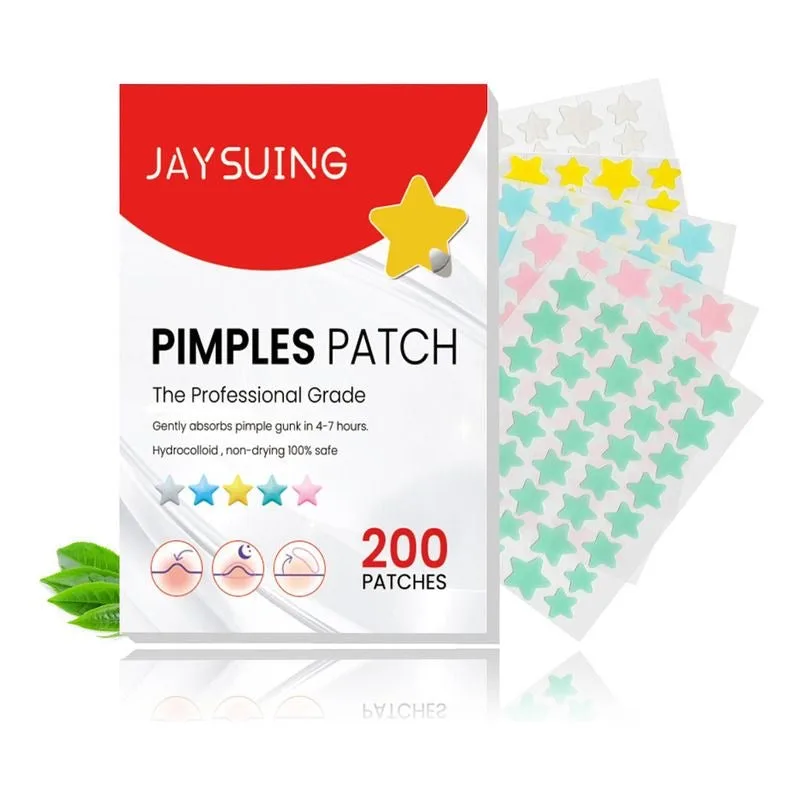
Acne Pimple Patches (200 Count)