Why Use Acrylic Specimens for Science Observation?
Acrylic specimens give students a safe, durable way to examine real marine animals without the mess or preservation concerns. The crystal-clear poly-resin blocks let kids see every detail of creatures like seahorses, crabs, starfish, and lobsters. This hands-on approach supports STEM learning and nature study by letting children observe, compare, and ask questions about ocean life.
Because the blocks are built for repeated handling, they work well in busy classrooms or homeschool settings. Teachers can pass them around for group observation without worrying about breakage. The included booklet adds facts about each animal, turning a simple look into a mini science lesson.
What the Acrylic Specimens Sealife Set Offers
-
Acrylic Specimens Sealife - Set of 4: Each set features four captivating marine animals: a graceful seahorse, a scuttling crab, a spiny starfish, and a vibrant lobster — bringing real ocean discovery right into your classroom or home. Students get to observe four different sea creatures, which supports comparison and classification activities.
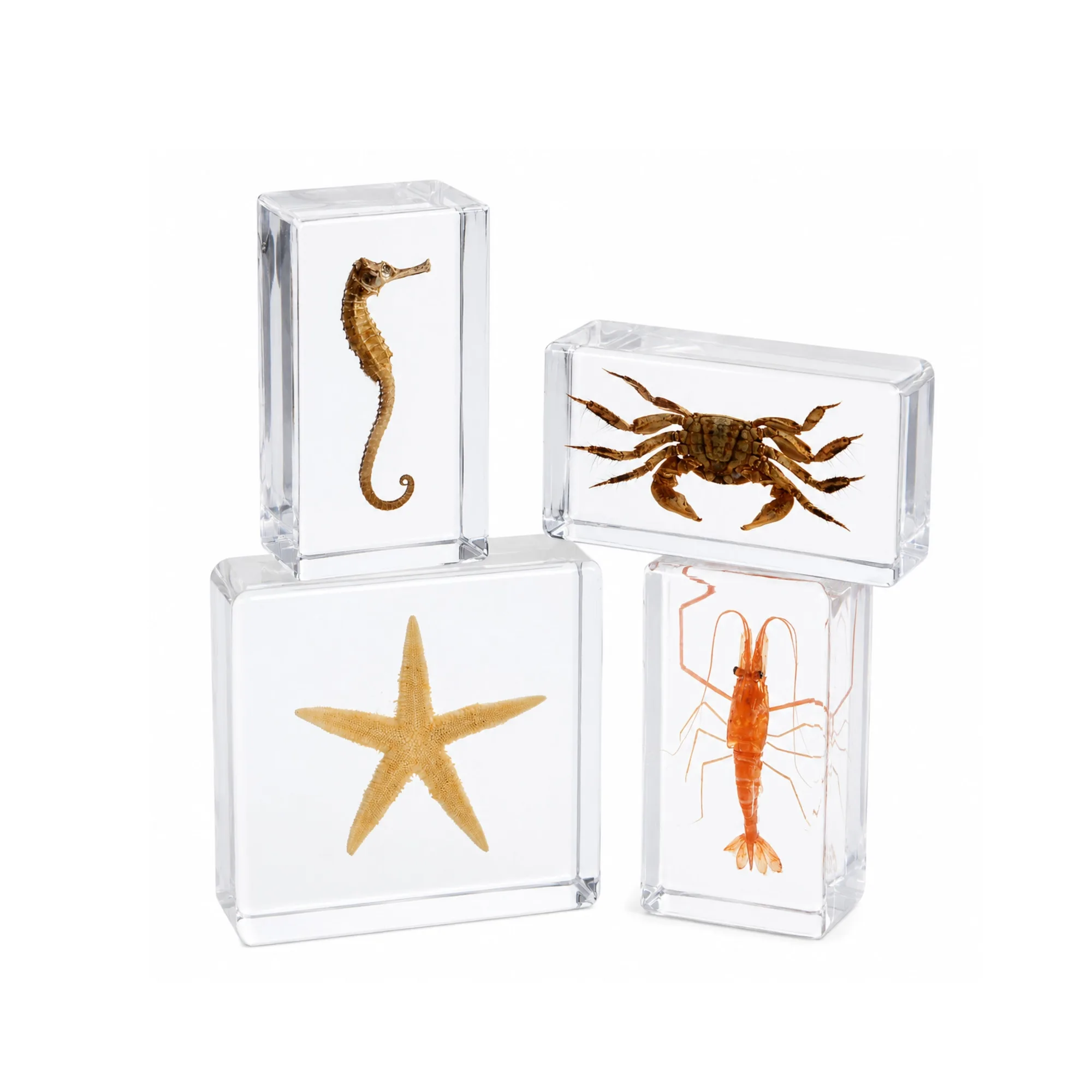
Acrylic Specimens Sealife - Set of 4
-
Acrylic Specimens Sealife - Set of 4: These tactile, durable specimens are designed for curious hands and inquisitive minds. The blocks withstand daily classroom use, so children can handle them freely during science observation.
-
Acrylic Specimens Sealife - Set of 4: Each crystal-clear block showcases a different sea creature—seahorse, crab, starfish, or lobster—alongside an informative booklet packed with fascinating facts about each marine animal. The booklet provides ready-to-use content for lessons, saving teachers preparation time.
How to Use Acrylic Specimens for Science Observation
Follow these simple steps to turn the specimens into an engaging observation activity.
- Introduce the specimens: Show students the four acrylic blocks one at a time. Let them hold each block, turn it over, and look at the creature from different angles. Ask open-ended questions like 'What do you notice about the starfish?' or 'How is the lobster different from the crab?'
- Use the booklet for guided learning: Read a fact from the included booklet about one animal, then ask students to find that feature on the specimen. For example, after reading about the seahorse's curved tail, have them point to it on the block.
- Set up a comparison station: Place all four blocks on a tray or table. Give each student a simple chart or notebook page to record observations. Encourage them to draw what they see and write one difference between two animals.
- Extend with group discussion: After individual observation, bring the class together to share findings. Ask which animal they found most interesting and why. This builds communication skills and reinforces science vocabulary.
Tips for Classroom and Homeschool Use
These specimens work well for marine biology units, ocean-themed weeks, or as a sensory learning station. Because they are solid and easy to clean, you can store them in a bin and pull them out whenever a lesson calls for real-world examples. The set is also great for nature-based discovery activities—just pair the blocks with a children's book about ocean life for a richer experience.
If you're using them in a group setting, consider having students work in pairs. This encourages discussion and lets each child have a turn holding the block. For younger learners, focus on simple identification and vocabulary building. Older students can use the specimens as a starting point for research projects on marine ecosystems.