When to Offer a Straw Cup
Most pediatricians suggest introducing a straw cup around 6 to 9 months. This is the same window when many babies start solids and begin exploring self-feeding. The Bunny straw cup fits comfortably in small hands and supports baby-led weaning, making it a natural next step after the bottle.
How the Bunny Cup Works
The Baby Straw Cup - Bunny is made from LFGB-certified food-grade silicone, with a soft silicone straw that is gentle on gums. It holds 5.2 fl oz (150 ml) and measures 2.7 × 2.7 × 3.3 in, sized for toddler hands. The cup comes with a straw-cleaning brush and is dishwasher safe on the top rack and microwave safe.
Key Product Details
-
Baby Straw Cup - Bunny: The cup works with or without the straw, doubling as an open training cup that supports healthy oral and speech development. This flexibility lets you start with the straw and later transition to open-cup drinking without buying a separate cup.
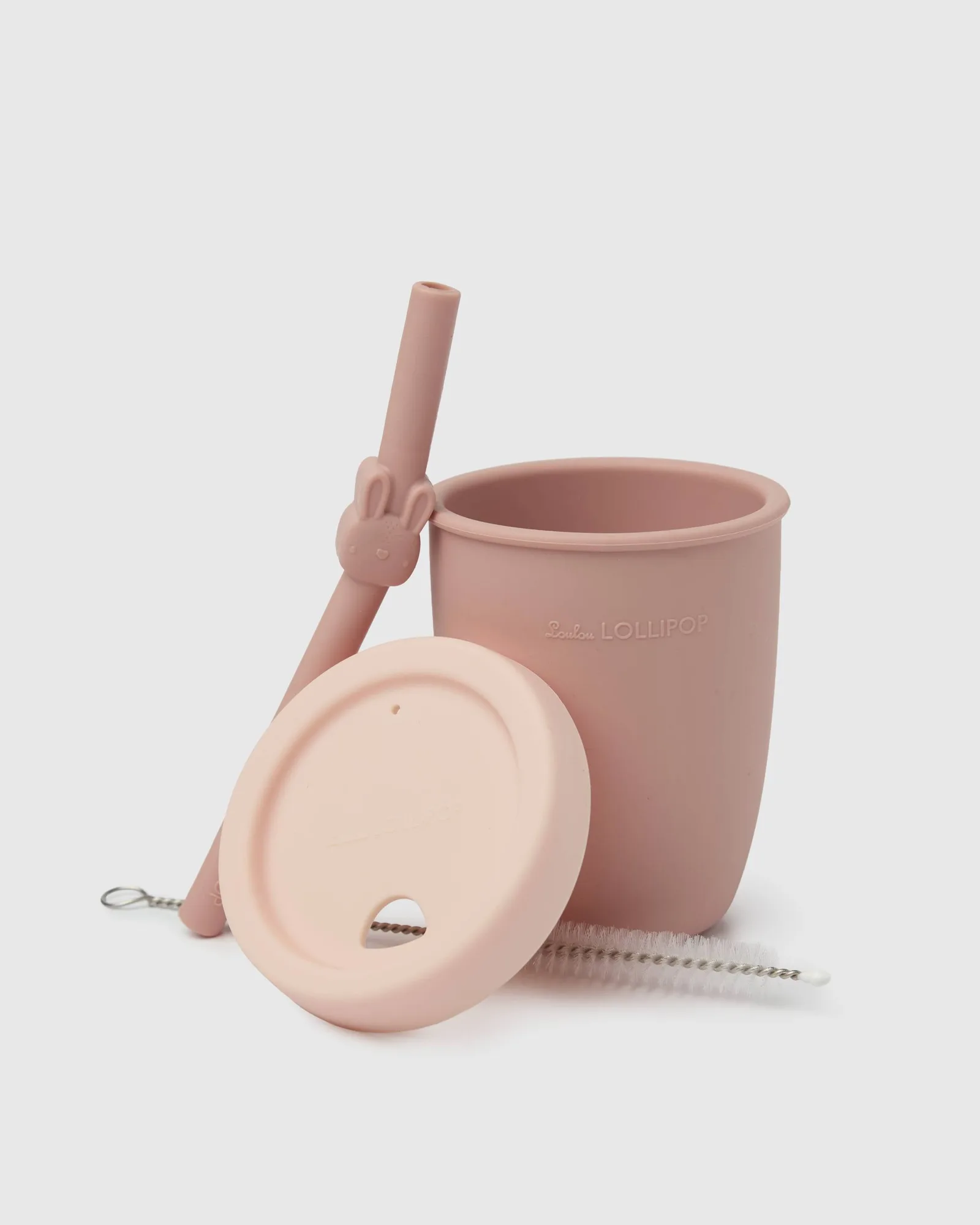
Baby Straw Cup - Bunny
-
Baby Straw Cup - Bunny: It measures 2.7 × 2.7 × 3.3 in, holds 5.2 fl oz (150 ml), and weighs 4.4 oz (125 g) — sized for toddler hands. The compact size and light weight make it easy for babies to hold and lift on their own.
Introducing the Straw Cup Step by Step
Some kids take to the straw on day one; others need a week of you demonstrating it. Here’s a simple approach.
- Start with a small amount of liquid: Fill the cup with just an ounce or two of water or expressed milk. This reduces spills and lets your baby focus on the new skill.
- Demonstrate the straw: Show your baby how liquid comes up by sipping from the straw yourself. They may imitate after watching a few times.
- Offer the cup at mealtime: Place the cup on the high chair tray or hold it for your baby. The floppy ears hang slightly off the edge of the plate, making it easy to spot.
- Let them explore: Expect some throwing and dropping — the cup is designed for that. The silicone construction is durable and dishwasher safe.
- Gradually increase use: By a year, the straw cup can become the main daytime cup. Open cups and their spills can start at the table around 12 months.
Using the Cup Without the Straw
The Bunny cup is designed to work both ways. Removing the straw turns it into an open training cup, which helps develop oral and speech skills. You can start with the straw for easier drinking and later take it off when your baby is ready to practice tipping and sipping.
Why Straws Over Sippy Cups
Most guidance has shifted toward straw cups. The motion to draw liquid up a straw is closer to open-cup drinking than the bottle-like suck of a sippy spout. The Bunny cup’s soft silicone straw supports that natural transition.
Care and Cleaning
The cup, lid, and straw are all LFGB-certified food-grade silicone. They are dishwasher safe on the top rack and microwave safe. A straw-cleaning brush is included to keep the straw clean after each use.