Baobab powder isn’t just for smoothies and shots—it’s a surprisingly versatile ingredient in baking. With its tangy, citrus-like flavor and natural prebiotic fiber, baobab fruit powder can add a gut-healthy twist to your favorite baked goods. Whether you’re a seasoned baker or just starting out, this guide will show you how to use baobab powder in baking, with practical tips and delicious recipes.
Why bake with baobab? First, it’s a great source of soluble fiber, which feeds beneficial gut bacteria. Second, it’s naturally low in sugar and high in vitamin C, making it a smart swap for some of the sugar or flour in recipes. Plus, its mild tartness pairs beautifully with sweet and savory flavors alike. Let’s dive into the basics and some easy recipes.
Baobab Powder Baking Basics: Substitution Tips
Baobab powder is not a direct 1:1 substitute for flour or sugar, but it can replace a portion of either. For most recipes, start by replacing 1–2 tablespoons of flour with baobab powder per cup of flour. This keeps the texture light while adding fiber and a subtle tang. You can also swap up to 1/4 cup of sugar with baobab powder, but keep in mind that baobab is less sweet than sugar, so you may need to adjust with a natural sweetener like honey or maple syrup.
Because baobab powder is acidic (similar to buttermilk or lemon juice), it reacts with baking soda to create lift. If your recipe uses baking soda, you can reduce the liquid slightly or add a pinch more soda to compensate. For recipes using baking powder, no adjustment is needed. Always sift baobab powder with dry ingredients to avoid clumps.
- Replace 1–2 tbsp flour per cup with baobab powder for a fiber boost.
- For tangy flavor, use baobab in place of lemon zest or buttermilk powder.
- Store baobab powder in a cool, dry place to maintain freshness.
Gut-Healthy Baobab Banana Muffins
These moist banana muffins are a perfect introduction to baobab powder baking. The natural sweetness of ripe bananas balances baobab’s tang, while the added fiber supports digestion. To make them, mash 3 ripe bananas and mix with 1/3 cup melted coconut oil, 1/4 cup maple syrup, 2 eggs, and 1 tsp vanilla. In a separate bowl, whisk 1 3/4 cups whole wheat flour, 1/4 cup baobab powder, 1 tsp baking soda, 1/2 tsp salt, and 1 tsp cinnamon. Combine wet and dry ingredients, fold in 1/2 cup chopped walnuts, and bake at 350°F for 18–20 minutes.
These muffins are great for meal prep—they stay moist for days. For an extra gut-healthy twist, add a tablespoon of Good Fibre Baobab Fruit Powder Sachets to the batter. The prebiotic fiber helps feed your gut microbiome, making these a smart snack for everyday energy.
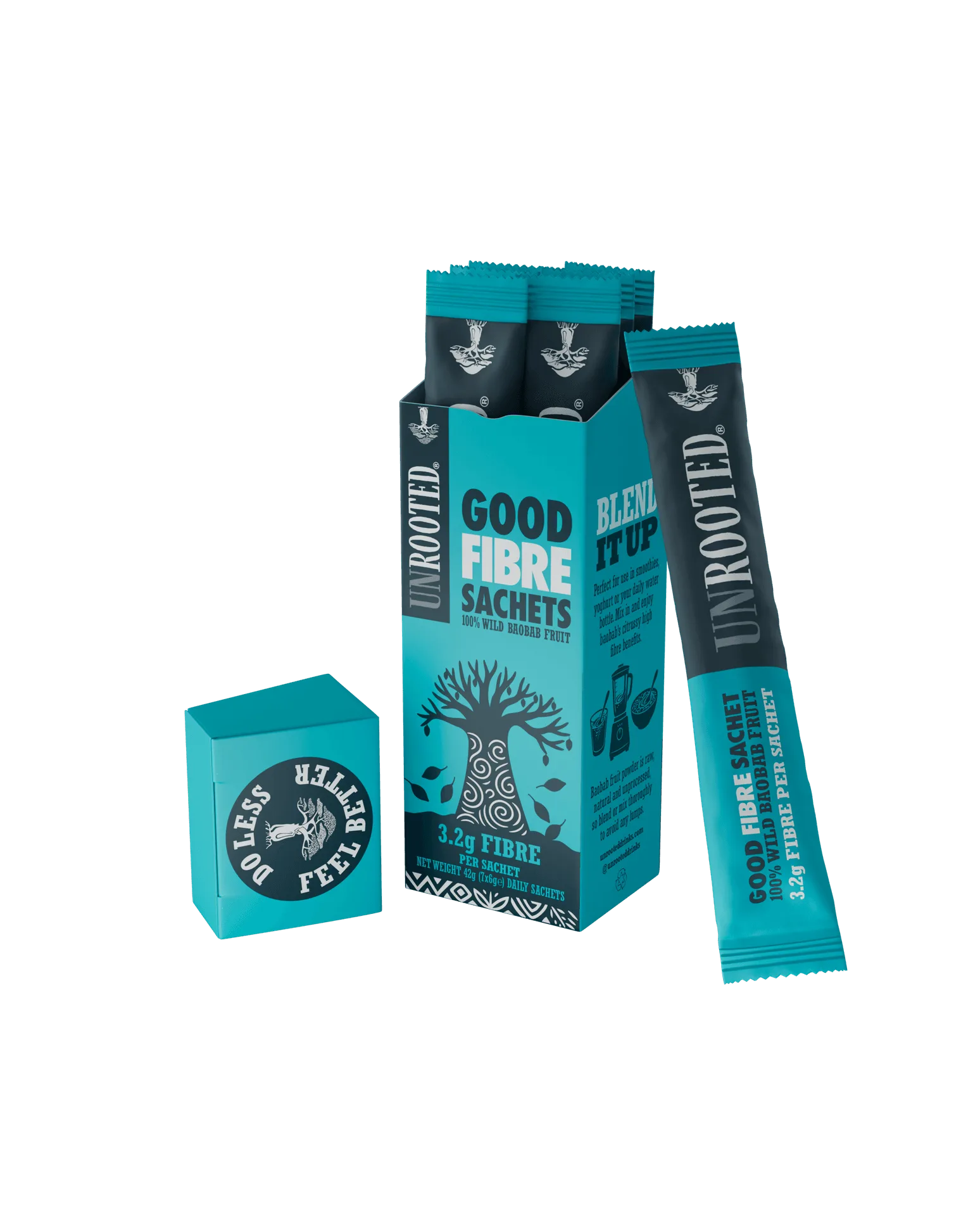
Good Fibre Baobab Fruit Powder Sachets
- Use very ripe bananas for maximum sweetness without added sugar.
- Substitute 1/4 cup of flour with baobab powder for the best texture.
Zesty Baobab Lemon Loaf
Love lemon loaf? Try this baobab-infused version that’s bright, tangy, and gut-friendly. In a large bowl, cream 1/2 cup butter with 3/4 cup sugar. Beat in 2 eggs, 1 tsp vanilla, and the zest of 2 lemons. In another bowl, whisk 1 1/2 cups all-purpose flour, 1/4 cup baobab powder, 1 tsp baking powder, and 1/2 tsp salt. Alternate adding dry ingredients and 1/2 cup buttermilk to the butter mixture. Bake in a greased loaf pan at 350°F for 45–50 minutes. While warm, drizzle with a glaze made from 1/2 cup powdered sugar and 2 tbsp lemon juice.
The baobab powder enhances the lemon flavor while adding vitamin C and prebiotic fiber. For a twist, fold in 1/2 cup blueberries or poppy seeds. This loaf pairs beautifully with a cup of tea or a shot from the Variety pack of daily shots for a complete gut-healthy treat.
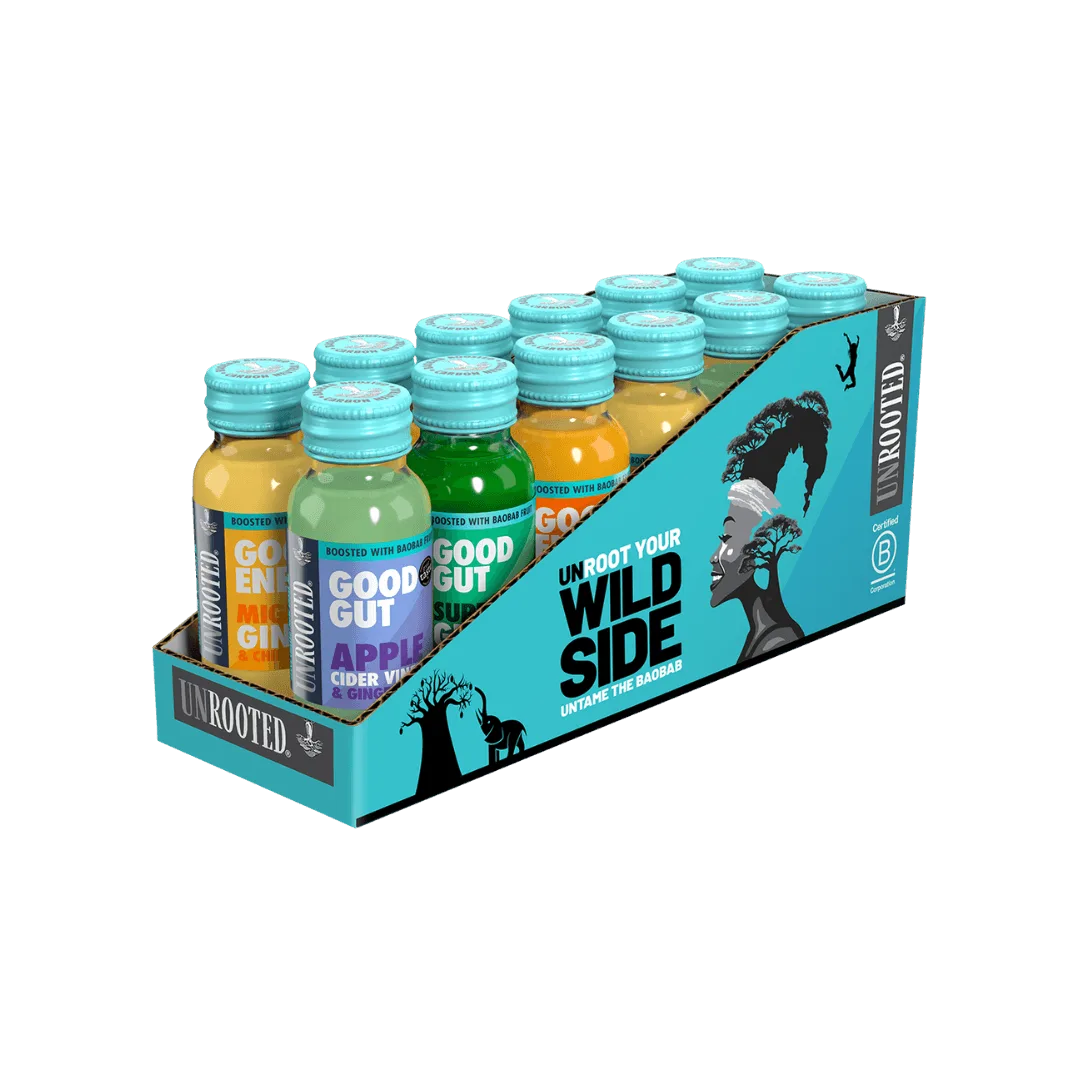
Variety pack of daily shots
- Sift baobab powder with flour to prevent clumps in the batter.
- For a dairy-free version, use almond milk with 1 tsp lemon juice instead of buttermilk.
Savory Baobab Herb Bread
Baobab powder isn’t just for sweet bakes—it adds a subtle tang to savory breads too. This no-knead herb bread is simple and packed with flavor. In a large bowl, combine 3 cups bread flour, 1/4 cup baobab powder, 1 tsp salt, 1 tsp dried rosemary, 1 tsp thyme, and 1 packet instant yeast. Add 1 1/2 cups warm water and 2 tbsp olive oil, stirring until a shaggy dough forms. Cover and let rise for 2 hours. Shape into a loaf, let rise 30 minutes, then bake at 450°F for 30–35 minutes in a Dutch oven.
The baobab powder gives the bread a slight sourdough-like tang without the long fermentation. It’s excellent for sandwiches or toasted with butter. For an extra fiber boost, sprinkle a packet of Good Fibre Baobab Fruit Powder Sachets into the dough. This bread freezes well, so make a double batch.
- Use bread flour for a chewier texture; all-purpose works too.
- Add 1/4 cup sunflower seeds or chopped olives for more flavor.
Baobab powder is a versatile, gut-healthy addition to your baking repertoire. Whether you’re making sweet muffins, tangy loaves, or savory bread, it’s easy to swap in a few tablespoons for a fiber and vitamin C boost. Start with the recipes above, then experiment with your own favorites. Your gut—and your taste buds—will thank you.