Quick answer
Use a birthing ball for gentle rocking and seated pelvic tilts during early pregnancy to ease discomfort, then transition to active labor positions like kneeling with the ball for support or deep squats to aid descent.
Why a birthing ball works differently than a gym ball
A birthing ball is built to handle higher loads and repetitive movement during labor. The BABYGO® Birthing Ball, for example, is tested to hold up to 1000 kg, making it 5x stronger than a standard gym ball. This extra durability matters when you lean into it during contractions or use it to support your full weight in a kneeling position.
The surface texture and size options also differ. Gym balls are often slick and come in one size, while birthing balls are designed for stability on various floor surfaces and allow you to choose a size that keeps your hips slightly higher than your knees when seated.
When to start using a birthing ball in pregnancy
You can begin seated exercises as early as the first trimester if you have no restrictions from your healthcare provider. Early use helps strengthen your core and pelvic floor, improves posture, and reduces common aches like sciatica and PGP. Avoid bouncing or sudden movements in the first trimester if you have a history of spotting or are advised to limit activity.
For late pregnancy and labor, the ball becomes a positioning tool. Many women find relief from back labor by leaning forward over the ball on a bed or mat. The key is to listen to your body and stop any movement that causes sharp pain.
How to use a birthing ball step by step
- Choose the right size and inflate it properly: Sit on the ball with your feet flat on the floor. Your hips should be slightly higher than your knees (about a 90-100° angle). Inflate the ball until it feels firm but has about 2 inches of give when you press down. Over-inflating makes it unstable; under-inflating reduces support. Check the ball's height weekly as air pressure changes can affect firmness.
- Start with seated pelvic tilts for early pregnancy comfort: Sit upright on the ball with hands on hips. Gently tilt your pelvis forward and backward in a slow, controlled motion. Keep your spine neutral and avoid arching your lower back. Do 10 tilts per session, 2–3 times a day. If you feel any sharp pain in your pubic bone, reduce the range of motion and consult your provider.
- Use the ball for back labor relief: Kneel on a mat or bed and place the ball under your chest and shoulders. Lean forward so your weight rests on the ball. Rock side to side or in circles to ease lower back pressure during contractions. Keep your knees hip-width apart for stability. A common mistake is leaning too far forward, which can strain your neck. Keep your head aligned with your spine.
- Transition to active labor positions: For the pushing stage, place the ball against a wall or bed. Squat with your back against the ball, using it to support your lower back while you bear down. Alternatively, sit on the ball and gently bounce during early labor to encourage the baby to descend. Never bounce vigorously during late labor—gentle, rhythmic movement is safer and more effective.
Product facts
-
BABYGO® Birthing Ball: Tried and tested to hold a weight of up to 1000kg, that's a baby elephant. This extreme weight rating means the ball won't burst under the dynamic pressure of labor positions, giving you confidence to lean or kneel on it without worry.
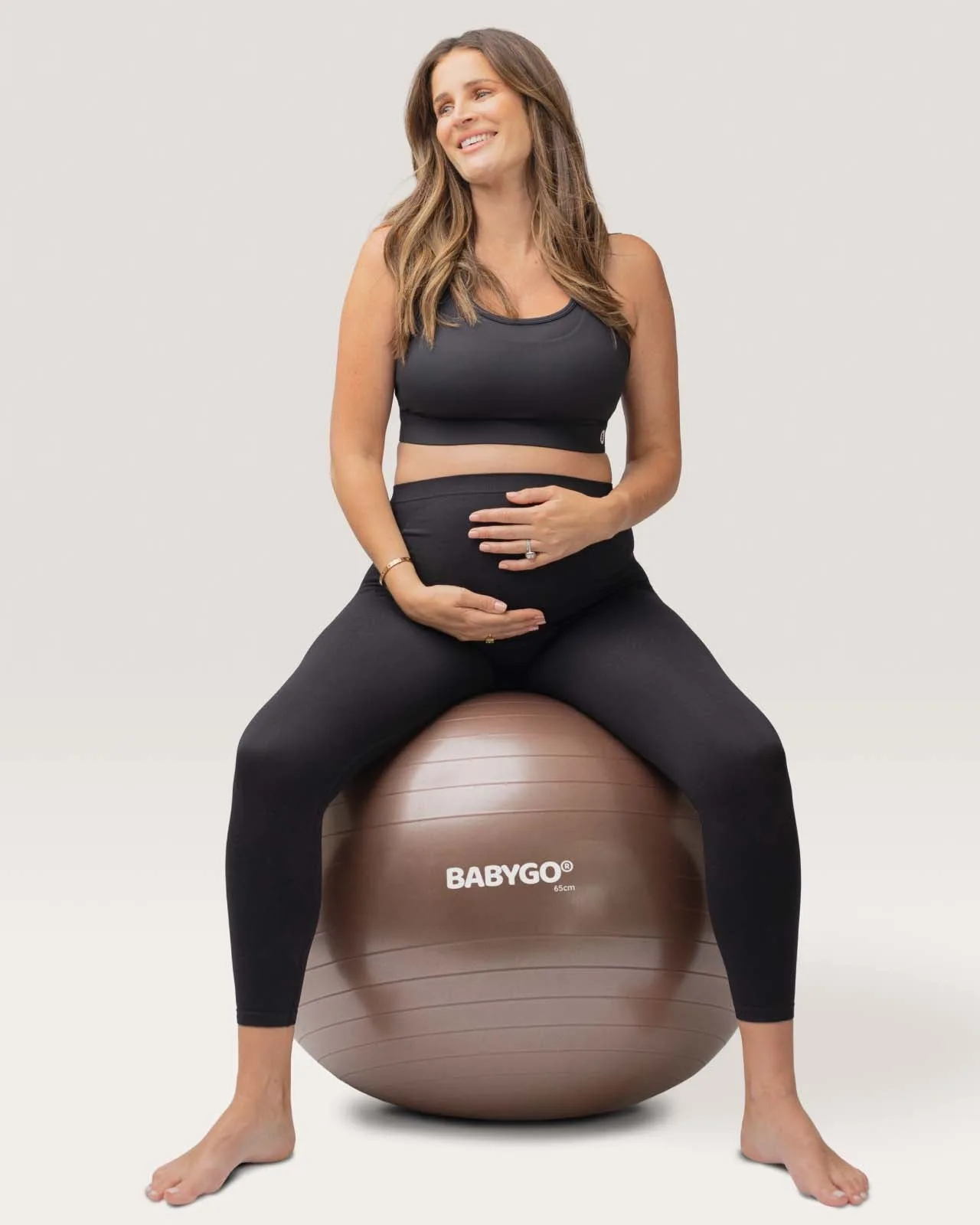
BABYGO® Birthing Ball
-
BABYGO® Birthing Ball: Your ball comes with our dedicated 100 page BABYGO® Pregnancy Book, guiding you through each trimester. The included guide provides trimester-specific exercises and labor positioning tips, so you don't have to guess what's safe at each stage.