Why the Bunka Knife Excels at Chopping and Slicing
The Misen 6" Bunka Knife (ACUTO440) is a Japanese-style chef’s knife with a distinctive paring tip. Its compact 6-inch blade makes it ideal for precise, everyday food preparation, especially when you need both chopping and slicing in the same task. The bunka shape combines a flat cutting edge for efficient chopping with a pointed tip for detailed cuts, giving you a versatile tool that handles vegetables, fruits, and boneless proteins with ease.
Key Features of the Misen 6" Bunka Knife
-
6" Bunka Knife (ACUTO440: Japanese-style bunka shape with a paring tip for detailed cutting tasks. The paring tip allows you to pivot from rough chopping to fine slicing or trimming without switching knives.
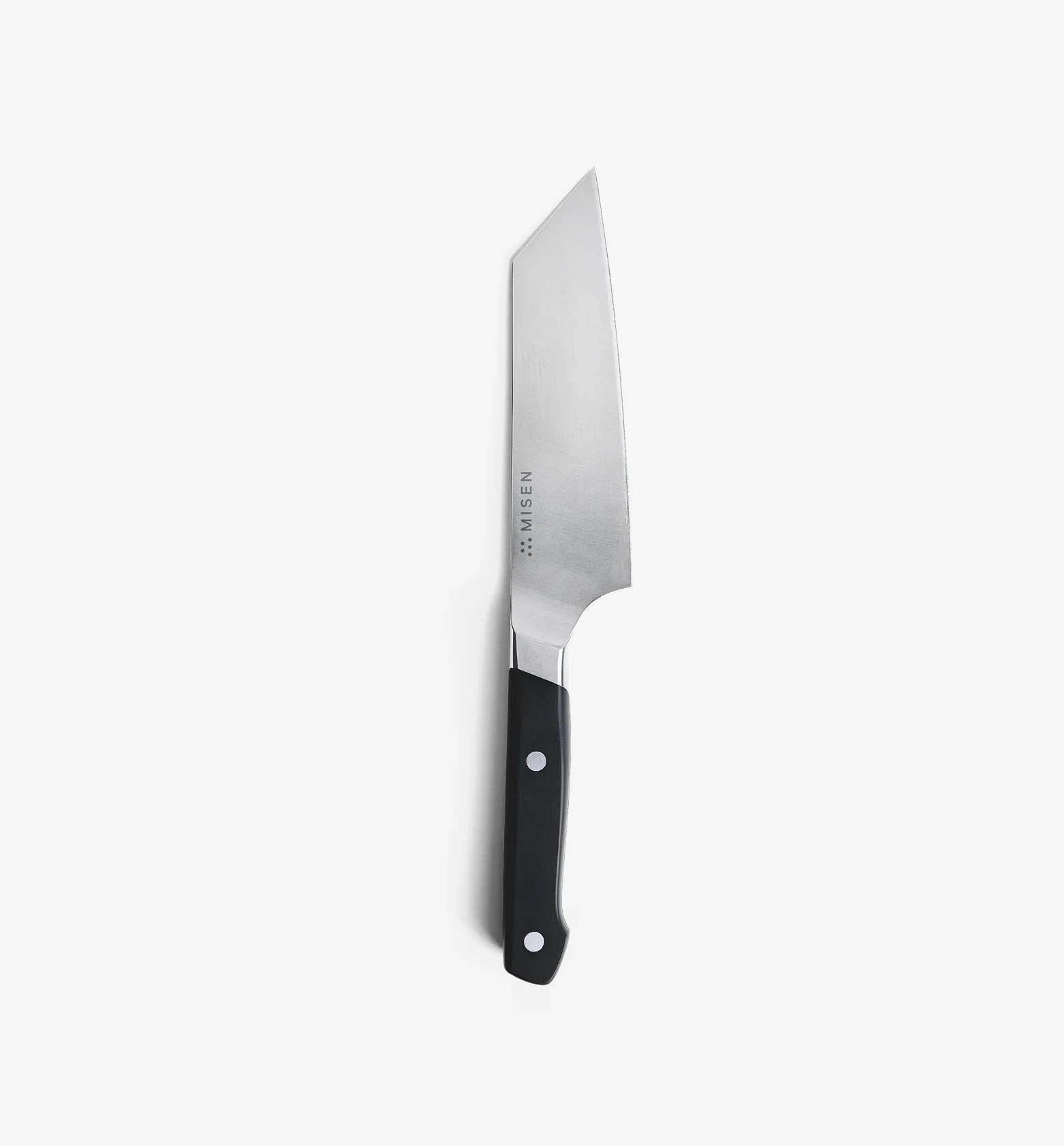
6" Bunka Knife (ACUTO440
-
6" Bunka Knife (ACUTO440: Compact 6-inch blade length, ideal for precise, everyday food preparation. A shorter blade gives you more control and maneuverability, especially on smaller cutting boards or when working with delicate ingredients.
-
6" Bunka Knife (ACUTO440: Available in Black, Blue, Red, or White. Color options let you personalize your knife or coordinate with your kitchen aesthetic.
How to Chop with a Bunka Knife
Chopping with the Misen Bunka Knife feels natural thanks to its flat blade profile. Use a rocking motion: keep the tip on the cutting board and lift the heel of the blade, then press down through the ingredient. The 6-inch length is especially good for chopping herbs, garlic, onions, and bell peppers. Because the blade is shorter than a standard chef’s knife, you’ll find it easier to control the depth of each cut, reducing the risk of over-chopping.
For larger vegetables like carrots or zucchini, use a push-cut: slide the blade forward and slightly downward in one smooth motion. The bunka’s flat edge makes clean contact with the board, so slices come out even. Always use a stable cutting board and keep your fingertips curled under your knuckles for safety.
How to Slice with a Bunka Knife
Slicing benefits from the bunka’s paring tip. For tomatoes, hold the knife at a slight angle and draw the blade from heel to tip in a single, gentle stroke. The pointed tip lets you start the cut precisely at the skin, reducing crushing. For boneless proteins like chicken breast or fish fillets, use a long, smooth slicing motion without sawing. The compact blade gives you excellent control for thin, even slices.
The bunka also works well for slicing fruit like apples or melons. The paring tip helps you navigate around cores or seeds, and the flat edge produces clean slices. For best results, keep the blade sharp—a dull knife requires more force and increases the chance of slipping.
Tips for Getting the Most Out of Your Bunka Knife
The Misen Bunka Knife is part of the ACUTO series, designed for performance and durability. To maintain its edge, hand wash and dry immediately after use—dishwashers can dull the blade and damage the handle. Store it in a knife block, magnetic strip, or blade guard to protect the edge.
Because the bunka has a paring tip, it can also handle tasks like deveining shrimp, trimming fat, or making decorative cuts. Its versatility makes it a great everyday knife for home cooks who want precision without a larger blade.