Start with the right jobs for a CoffeeCloud cloth
A coffee-themed dishcloth earns its place in the kitchen because coffee is a daily mess: drips under the mug, rings on the counter, splashes on the stovetop. The CoffeeCloud design is printed on the same Swedish dishcloth base as the rest of the line, so the routine below applies whether you keep it by the coffee maker or use it for general wiping.
The supplied product record describes the cloth as absorbing 20 times its own weight in liquid and replacing up to 17 rolls of paper towels. Those are the two numbers to keep in mind when you decide which jobs to hand it and when to reach for something else.
What the CoffeeCloud cloth is working with
-
Swedish Dishcloth One Swedish CoffeeCloud Design: Each cloth can absorb 20 times its own weight in liquid. That is the reason a small cloth can handle a full mug spill before you need a second one.
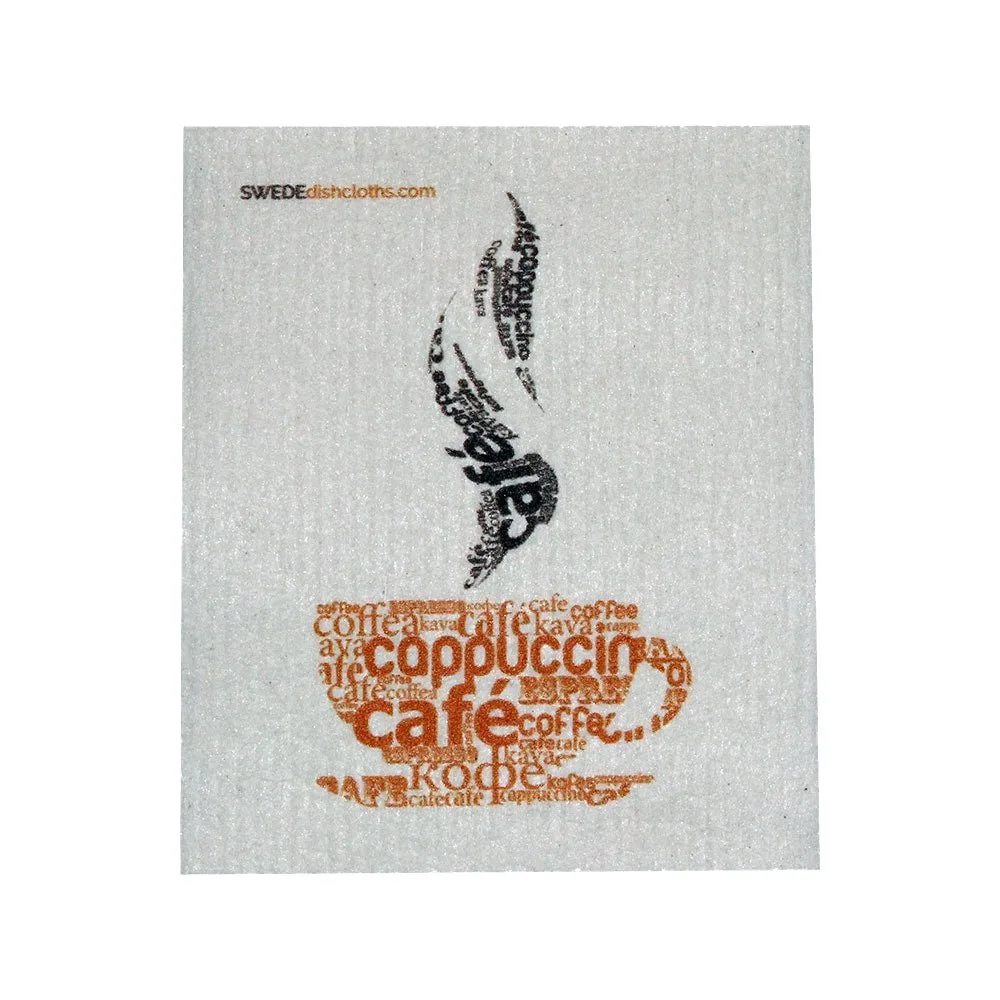
Swedish Dishcloth One Swedish CoffeeCloud Design
-
Swedish Dishcloth One Swedish CoffeeCloud Design: One cloth can replace up to 17 rolls of paper towels. This sets a realistic expectation for how often you reach for the cloth instead of tearing off a sheet.
-
Swedish Dishcloth One Swedish CoffeeCloud Design: The cloth measures 180x200mm. That size fits comfortably in one hand for counter wiping and folds into a pad for blotting spills.
A daily coffee-corner routine
Keep the cloth dry or only slightly damp between uses. A dry cloth is easier to control on a spill, and a damp one is better for smears and fingerprints.
- Blot the spill first: Press the cloth flat over the spill and let it draw the liquid in. The supplied record says the cloth absorbs 20 times its own weight, so a single press usually does more than a quick swipe.
- Wipe the counter edge to edge: After the bulk of the liquid is up, use the cloth to wipe the counter, the coffee maker base, and the surrounding area. The 180x200mm size covers a useful strip with each pass.
- Rinse and wring before the next job: Rinse the cloth under running water and wring it out. The record does not specify a wringing method, so use gentle pressure and avoid twisting hard against the fibers.
- Hang it to dry: The supplied information does not include a specific drying instruction, so the safe habit is to spread the cloth out or hang it where air can reach both sides rather than leaving it bunched on the counter.
Where the coffee design helps and where it does not
A printed coffee design is mostly a visual cue: it marks the cloth as the one for the coffee station, so it does not drift into bathroom duty or get mixed up with a cloth used for raw meat juices. That separation is a practical habit, not a product claim.
The cloth is not a substitute for a dedicated scrubber on burnt-on food, and the supplied record does not describe abrasive properties. Use it for wet spills, smudgy windows, wet dishes, and messy counters, which are the jobs the product record names.
Washing and reusing the cloth
The product record supports machine washing in your clothes or dishwasher up to 200 times. That is the lifespan figure to plan around.
- Wash with your regular load: The supplied care evidence says the cloth can go in your clothes or dishwasher, so there is no need for a separate wash cycle.
- Expect up to 200 washes: That figure comes from the product record and is the clearest guide to when the cloth is nearing the end of its useful life.
- Keep a second cloth on hand: Because the cloth goes into the wash with other laundry, a spare means the coffee corner stays covered while the first one is cleaning.
What happens at the end of the cloth's life
The record says the cloth is easily compostable and can be recycled with old newspapers where composting is not an option. It also says the designs are printed with non-toxic, water-based ink, which is relevant if you compost the cloth at home.
The material is described as a combination of wood pulp cellulose from sustainable forests and renewable cotton fibers. That composition is why the cloth behaves like a dense, absorbent sponge rather than a woven towel.
CoffeeCloud design facts for the kitchen
- Swedish Dishcloth One Swedish CoffeeCloud Design: The cloth is made from wood pulp cellulose and cotton fibers. This is the material behind the sponge-like absorbency, and it explains why the cloth stiffens when dry and softens when wet.
- Swedish Dishcloth One Swedish CoffeeCloud Design: The design is printed with non-toxic, water-based ink. Useful to know if the cloth will be composted or handled often around food prep areas.
- Swedish Dishcloth One Swedish CoffeeCloud Design: The cloth is machine washable and reusable. This is the basis for the kitchen routine: one cloth cycles through spills, washing, and back to the counter.