Why a click-pen concealer works differently
A concealer pen is a liquid formula in a click-dispensing tube, usually with a built-in applicator tip. That design gives you targeted placement and controlled amounts, which is why it suits both under-eye brightening and spot coverage. The Neutrogena Healthy Skin Glow Perfector Concealer Pen in Light is one example: it acts as both a lightweight liquid concealer and a shimmer-free highlighter pen, and the click mechanism dispenses the right amount for targeted application. That matters because under-eyes and blemishes need different amounts of product and different blending pressure.
A supported application sequence
- Click once to dispense: The pen dispenses product with one click. Start with a single click and add more only if needed. A little goes a long way with liquid formulas, and over-clicking is the fastest route to cakiness.
- Place product precisely: Use the applicator tip to dot product where you actually see dullness or discoloration. For under-eyes, that means the inner corner and any shadowed areas; for blemishes, place a small dot directly on the spot rather than sweeping across the whole area.
- Blend with a light touch: Tap or press the product in with a fingertip or a small brush. The formula is described as lightweight and designed to create a radiant, flawless complexion without caking or heaviness, so aggressive buffing works against you. Pressing keeps coverage where you placed it.
- Build only where needed: If a blemish still shows, add another small click and repeat. Layering thin amounts gives more control than one heavy application, especially around the eyes where product tends to settle.
What the formula brings to the application
-
Neutrogena Healthy Skin Glow Perfector Concealer Pen, Lightweight Liquid Makeup for Face with Pro-Vitamin B5 & Vitamin E for a Radiant Finish, Light, 0.1 oz: Infused with Pro-Vitamin B5 (panthenol) and Vitamin E, this brightening concealer helps smooth and condition skin while adding a fresh, natural-looking glow. These are the two ingredients the brand highlights for conditioning and glow, which supports using the pen as a brightening step rather than a heavy coverage product.
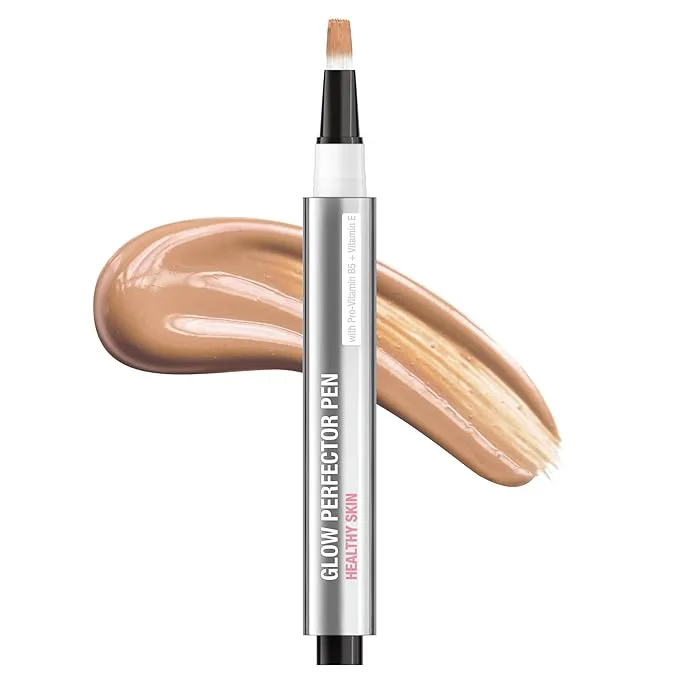
Neutrogena Healthy Skin Glow Perfector Concealer Pen, Lightweight Liquid Makeup for Face with Pro-Vitamin B5 & Vitamin E for a Radiant Finish, Light, 0.1 oz
-
Neutrogena Healthy Skin Glow Perfector Concealer Pen, Lightweight Liquid Makeup for Face with Pro-Vitamin B5 & Vitamin E for a Radiant Finish, Light, 0.1 oz: This multitasking makeup pen acts as both a lightweight liquid concealer and shimmer-free makeup highlighter pen. Shimmer-free matters for under-eyes and blemishes: it keeps the finish radiant without drawing attention to texture or spots.
-
Neutrogena Healthy Skin Glow Perfector Concealer Pen, Lightweight Liquid Makeup for Face with Pro-Vitamin B5 & Vitamin E for a Radiant Finish, Light, 0.1 oz: Available in Light, 0.1 oz. The shade is called Light, so check it against your skin tone before buying. The 0.1 oz size is typical for a pen format and suits targeted use.
Under-eyes vs. blemishes: two different jobs
- Under-eyes: brighten, don't mask: The pen is described as a brightening liquid makeup for covering dullness around the eyes. Use it to lift shadowed areas, not to paint a thick stripe. Because the formula is shimmer-free, it adds light without glitter, which keeps the under-eye area looking natural.
- Blemishes: spot-place, then press: For blemishes, the goal is coverage that stays put. Dot directly on the spot with the applicator, then press the product in with a fingertip. Avoid sweeping motions that can move product off the blemish and onto surrounding skin.
- Cheeks and high points: a quick refresh: The pen is also described for highlighting cheeks and refreshing tired skin. A small click tapped along the top of the cheekbone gives a subtle glow without a separate highlighter.
Concealer pen vs. liquid concealer in a tube
Both formats use liquid formulas, but the pen changes how you dispense and place product. This comparison is about the format, not a claim that one is universally better.
- Control: A click pen dispenses a measured amount per click and lets you place product directly from the applicator. A squeeze tube or doe-foot wand gives you a reservoir you dip into, which can pick up more product than you need.
- Precision: The pen tip is built for targeted application, which suits spot coverage and under-eye placement. A larger applicator is faster for broad areas but less precise on small blemishes.
- Product waste: With a click pen, you dispense only what you click. That can mean less waste, but it also means you need to click more if you want full-face coverage. The 0.1 oz size reflects that targeted use case.
- Finish: Finish depends on the formula, not the package. The Neutrogena pen is described as shimmer-free and radiant, so it suits a natural glow. If you want a matte finish, this specific product is not described that way.
Application tips that prevent cakiness
- Start with one click: The pen dispenses with one click, so begin there. Adding more is easy; removing excess is not.
- Don't over-blend: The formula is designed to avoid caking and heaviness. Over-blending can thin coverage and make you add more product, which is the opposite of what you want.
- Layer thin, not thick: For blemishes, two thin layers look more natural than one heavy dot. Let the first layer settle before adding the second.
- Keep it to targeted areas: This is a pen for dullness, under-eyes, cheeks, and spots. If you need full-face coverage, a liquid foundation is the better tool; the pen is not described as a foundation.
What the supplied information doesn't cover
The supplied product record does not include skin-type suitability, patch-test results, or a recommended usage frequency. It also does not list a full ingredient panel beyond Pro-Vitamin B5 and Vitamin E. If you have sensitive skin or known allergies, check the full ingredient list on the packaging before use. The absence of that information here is not a claim that the product lacks it; it simply means those details are not confirmed by the supplied evidence.