When Nipple Shields Can Help with Latching
Breastfeeding latch difficulties can stem from several causes: flat or inverted nipples, tongue tie, lip tie, overactive let-down, or nursing a premature, small, or ill infant. Lansinoh Contact Nipple Shields are designed as a short-term tool to address these issues, helping your baby latch more effectively until the underlying problem is resolved.
These shields are ultra-thin, super soft, flexible, and made from 100% silicone. They come in a pack of two with a protective case for hygienic storage. The special cut-out design maximizes skin-to-skin contact, which is important for milk transfer and bonding.
Step-by-Step: How to Use Contact Nipple Shields
Follow these steps to apply and use Lansinoh Contact Nipple Shields. Always consult a breastfeeding professional before and during use.
- Choose the right size: The shields are available in 20mm or 24mm sizes. Select the size that fits your nipple comfortably without pinching or slipping. If unsure, your healthcare provider can help measure.
- Wash and prepare: Wash the shields with warm, soapy water before first use and after each feeding. Rinse thoroughly and air dry. Store them in the protective case when not in use.
- Position the shield: Center the shield over your nipple, pressing the edges gently against your breast to create a seal. The nipple should be drawn into the shield's tip. Ensure the cut-out area aligns with your baby's nose for maximum skin contact.
- Latch your baby: Bring your baby to the breast with the shield in place. Their mouth should cover the shield's tip and part of the areola. If the latch feels shallow or painful, reposition and try again.
- Monitor and adjust: Watch for effective milk transfer (swallowing sounds, rhythmic sucking). If the shield slips or your baby loses suction, remove and reapply. Use the shield only until the latch issue is resolved.
Product Facts: Lansinoh Contact Nipple Shields Pack of 2
-
Contact Nipple Shields Pack of 2: Ultra-thin, super soft, flexible, and 100% silicone. Available in 20mm or 24mm sizes. Comes with a protective case. The thin silicone allows for natural nipple movement and skin contact, while the sizing options help you find a comfortable fit for your anatomy.
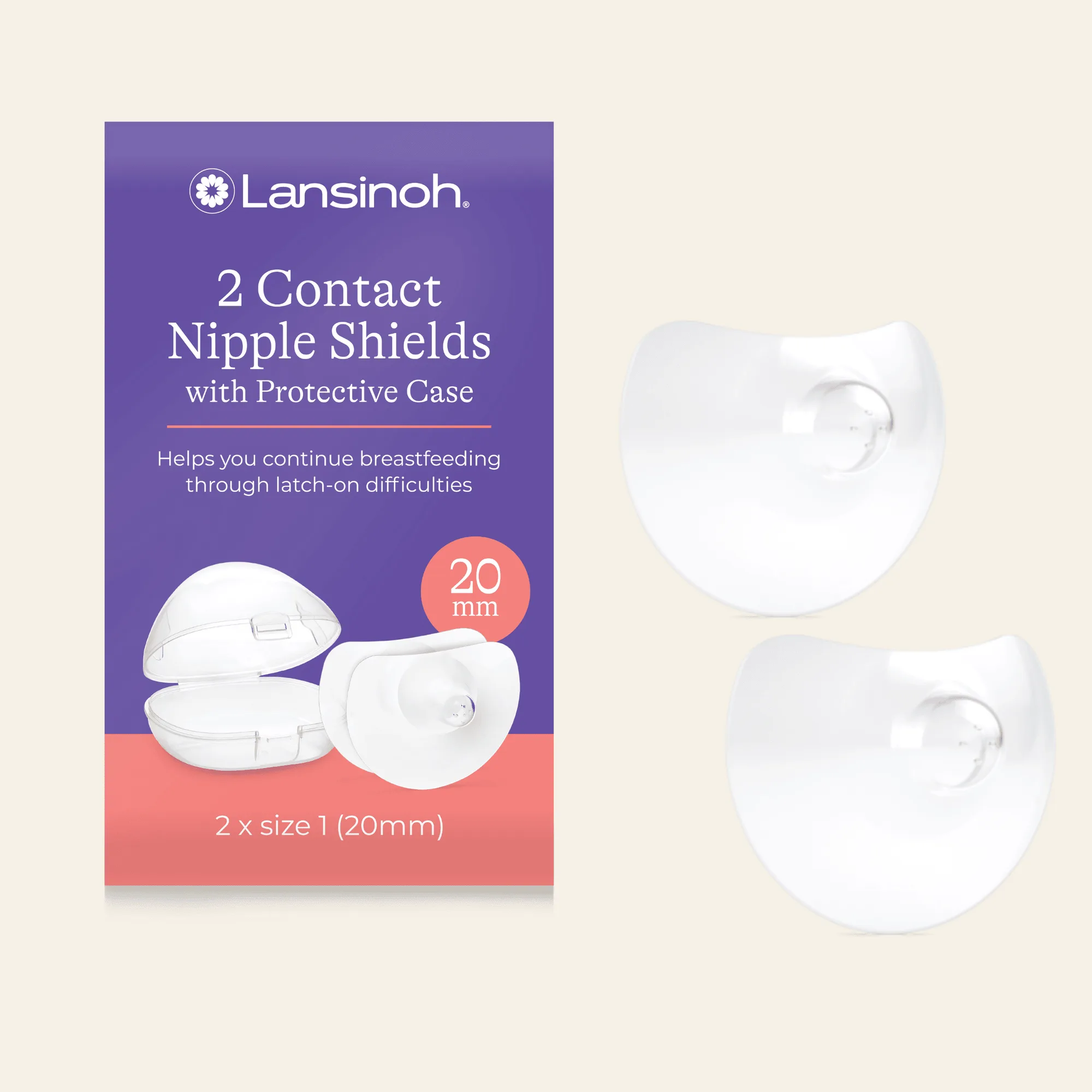
Contact Nipple Shields Pack of 2
-
Contact Nipple Shields Pack of 2: Designed for short-term latch-on issues related to premature, small, or ill infants, flat or inverted nipples, tongue tie, lip tie, or overactive let-down. This confirms the shields are a temporary aid, not a permanent solution. They help bridge a difficult period while you work with a lactation consultant.
-
Contact Nipple Shields Pack of 2: All nipple shields should be used under the advisement of a breastfeeding professional. Professional guidance ensures you use the correct size and technique, and helps you transition away from shields once the latch improves.
Sizing and Fit Tips
The right size is crucial for comfort and effectiveness. The 20mm size is generally suitable for smaller nipples, while 24mm fits average to larger nipples. A shield that is too tight can cause pain or restrict milk flow; one that is too loose may slip off during feeding. If you are between sizes, try both to see which provides the best seal and comfort.
The protective case keeps the shields clean between uses, especially when you are out and about. Always check the shield for any tears or damage before each use.
When to Seek Professional Help
Nipple shields are a short-term tool. If you are still relying on them after several weeks, or if you experience ongoing pain, low milk supply, or poor weight gain in your baby, consult a lactation consultant or healthcare provider. They can assess the root cause and help you transition to direct breastfeeding if appropriate.
Remember: the goal is to resolve the underlying latch issue, not to use shields indefinitely. With professional support, many mothers successfully wean off shields within a few weeks.