Quick answer
Cork coasters do protect wood tables from everyday condensation and light heat, but they are not a waterproof barrier. Use them dry, lift them after each use, and never place a soaking-wet glass or a hot pan directly on cork. If water still reaches the wood, dry the area immediately and let it breathe.
You bought cork coasters to protect your wood table, but a few weeks later you notice a faint ring or a dark spot where a glass sat. Cork is naturally water-resistant and slightly cushioned, yet it is not a sealed plastic mat. Most coaster-related damage comes from how the coaster is used, not from the material itself.
This guide separates the symptom you see from the likely cause and the corrective action. It also tells you when cork is the right choice and when you should switch to a different coaster for a particular drink or piece of furniture.
What cork coasters actually do for wood tables
Cork is the bark of the cork oak, and its cellular structure traps air, which makes it a poor conductor of heat and a decent barrier against minor condensation. A dry cork coaster slows the transfer of cold from a glass to the wood, so the table surface stays closer to room temperature. That reduces the chance of a temporary white ring caused by trapped moisture in the finish.
What cork does not do is create an airtight seal. If a glass sweats heavily, water can sit on the coaster surface or wick toward the edge. On an unsealed or worn wood finish, that moisture can enter the grain and leave a dark stain. Cork also has a textured surface, so fine grit can get pressed into it and later scratch a polished table if the coaster is slid around.
- Use cork coasters on finished, sealed wood for everyday drinks.
- Avoid leaving a wet coaster in one spot for hours.
- Wipe both the coaster and the table dry after guests leave.
Why you still see water rings or dark spots
A white ring usually means moisture is trapped in the surface finish, not in the wood itself. It often appears when a cold glass sits long enough for condensation to pool on the coaster and touch the table at the edge. The fix is to dry the area and let it air out; many white rings fade on their own within a day or two. Do not rub hard or use heat, which can cloud the finish permanently.
A dark ring or black spot is more serious. That usually means water has penetrated the finish and reached the wood, or that a wet coaster has been left in place long enough for mold or tannin staining to start. If the spot is dark and does not lighten after drying, the finish may already be compromised. In that case, stop using that coaster on that table and have the surface assessed by a furniture restorer.
- White ring: dry it, wait, and avoid heat or abrasive rubbing.
- Dark ring: stop using the coaster there and check the finish.
- Recurring rings: your table finish may need resealing.
How to use cork coasters correctly
Start with a dry coaster and a dry table. If a glass is already sweating, wipe the outside of the glass before you set it down. Choose a coaster wide enough that the entire base of the glass sits on cork, not hanging over the edge. For a pitcher or a bottle, use a tray rather than a single coaster so condensation is contained in one area.
After each use, lift the coaster and check underneath. If it feels damp, set it aside to air dry before putting it back. Rotate coasters between uses so one spot on the table is not repeatedly exposed to moisture. On a wood table, avoid stacking a hot mug directly on a cold coaster or vice versa, because sudden temperature changes can stress the finish.
- Match coaster size to glass base.
- Use a tray for bottles and pitchers.
- Let damp coasters dry fully before reuse.
Cork coaster care that prevents table damage
Cork coaster care is mostly about keeping the material dry and free of grit. Wipe cork with a barely damp cloth and mild soap, then dry it immediately with a towel. Do not soak cork in water or put it in a dishwasher, because excess moisture can warp the shape and weaken the binder. For printed cork, avoid scrubbing the surface, which can dull the design.
Store coasters flat or in a holder where air can reach them. If you stack damp coasters, the moisture has nowhere to go and can transfer to the next coaster or to the table. Once a month, check the edges of your table for dull spots or a rough feel; that can be an early sign that the finish is wearing and needs a fresh coat of sealant.
- Wipe, do not soak.
- Air-dry before stacking.
- Check table finish monthly for wear.
When cork is not the right coaster
Cork is a good everyday choice for finished wood, but it is not the best option for every situation. If you regularly serve very cold drinks in a humid room, a coaster with a raised lip or a non-porous material may contain condensation better. If you set down hot cast-iron pans or dripping bottles, use a trivet or a tray instead of a coaster.
For an antique or unsealed wood table, treat any coaster as a temporary barrier, not a permanent protection. In that case, a felt-backed or silicone coaster with a waterproof top may be safer. Cork still works well on sealed surfaces, painted furniture, and outdoor tables that are already weather-resistant.
- Use a trivet for hot cookware.
- Use a tray for bottles and pitchers.
- On unsealed wood, choose a waterproof-backed coaster.
Diagnosis: match the symptom to the cause
- White ring that fades: Moisture is trapped in the surface finish, usually from a cold glass sitting too long on a damp coaster. Dry the area, let it air out, and avoid heat or abrasive rubbing. If it fades, your finish is probably intact.
- Dark ring or black spot: Water has reached the wood or a wet coaster has been left in place long enough to stain or grow mold. Stop using that coaster on that table and have the finish checked. Do not sand or refinish without advice.
- Fine scratches near the coaster: Grit trapped in the cork texture is being dragged across the table when the coaster is slid. Shake or wipe coasters before use and lift rather than slide them. If scratches are deep, the table needs professional attention.
- Coaster feels damp underneath: Condensation has passed through the cork or the coaster was put away wet. Air-dry the coaster fully and rotate it out of use. If this happens often, switch to a waterproof-backed coaster for cold drinks.
- Ring keeps coming back in the same spot: The table finish in that area is worn or unsealed, so even brief moisture leaves a mark. Treat the finish or use a different coaster type there. Cork alone is not enough on bare wood.
Cork pieces that work well with this routine
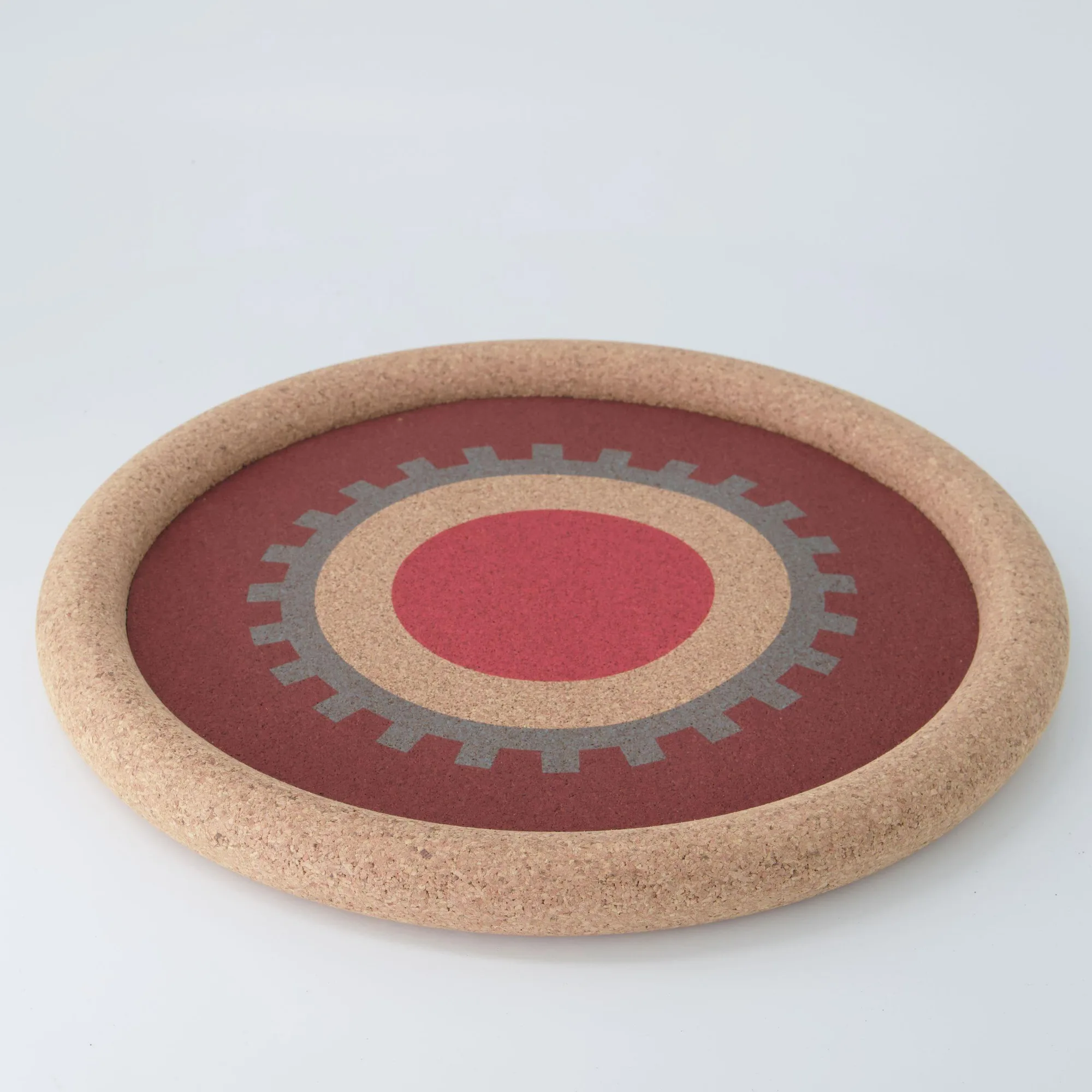
- Vita Cork Tray: Round tray with a vibrant print, handcrafted in Europe and designed by Capra Designs in Australia, available in multiple colours. A tray contains condensation from bottles, pitchers, or several glasses in one area, so you are not managing many separate coasters on a wood table.
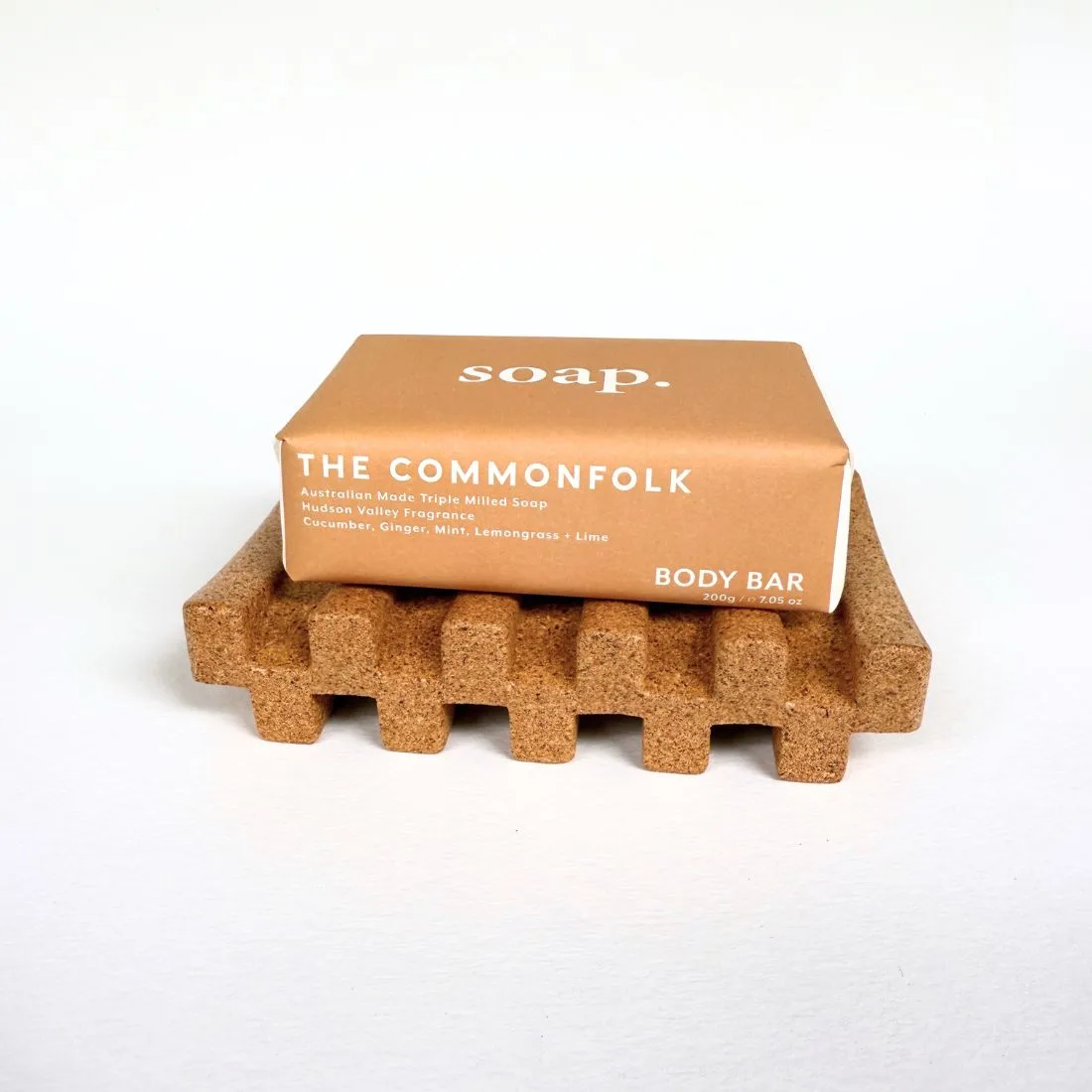
- Cork Soap Tray Set: Includes a Portuguese cork soap tray and a Commonfolk Collective body bar handmade in Australia, with body bar options. The same dry-and-air habit you use for a soap tray applies to coasters: keep cork dry between uses so it does not transfer moisture to the surface beneath it.
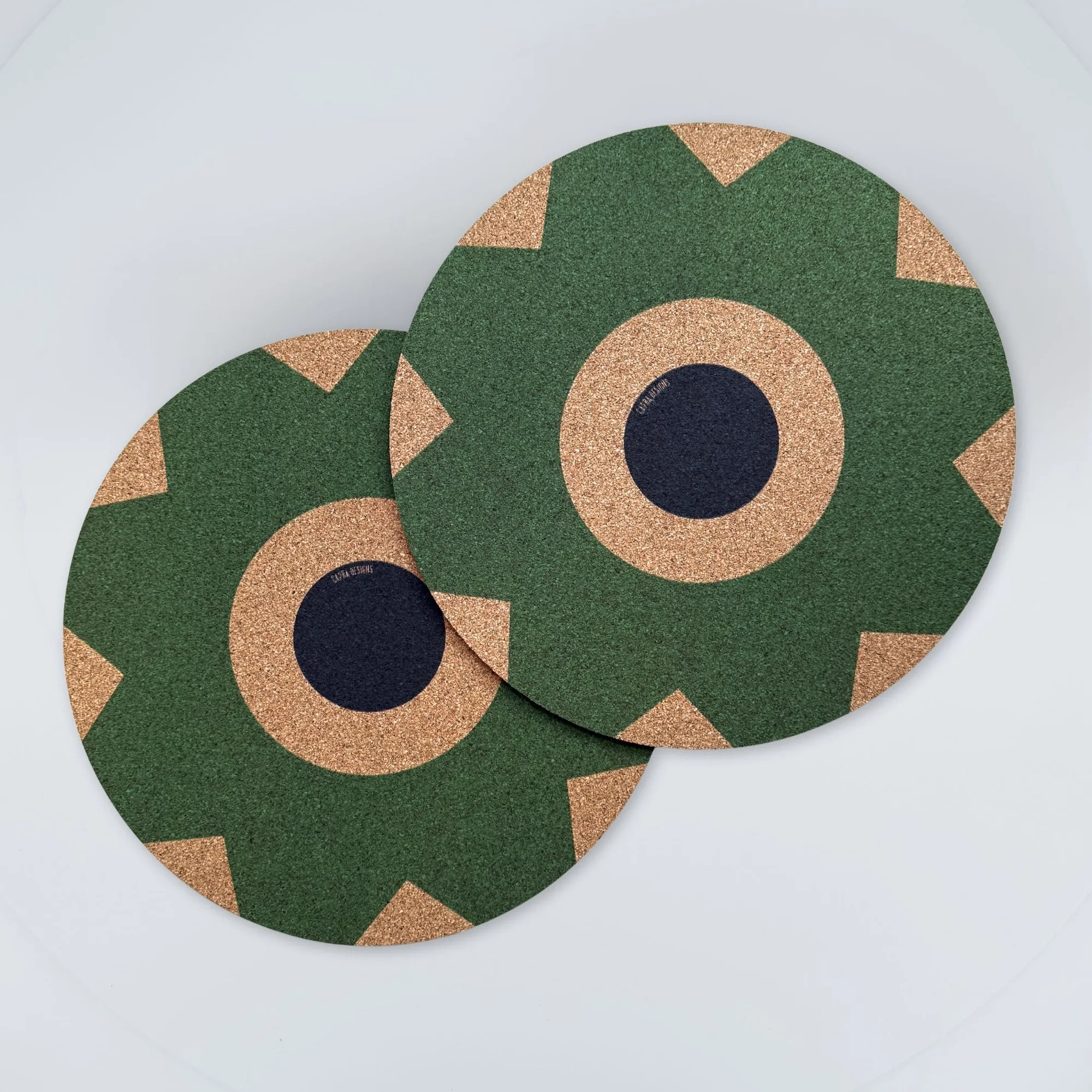
- Sol Large Cork Placemats: Set of two large round Portuguese cork placemats with a modern print, designed in Australia and available in multiple colours. For a full table setting, a placemat gives a wider cork barrier under plates and glasses, which reduces the chance of rings forming at the edge of a single coaster.
Cork coasters are a practical, low-effort way to protect a sealed wood table, as long as you keep them dry and lift them after use. Match the coaster to the drink, use a tray for bottles, and check the table finish now and then. If you see a dark stain or a worn spot, stop and address the finish before you keep using any coaster there.