Quick Answer
Use the Developmental Utensil Set in three stages—starting with Tiny Spoons for dipping at 4 months, moving to Mini Utensils for scooping and piercing at 12 months, and finishing with Happy Utensils for knife skills at 2 years—to build self-feeding skills progressively.
Why a Developmental Approach Works
The Developmental Utensil Set is designed to match your child's motor skills at each stage. Instead of handing a toddler a full-sized fork and spoon and hoping for the best, you introduce tools that are sized and shaped for their current abilities. This reduces frustration for both of you and builds confidence with each milestone.
Each stage builds on the previous one. Dipping helps your baby learn to grip and coordinate hand-to-mouth movements. Scooping and piercing refine those skills and add accuracy. Knife skills, like spreading and cutting, require more advanced hand strength and coordination, so they are saved for last.
Common Trade-Offs to Keep in Mind
The set covers a wide age range, which is great for value, but it means you'll have multiple pieces to store. If you're short on drawer space, you might prefer to buy only the stage you need now.
Because the utensils are designed for little hands, they are smaller than typical toddler cutlery. Some older preschoolers may find them too small and prefer full-size utensils. Watch your child's comfort and switch when they seem ready.
Step-by-Step Guide to Using the Developmental Utensil Set
- Start with Tiny Spoons for Dipping: From 4 months, offer the Tiny Spoon to your baby during meals. Let them hold it and dip it into purees or soft foods. This builds the grip and hand-to-mouth coordination needed for self-feeding. Checkpoint: Let your baby explore the spoon even if they make a mess; that's part of learning.
- Introduce Mini Utensils for Scooping and Piercing: At around 12 months, swap to the Mini Utensils. Show your child how to scoop soft foods and pierce bite-sized pieces. Practice with foods that stick to the spoon or are easy to spear, like mashed avocado or soft fruit. Checkpoint: Avoid foods that are too slippery or crumbly at first; they are harder to pick up and can cause frustration.
- Add Happy Utensils for Knife Skills: From 2 years, introduce the Happy Utensils. Start with spreading soft spreads like butter or hummus on toast. Then move to cutting soft foods like banana or cooked vegetables. Show your child how to hold the knife and use a sawing motion. Checkpoint: Always supervise knife use, and ensure the food is soft enough for a child to cut safely.
Product Facts
-
Developmental Utensil Set: The Developmental Utensil Set includes Tiny Spoons for dipping (4 months+), Mini Utensils for scooping and piercing (12 months+), and Happy Utensils for knife skills (2 years+). This staged system means you can introduce the right tool at the right age, supporting your child's motor development without overwhelming them.
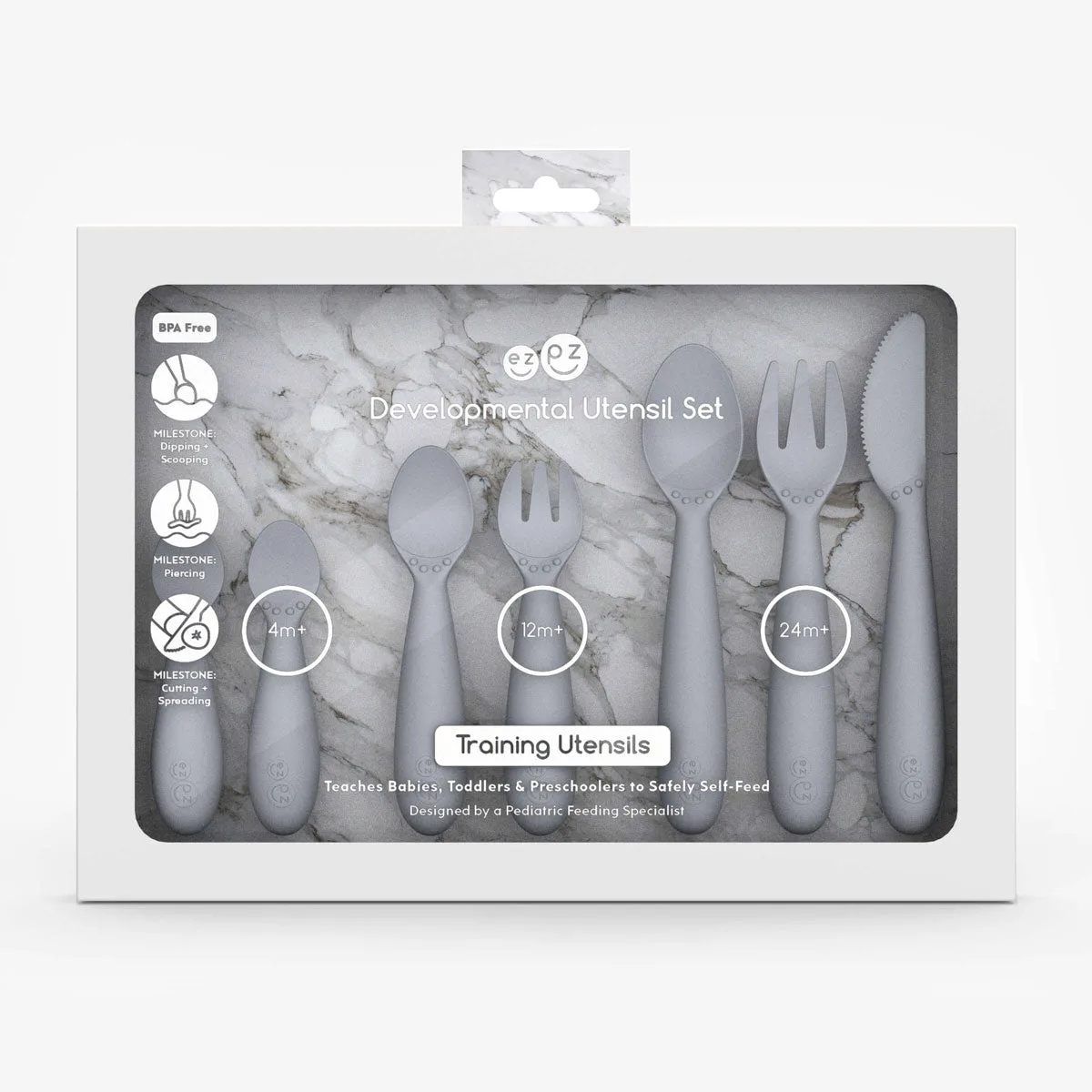
Developmental Utensil Set