Quick answer
Use dinosaur fossil play dough moulds to teach science concepts like extinction and paleontology while building fine motor skills through hands-on sensory play.
Why play dough moulds work for learning
Young children learn best when they can touch, press, and shape materials. Dinosaur fossil moulds turn abstract ideas like fossils and dinosaurs into something they can hold and explore. The pressing motion strengthens hand muscles needed for writing later on.
The Dinosaur Fossil Play Dough Mould Set includes four detailed moulds featuring a T-Rex and Brachiosaurus. This gives you specific shapes to talk about while your child plays, making each session a mini science lesson without a textbook.
What to watch for
Some children get frustrated if the play dough sticks inside the mould. A light dusting of flour on the dough surface before pressing helps release the fossil cleanly. Also, young kids may try to eat the dough — supervise closely and choose non-toxic, homemade or store-bought play dough labeled safe for children.
Step-by-step learning activities with fossil moulds
- Introduce the fossil concept: Show your child a finished fossil imprint and explain that real fossils are the remains of animals that lived long ago. Use simple words like "this is a dinosaur bone print." Keep it short — a 30-second explanation is enough for a preschooler.
- Press the mould together: Roll a ball of play dough, flatten it slightly, and press the dinosaur fossil mould firmly into the dough. Lift the mould straight up to reveal the fossil shape. If the dough sticks, dust the mould or dough with a little flour before pressing.
- Name and describe the dinosaur: Point to the fossil and say the dinosaur's name — for example, "This is a T-Rex fossil. T-Rex had tiny arms and huge teeth." Let your child repeat the name. Don't worry about perfect pronunciation; the goal is connecting the shape to a real creature.
- Compare multiple fossils: Make imprints with two different moulds side by side. Ask your child, "Which fossil is bigger? Which one has spikes?" This builds observation and comparison skills. Limit to two moulds at a time to avoid overwhelming a young child.
- Create a fossil dig scene: Hide the finished fossils under a thin layer of uncooked rice or sand in a shallow tray. Give your child a small brush or spoon to "excavate" each fossil, just like a real paleontologist. Use a tray with edges to contain the mess. Supervise so no rice or sand goes in the mouth.
Product used in this guide
-
Clearance ! Dinosaur Fossil, World Map, Planet Play dough Mould Set: The set includes 4 detailed dinosaur fossil moulds featuring a T-Rex and Brachiosaurus. You can name each dinosaur and talk about its features while your child presses the mould, turning play into a vocabulary-building science moment.
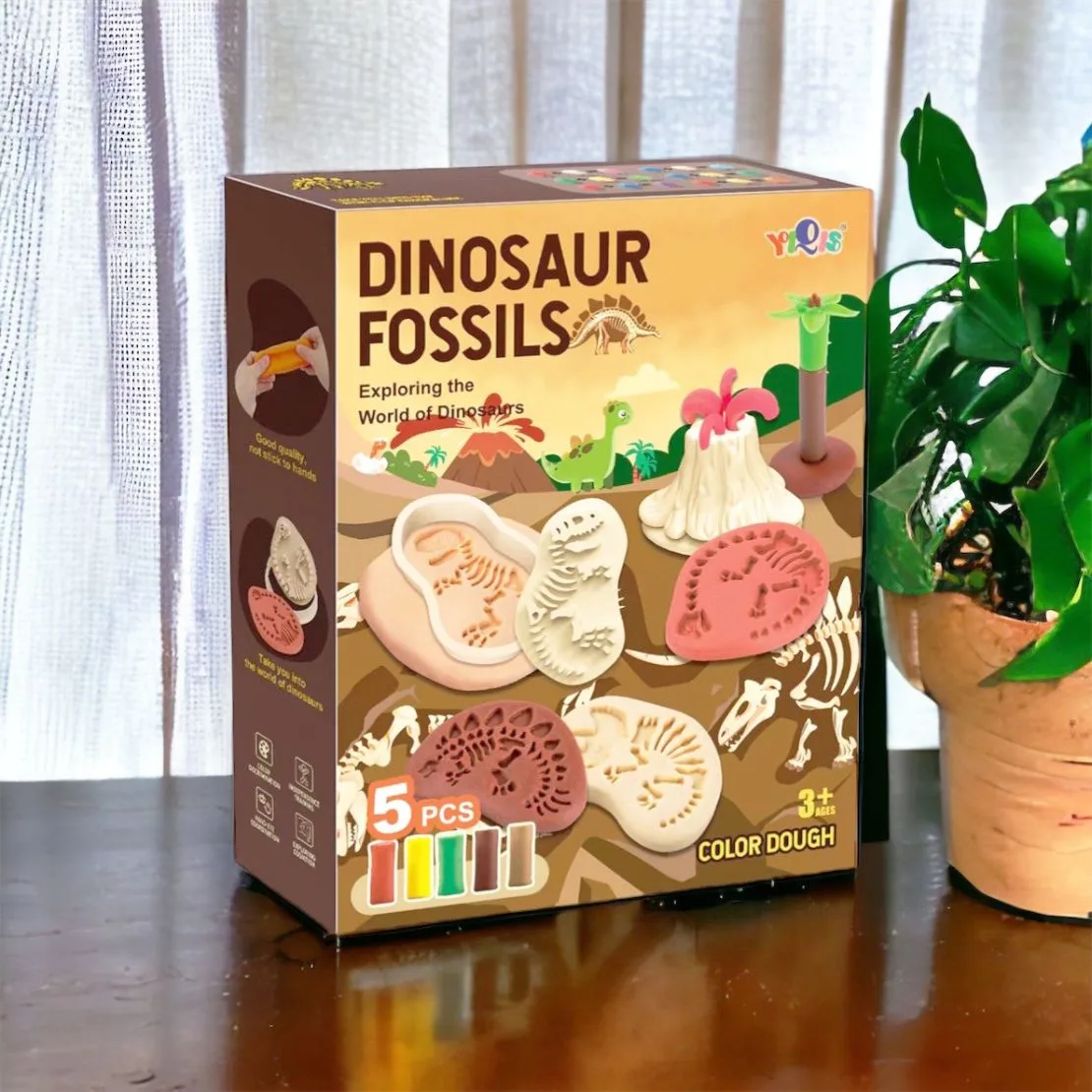
Clearance ! Dinosaur Fossil, World Map, Planet Play dough Mould Set