Start with the right pot and lid rules
A donabe earns its place on weeknights because it moves from stovetop to table without fuss. The Hario Donabe Ceramic Cooking Pot is made with Japanese-made Banko ware and a heatproof glass lid, and it is designed for stovetop use with handles that make it easy to lift. Before you cook, separate the two materials in your mind: the pot can go in the oven, but the lid cannot. The lid is also not for the microwave. These are the two heat rules that matter most, and they are easy to follow once they become habit.
The pot comes in two sizes: Small at 2,000 milliliters and Large at 3,000 milliliters. Both share the same simple black design, so choose based on how many people you usually cook for and whether you want leftovers. The smaller size suits rice and modest stews; the larger size gives more room for vegetables and braises.
What the Donabe Ceramic Cooking Pot gives you
-
Donabe Ceramic Cooking Pot: Pot is made of heatproof ceramic (Banko ware); lid is heatproof borosilicate glass with a polypropylene knob. The pot and lid are different materials with different heat limits, so treat them separately in the oven and microwave.
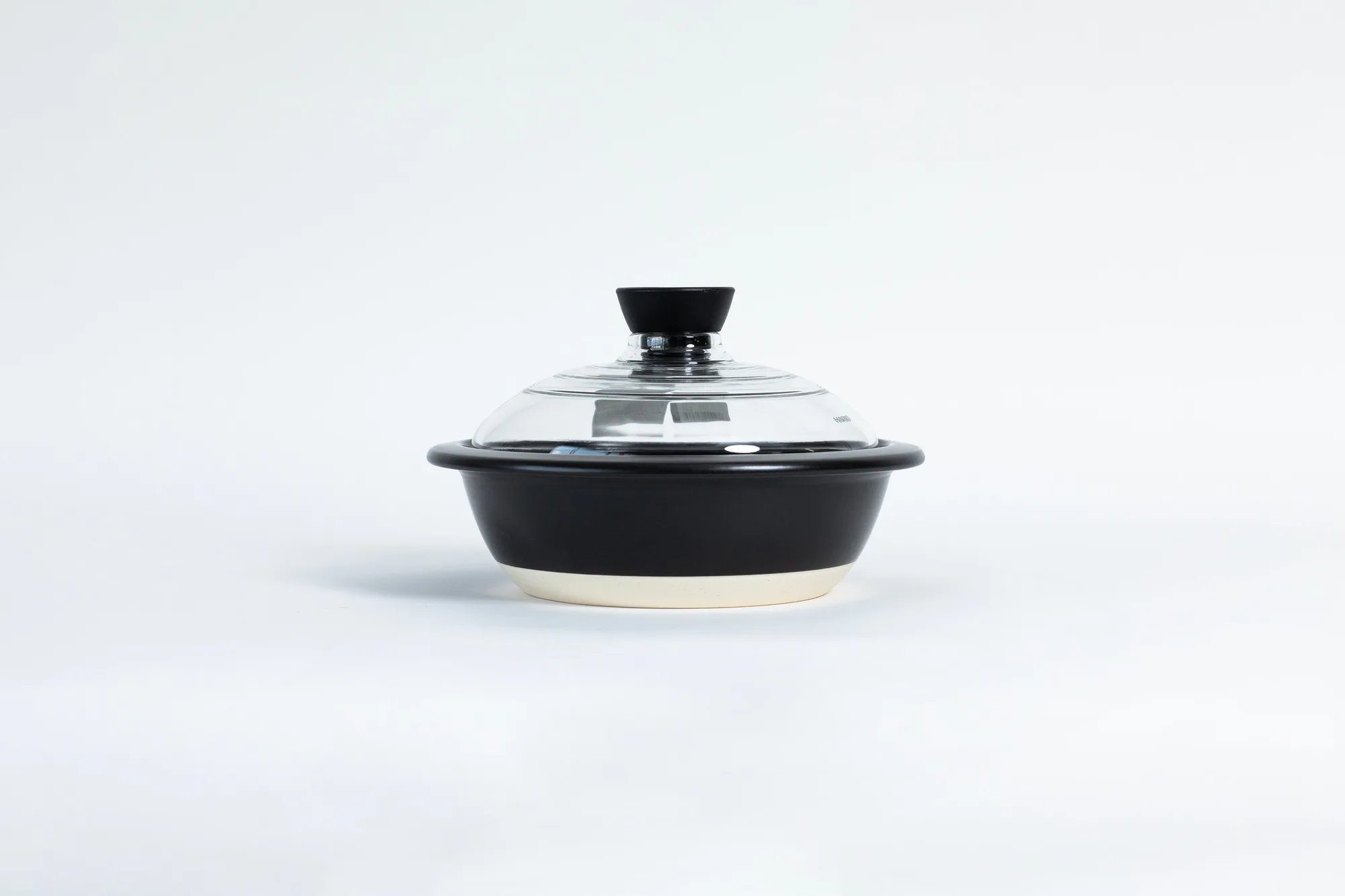
Donabe Ceramic Cooking Pot
-
Donabe Ceramic Cooking Pot: Only the pot can be used with an oven; do not put the lid in the microwave or oven. This is the clearest safety boundary for weeknight cooking and reheating.
-
Donabe Ceramic Cooking Pot: Full capacity: 2,000 milliliters (Small) or 3,000 milliliters (Large). Capacity helps you match the pot to rice, stew, and vegetable portions without guessing.
A simple weeknight workflow for rice and stews
The supplied information does not include a seasoning procedure, so do not invent one. Instead, follow the pot's intended use and the heat rules above. These steps focus on what the evidence supports: stovetop cooking, oven use for the pot only, and easy lifting with the handles.
- 1. Choose the size for the job: Use the Small (2,000 milliliters) for a weeknight rice or a small stew; use the Large (3,000 milliliters) when you want more vegetables or planned leftovers.
- 2. Cook on the stovetop: The pot is safe for stovetop use. Add your rice, stew, or vegetables and cook as you normally would, using the handles to lift the pot when needed.
- 3. Move to the oven only with the pot: If you want oven finishing, use only the pot. Leave the glass lid out of the oven. The lid is not for the microwave either.
- 4. Serve and store: The simple design suits both Japanese and Western dishes, so you can bring the pot to the table. Let leftovers cool before storing; the supplied information does not specify refrigerator or freezer use, so use your own judgment and avoid sudden temperature changes.
Care that keeps the pot and lid ready for the next meal
The glass lid and plastic parts are dishwasher safe. The pot itself is heatproof ceramic; the supplied care information does not state whether it is dishwasher safe, so hand-wash it to be safe. Avoid putting the lid in the oven or microwave at any point, including reheating.
- Lid and knob: Glass lid and plastic parts are dishwasher safe. Keep the lid out of the oven and microwave.
- Pot: The pot is heatproof ceramic. The supplied information does not confirm dishwasher safety for the pot, so wash it by hand.
- Handles: Use the handles to lift and move the pot; they are designed for easy lifting around the kitchen.
What about seasoning a donabe pot?
Many donabe recipes call for seasoning, but the supplied product information for the Hario Donabe Ceramic Cooking Pot does not include a seasoning procedure. Do not assume a seasoning step is required or skip it based on this article. If you want to season your pot, look for the product manual referenced in the catalog or contact the manufacturer for guidance. The same applies to any specific pre-use treatment: the evidence here does not supply one, so avoid inventing a method that could damage the ceramic or glass.
Small or Large: match the pot to your weeknight
Both sizes share the same materials and heat rules. The decision comes down to capacity and the size of your usual meals.
- Small (2,000 milliliters): Best for one or two people, a batch of rice, or a modest stew. Takes up less space on the stovetop and table.
- Large (3,000 milliliters): Better for families or meal prep, with more room for vegetables and braises. Still easy to lift with the handles.