Quick Answer
To teach children to name and express feelings, start by introducing a feelings chart or plush characters that represent different emotions, then use daily check-ins and storytelling to practice naming emotions in context. Slumberkins' emotional identification set, including the Creatures Full of Feelings Parenting Toolkit, provides structured activities and characters to guide this process.
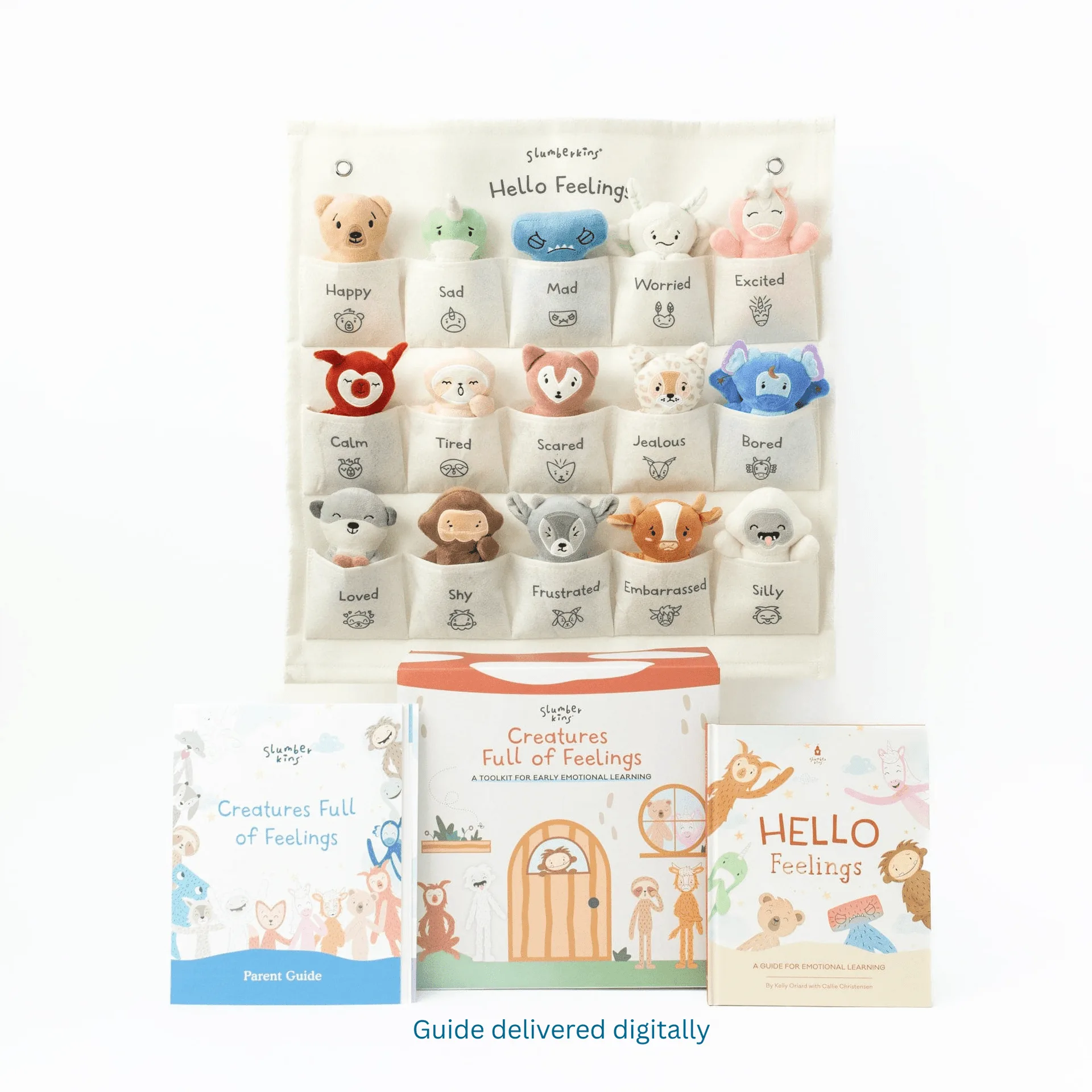
Creatures Full of Feelings Parenting Toolkit
Helping children identify and express their emotions is a foundational skill that supports mental health, social relationships, and academic success. Yet many parents and educators struggle with where to begin. The key is to make emotional learning concrete and playful, using tools that children can see, touch, and relate to.
Slumberkins offers a range of emotional learning products, from plush Kins to board books and parenting toolkits, designed to turn abstract feelings into tangible characters and stories. This guide walks you through a step-by-step process to use these tools effectively, whether at home or in a classroom.
Start with a Feelings Check-In Routine
Create a daily ritual where you and your child sit together and check in on feelings. Use a feelings chart or a set of plush characters, like the Ibex Kin (which promotes emotional courage), to represent different emotions. Ask open-ended questions like, 'What feeling is biggest for you right now?' and let your child point to or hold the character that matches.
This routine normalizes talking about feelings and gives children a safe way to express themselves without needing perfect language. Over time, they'll learn to associate specific words with bodily sensations and situations, building a strong emotional vocabulary.
- Keep the check-in brief (2-3 minutes) to maintain engagement.
- Model your own feelings to show that everyone has them.
Use Storytelling to Explore Emotions
Books are powerful tools for teaching emotions because they place feelings in a narrative context. Slumberkins' board books, like 'Narwhal Uses Teamwork Board Book' (which promotes a growth mindset), can help children see how characters handle challenges. After reading, pause to ask questions like, 'How do you think Narwhal felt when they needed help?'
For older children, the XL Hammerhead's Big Feelings Adventure Set includes a hardcover book that dives deeper into complex emotions like anger and frustration. Discussing the character's journey helps children understand that big feelings are normal and manageable.
- Choose books that match your child's current emotional challenges.
- Encourage your child to predict how a character might feel next.
Incorporate Playful Activities
Play is how children learn best. Use the Creatures Full of Feelings Parenting Toolkit, which includes activities created by therapists and educators, to engage your child in intentional playtime. These activities are designed to help children explore big feelings like mad, sad, and happy through games and creative projects.
For example, you might create a 'feelings collage' using magazine cutouts or draw faces showing different emotions. The toolkit provides structured guidance, but you can also adapt activities to your child's interests.
- Let your child lead the play; your role is to facilitate and name emotions as they arise.
- Celebrate effort, not just correct identification.
5 Steps to Teach Children to Name and Express Feelings
- Step 1: Introduce the Feelings Characters: Show your child a few Slumberkins Kins or use the feelings cards from the Creatures Full of Feelings Toolkit. Name each character and the emotion they represent (e.g., 'This is Ibex, and Ibex helps us feel brave when we're scared.') Checkpoint: Your child can point to the character that matches a feeling you name.
- Step 2: Practice Naming Emotions in Daily Life: During the day, pause to name your own feelings and ask your child to name theirs. For example, 'I feel frustrated when I can't find my keys. How do you feel when we have to leave the park?' Use the characters as a visual aid. Checkpoint: Your child uses a feeling word (e.g., 'mad', 'happy') without prompting at least once a day.
- Step 3: Read Stories and Discuss Characters' Feelings: Read a Slumberkins book like 'Narwhal Uses Teamwork Board Book' and ask questions about how the character feels at different points. Encourage your child to imagine what they would feel in the same situation. Checkpoint: After reading, your child can identify at least one emotion the character experienced and give a reason.
- Step 4: Engage in Emotion-Focused Play: Use the activities from the Creatures Full of Feelings Toolkit or create your own. For example, play a 'feelings charades' game where you act out an emotion and your child guesses. This makes learning fun and interactive. Checkpoint: Your child can act out or describe at least three different emotions during play.
- Step 5: Reinforce with Positive Reinforcement: When your child successfully names or expresses a feeling, praise them specifically: 'You told me you were sad. That was brave. Thank you for sharing.' This encourages them to continue using their emotional vocabulary. Checkpoint: Your child feels comfortable coming to you with a range of emotions, knowing they'll be heard.
Products That Support Emotional Identification
- Creatures Full of Feelings Parenting Toolkit: Support your child’s emotional growth with the help of their favorite Slumberkins friends. The Creatures Full of Feelings toolkit is a playful, ready-to-use resource that helps children explore and understand big feelings like mad, sad, happy, and more through intentional playtime. Created by therapists and educators, this toolkit gives families the tools they need to nurture lifelong emotional wellness. This toolkit is ideal for parents who want structured, expert-designed activities to teach emotional vocabulary at home.
- Slumberkins Classroom Library & Kin Set – 15 Plush Kins + Big Book Library: Promotes: Emotional Awareness, Social Skills, Self-Regulation, Connection. Bring social-emotional learning to life with the Slumberkins Classroom Library & Kin Set—a complete collection designed to support children through story, connection, and hands-on learning. This set pairs all 15 core Slumberkins Kins with the Slumberkins Big Book Library, featuring large-format educator editions of each story. For educators or families with multiple children, this set provides a comprehensive library of characters and stories to cover a wide range of emotions and social skills.
- XL Hammerhead’s Big Feelings Adventure Set: Dive into emotional learning with Hammerhead’s Big Feelings Adventure Set — a powerful tool for helping children understand what’s really going on beneath their biggest feelings. This set includes a beautifully illustrated hardcover book and a cuddly XL Hammerhead Kin, designed especially for older kids navigating the complexity of big emotions like anger, frustration, and embarrassment. This set is perfect for older children who need help with more nuanced emotions, providing a relatable character and story to discuss complex feelings.
Teaching children to name and express feelings is a journey that requires patience and consistency. By using Slumberkins' emotional identification tools—like the Creatures Full of Feelings Parenting Toolkit, the Classroom Library & Kin Set, and the XL Hammerhead's Big Feelings Adventure Set—you can make this learning process engaging and effective. Start with these steps, and you'll soon see your child building a stronger emotional vocabulary and a healthier relationship with their feelings.