Quick Answer
To make a bargello quilt from a fat quarter bundle, choose fabrics with a clear value gradient, cut them into uniform strips, and sew them into a tube before slicing and offsetting the segments to create the classic flowing wave.
Why Fabric Choice Matters in Bargello
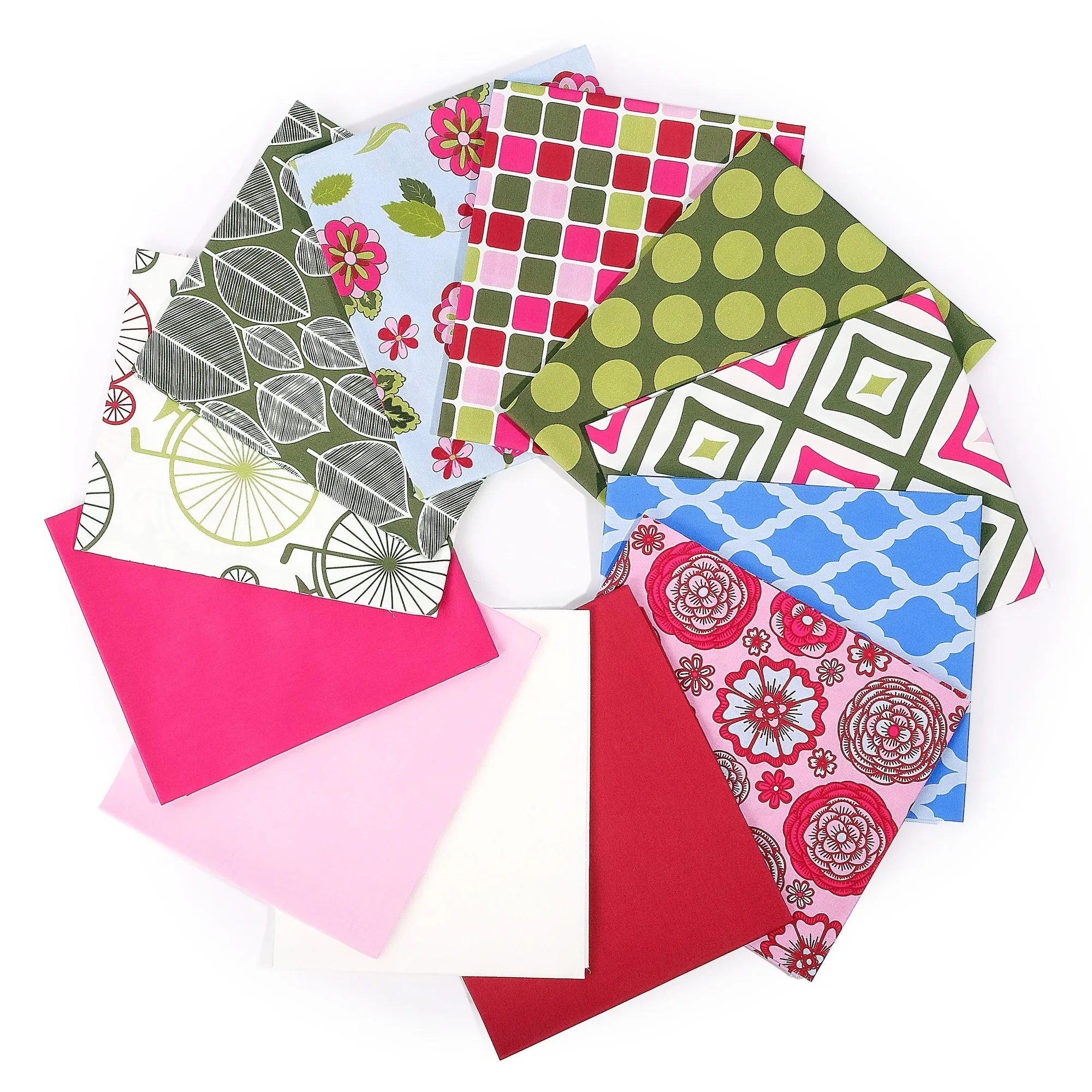
Bargello quilts rely on a smooth transition of colors and values to create the illusion of movement. A fat quarter bundle with a gradient, like the Floral Fade Collection, is ideal because the colors shift gradually from one hue to the next. If your bundle has high-contrast prints, you can still use it by arranging the fabrics from light to dark before cutting.
Keep in mind that busy prints can obscure the bargello effect. Solid or tone-on-tone fabrics work best, but if your bundle includes large-scale florals, use them sparingly or reserve them for the middle of the wave where they can anchor the design.
Planning Your Quilt Size and Layout
Before you cut, decide on the finished quilt size and how many fabrics you want to feature. A typical bargello lap quilt (about 50 by 60 inches) uses eight to ten fat quarters, each cut into strips of the same width. The number of strips per fabric determines the height of the wave, so more strips create a taller, more dramatic curve.
Sketch your color order on paper first. This helps you visualize the gradient and avoid rearranging fabric on the design wall later. Remember that the bargello pattern repeats, so you can adjust the number of fabrics to fit your bundle.
Step-by-Step Bargello Quilt Tutorial
- Arrange Your Fabrics: Lay out your fat quarters in a light-to-dark order. This establishes the value gradient that will drive the bargello wave. If your bundle lacks a clear gradient, sort by color intensity or contrast. A common mistake is skipping this step and cutting first, which makes it harder to adjust the order later.
- Cut Uniform Strips: Cut each fat quarter into strips of the same width (e.g., 2.5 inches). Use a rotary cutter and ruler for accuracy. The number of strips depends on your quilt size, but 6 to 8 strips per fabric is typical. Check that your strips are exactly the same width; even a 1/8-inch difference will show up in the wave.
- Sew Strips into a Tube: Sew the strips together end-to-end in your chosen color order to form a long strip. Then join the two ends of this strip to create a tube. Press all seams in the same direction to reduce bulk. Use a consistent seam allowance (usually 1/4 inch) and press carefully to avoid twisting the tube.
- Cut the Tube into Segments: Cut the tube crosswise into segments of equal width (e.g., 2.5 inches). Each segment becomes a row of your bargello top. You will need as many segments as you want rows in your quilt. Keep the tube flat and use a sharp rotary blade; a dull blade can stretch or distort the fabric.
- Offset and Sew the Segments: Open each segment and offset them by a certain number of squares to create the wave effect. For example, shift each row by one or two squares relative to the previous row. Pin and sew the rows together, matching seams carefully. A common mistake is losing the offset alignment; use pins at each seam intersection to keep the pattern accurate.
- Finish Your Quilt Top: Once all rows are sewn, press the top and trim any uneven edges. Your bargello quilt top is ready for basting, quilting, and binding. Before basting, step back and check the overall wave flow; if a section looks off, you can still unpick and adjust.
Featured Product
-
Floral Fade - Fat Quarter Bundle: The Floral Fade Fat Quarter Bundle features a gradient of floral patterns that gently fade from one hue to another. This built-in gradient makes it easier to achieve the smooth color transitions that bargello quilts need, saving you time on fabric arranging.
Floral Fade - Fat Quarter Bundle