When it comes to brewing a clean, flavorful cup of pour-over coffee, the filter paper you use is just as important as your beans or grinder. A good filter removes fine coffee particles and excess oils, letting the bright, nuanced flavors of specialty coffee shine through. But not all filter papers are created equal, and how you prepare them can make a big difference in taste.
In this guide, we’ll walk you through the best practices for using coffee filter papers, from choosing the right type for your brewer to rinsing and folding techniques. Whether you’re using a classic Hario V60 or a flat-bottom brewer, these tips will help you achieve a cleaner, more balanced cup every time.
Why Filter Papers Matter for Coffee Flavor
Filter papers act as a barrier between your coffee grounds and the final brew. They trap fine particles that would otherwise end up in your cup as sediment, and they absorb some of the oils that can make coffee taste heavy or bitter. This is especially important for pour-over methods, where the goal is clarity and brightness.
Unbleached paper filters can add a papery taste if not rinsed properly, while bleached filters (oxygen-bleached or chlorine-free) offer a neutral flavor profile. The thickness of the paper also affects brew time: thicker papers slow down the flow, leading to more extraction and a stronger cup. For a balanced brew, choose a filter that matches your brewer and your taste preferences.
- Use oxygen-bleached filters for a neutral taste without chemical aftertaste.
- Thicker filters (like some Hario V60 papers) work well for light roasts that need longer contact time.
- Thinner filters are ideal for darker roasts to avoid over-extraction.
How to Rinse Filter Papers Properly
Rinsing your filter paper before adding coffee grounds is a simple step that yields big rewards. Place the filter in your brewer, then pour hot water (just off the boil) over the entire surface. This wets the paper, removes any paper dust, and preheats your brewer and cup. It also eliminates the papery taste that can transfer to your coffee.
After rinsing, discard the water from the carafe or mug. Make sure the filter is seated evenly against the walls of the brewer—if it’s folded or wrinkled, you may get uneven extraction. For cone brewers like the Hario V60, the seam of the filter should align with the brewer’s ridge to create a proper seal.
- Always use fresh, hot water (around 200°F / 93°C) for rinsing.
- Pour water in a slow, circular motion to wet the entire filter.
- Let the filter drain completely before adding grounds.
Folding Techniques for Different Brewers
Most cone-shaped filters come with a seam that you need to fold. For a Hario V60 filter, fold the seam in the opposite direction of the paper’s natural curve, then open the filter so it forms a cone. This ensures the filter sits snugly against the brewer walls, preventing channeling and promoting even extraction.
For flat-bottom brewers like the Kalita Wave, the filters are pre-shaped and usually require no folding. Just place them in the brewer and press gently to form a flat bed. If you’re using a Chemex, the thick paper has a three-layer side that should face the spout to prevent collapse. Each brewer has its own quirks, so always check the manufacturer’s instructions.
- Hario V60: fold the seam and open into a cone, aligning with the ridge.
- Chemex: place the three-layer side against the spout for stability.
- Flat-bottom brewers: no folding needed; just seat the filter evenly.
Choosing the Right Filter Paper for Your Brew
Not all filter papers are interchangeable. Hario V60 filters are cone-shaped with a single hole at the bottom, designed for fast flow and bright, clean cups. Wilfa filters, on the other hand, are often flat-bottomed and work with Wilfa brewers for a more even extraction. Using the wrong filter can lead to clogging, slow drawdown, or a muddy cup.
If you’re unsure which filter to buy, start with the brand that matches your brewer. Many specialty coffee roasters, including Union Coffee, stock high-quality filters for popular brewers. For example, if you own a Chemex Brewer, 6-cup, you’ll need the thick Chemex-bonded filters that remove even the finest sediment. Using the right paper ensures consistency and lets the true character of your beans—like the fruity notes of Yirgacheffe, Organic Ethiopia—come through.
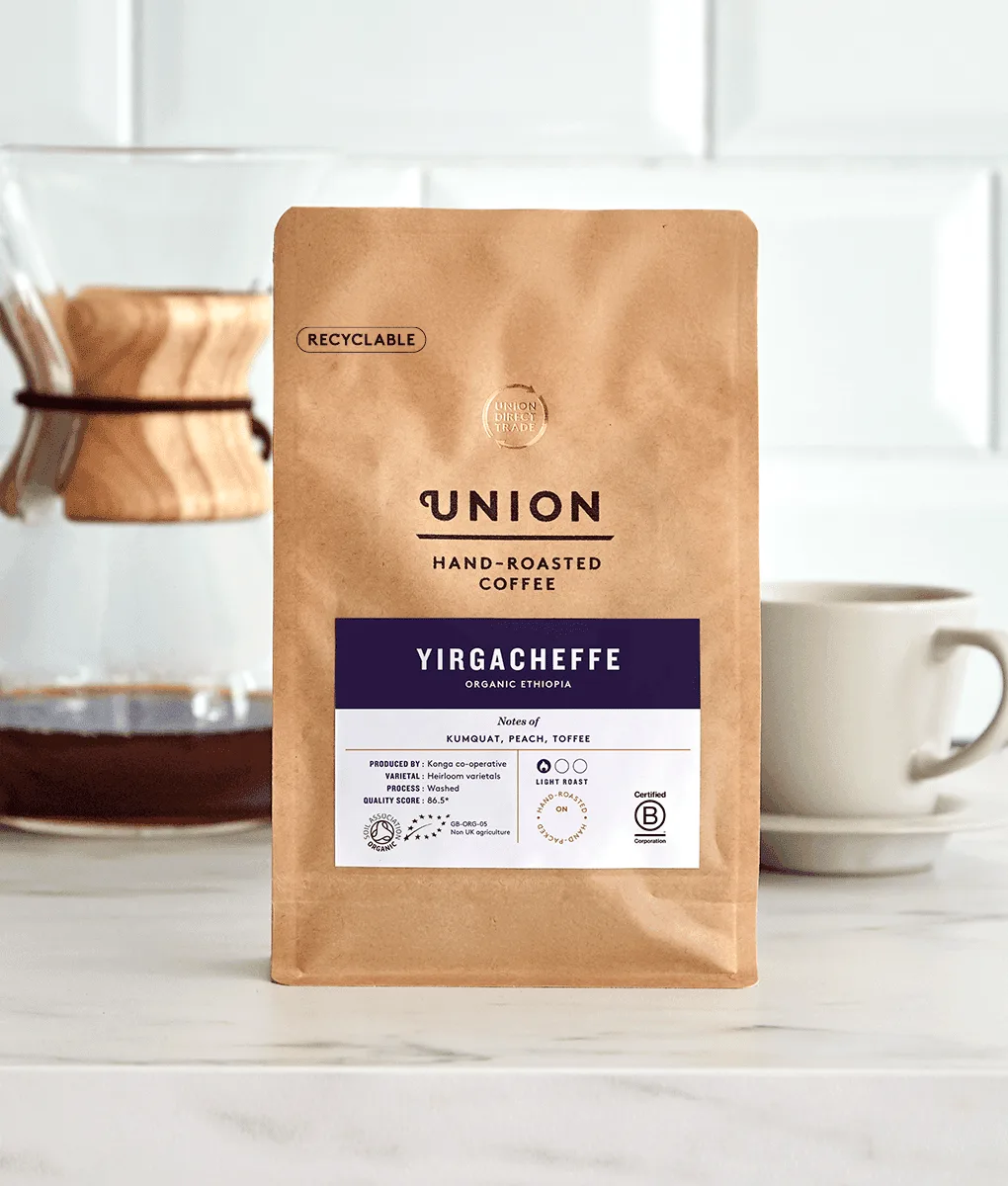
Yirgacheffe, Organic Ethiopia
- Hario V60 filters: best for light to medium roasts with bright acidity.
- Wilfa filters: ideal for flat-bottom brewers and balanced extraction.
- Chemex filters: thick paper for ultra-clean cups with no sediment.
Common Mistakes to Avoid
One of the most common mistakes is skipping the rinse step. This can leave a papery taste in your coffee, especially with unbleached filters. Another mistake is using a filter that’s too small or too large for your brewer, which can cause overflow or poor extraction. Always double-check the size before brewing.
Also, avoid touching the inside of the filter after rinsing—your fingers can transfer oils or residue that affect flavor. Finally, don’t reuse filter papers. They trap oils and fines that can turn rancid, ruining your next brew. A fresh filter for each batch is the only way to guarantee a clean, delicious cup.
- Always rinse unbleached filters to remove paper taste.
- Use the correct filter size for your brewer (e.g., 01 vs 02 for Hario V60).
- Never reuse filter papers—they accumulate bitter compounds.
By mastering the simple art of using filter papers—rinsing, folding, and choosing the right type—you can elevate your pour-over coffee from good to exceptional. Clean filters let the delicate flavors of single-origin beans shine, whether you’re brewing a bright Ethiopian Yirgacheffe or a smooth Sumatran Gajah Mountain. For the best results, pair your favorite beans with high-quality filters from Union Coffee, and enjoy a cup that’s free of bitterness and full of clarity.