Quick Answer
Start with a low-concentration glycolic acid cream twice a week, apply to clean dry skin, and always follow with moisturizer and sunscreen to avoid irritation.
Why Glycolic Acid Can Cause Irritation
Glycolic acid is a powerful AHA that works by dissolving the bonds between dead skin cells. This makes it highly effective for dullness and acne, but also means it can penetrate quickly and cause stinging, redness, or peeling if overused or applied incorrectly.
The key is to respect your skin's barrier. Starting slow and pairing the acid with hydrating ingredients helps you get the glow without the burn.
Choosing the Right Glycolic Acid Cream
Not all glycolic acid creams are the same. Look for formulas that combine exfoliation with moisturizing ingredients. For example, the A'PIEU Glycolic Acid Cream is a peeling moisture cream designed to melt away dead skin while delivering hydration, making it suitable for dull and acne-prone skin types.
Avoid products with additional irritants like alcohol or fragrance when you are new to AHAs.
Step-by-Step Guide to Exfoliate Without Irritation
- Step 1: Patch Test First: Apply a small amount of glycolic acid cream behind your ear or on your inner forearm. Wait 24 hours to check for redness, stinging, or breakouts. Never skip the patch test even if you have used other acids before.
- Step 2: Start with Clean, Dry Skin: Wash your face with a gentle cleanser and pat dry. Wait 5 minutes so your skin is completely dry. Applying acid to damp skin increases absorption and irritation risk. Damp skin increases penetration — keep it dry to stay safe.
- Step 3: Use a Pea-Sized Amount: Squeeze a pea-sized amount of cream and spread it evenly over your face, avoiding the eye and lip areas. Do not apply more product thinking it will work faster. More product does not mean better results — it increases irritation.
- Step 4: Start with Twice a Week: Use the cream only two nights per week for the first two weeks. If your skin tolerates it well, you can increase to every other night. Never use it daily until your skin is fully adjusted. Over-exfoliating is the most common mistake — slow and steady wins the glow.
- Step 5: Follow with a Moisturizer: After the cream has absorbed for 5-10 minutes, apply a hydrating, barrier-supporting moisturizer. This replenishes moisture and soothes the skin. Moisturizer is non-negotiable after every acid application.
- Step 6: Wear Sunscreen Every Morning: Glycolic acid makes your skin more sensitive to UV damage. Apply a broad-spectrum SPF 30 or higher every single day, even if you stay indoors. Skipping sunscreen undoes your progress and risks long-term damage.
Product Spotlight
-
Glycolic Acid Cream: A'PIEU Glycolic Acid Cream is a new conceptual peeling moisture cream that melts away stubborn dead skin cells and delivers moisture to your skin. Recommended for dull and acne-prone skin types. This dual-action approach reduces the drying effect typical of exfoliants, making it a safer starting point for beginners.
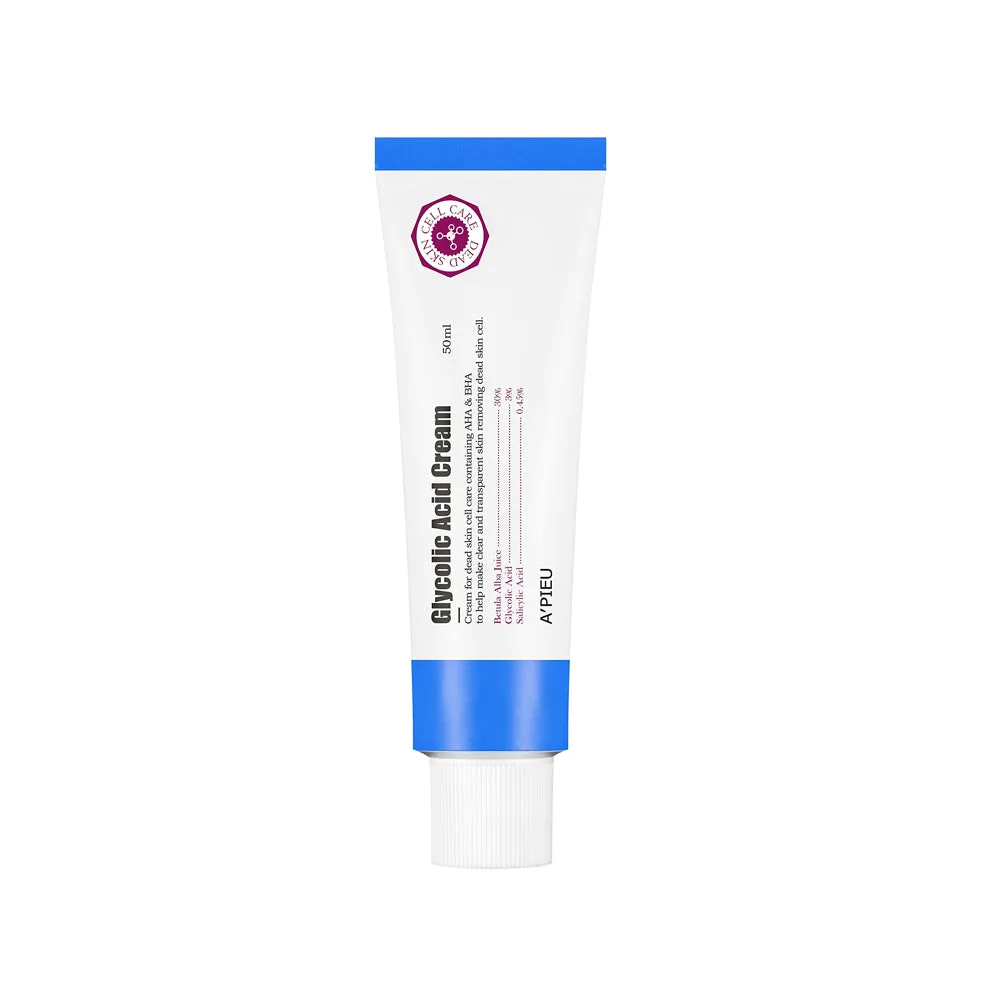
Glycolic Acid Cream