Quick answer
Use green peppercorns when you want a fresh, herbal pepper flavor without the heavy burn of black pepper. Soak dried green peppercorns in warm liquid before crushing, then add them to cream sauces, marinades or quick sautés.
Green vs black peppercorns: what changes in the pan
Green peppercorns are harvested and dried before they reach maturity, so they keep a lighter, fresher, more herbal flavor than black peppercorns. That difference matters when you want pepper to season without dominating. Black pepper brings a deeper, more pungent heat that stands up to long cooking and robust meats; green pepper is brighter and more aromatic, so it works best in dishes where you want the pepper to stay in the foreground without overwhelming other ingredients.
Because green peppercorns are less aggressive, you can use them more generously in delicate sauces or vegetable dishes. But they also have less built-in bite, so if you are looking for a strong peppery kick, black pepper remains the better choice.
Soaking and crushing: texture decisions that affect the dish
Dried green peppercorns are firm and need softening before they can be crushed or blended into a sauce. Soaking in warm water, stock or wine rehydrates them and makes crushing easier. The liquid you soak in can also add flavor, so choose one that matches the final dish. If you skip soaking, crushed peppercorns may stay hard and uneven, and they won't release their flavor as evenly.
Crushing green peppercorns is not the same as grinding black pepper. You want a coarse, cracked texture, not a fine powder, so the peppercorns retain some bite and visual appeal. A mortar and pestle or the flat side of a knife works well; a spice grinder can quickly turn them into paste, which is usually too fine for most recipes.
Pairing green peppercorns beyond the classic sauce
The classic French green peppercorn sauce, made with shallots, white wine, cream and mustard, is a natural match for steak, but it also works with pork, chicken or fish. Outside of that sauce, green peppercorns add a fresh lift to marinades for grilled vegetables, butter sauces for seafood, and even vinaigrettes. They pair well with dairy, mustard, tarragon, and mild meats that won't compete with their herbal notes.
Avoid pairing green peppercorns with very strong, smoky or heavily spiced dishes where their subtle flavor would be lost. They are at their best when they are the main pepper note, not one of many.
Step-by-step: how to soak, crush and cook with green peppercorns
- Soak the dried peppercorns: Place the dried green peppercorns in a small bowl and cover with warm water, stock, or wine. Let them soak for 15–20 minutes until they soften slightly. Common mistake: using boiling liquid, which can make them mushy; warm is enough. Check for softness by pressing one between your fingers; it should give slightly but still hold its shape.
- Drain and crush coarsely: Drain the peppercorns, reserving the soaking liquid if you want to use it in the sauce. Crush them with a mortar and pestle or the flat side of a knife until they crack into coarse pieces. Do not over-crush into a paste. Aim for uneven, cracked pieces so you get bursts of pepper rather than a uniform texture.
- Add to the pan at the right stage: For a cream sauce, sauté shallots, deglaze with wine, add stock and cream, then stir in the crushed peppercorns near the end of cooking to preserve their fresh flavor. For marinades, mix crushed peppercorns with oil and acid and coat the protein at least 30 minutes before cooking. Taste after adding peppercorns; green peppercorns are milder, so you may need more than you expect.
- Balance the heat and seasoning: Green peppercorns have a gentle heat, so adjust salt and acid to let their herbal notes come through. If the dish tastes flat, a squeeze of lemon or a splash of the soaking liquid can brighten it. Avoid adding black pepper at the same time; it can mask the green peppercorn's delicate flavor.
Product facts
-
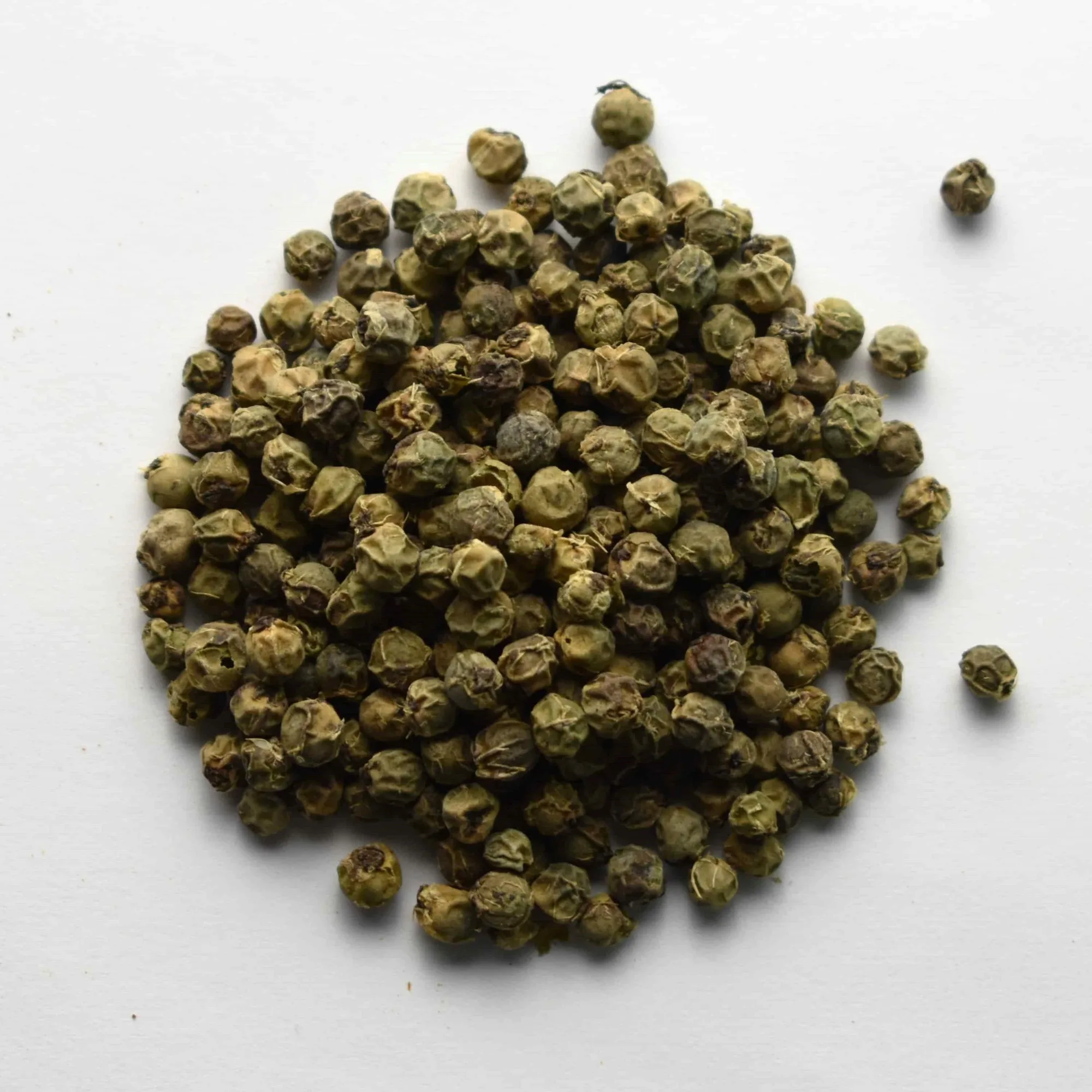
Peppercorns, Green: Green peppercorns are harvested and dried before maturity, giving them a lighter, fresher, more herbal flavor than black peppercorns. This makes them ideal for sauces and dishes where you want a gentle pepper flavor that doesn't overpower other ingredients.
Peppercorns, Green