Quick answer
Use a hammock pillow under your neck for head support and a second pillow under your knees to stop your legs from hyperextending. Loosen the pillow's drawstring to reduce loft if your chin tilts up, and tighten it for side sleeping. A camping pillow for hammock use should be small enough to stay in place but adjustable enough to match your sleep position.
A hammock pillow is not just a comfort extra. Placed correctly, it keeps your neck neutral and your knees slightly bent so you wake up without the stiff lower back that comes from sleeping in a banana shape. The catch is that most people use a pillow the same way they would on a bed, which is why it slides around or feels too tall.
This guide walks through the exact steps for hammock pillow use, from dialing in your hang angle to positioning one pillow at your neck and another under your knees. You will also see how the Puffy Adjustable Travel Pillow fits into a camping sleep system, and when a sleeping bag hammock changes what you need.
Puffy Adjustable Travel Pillow
Why hammock pillow positioning matters more than pillow size
On a mattress, your body stays flat and a pillow mainly fills the gap between your neck and the bed. In a hammock, your body settles into a curve. If you sleep on your back without support, your head drops back and your knees straighten, which can leave your lower back aching by morning. A pillow at the neck and another under the knees breaks that curve.
The hammock pillow benefits come from two jobs: keeping your head in line with your spine and preventing your legs from locking straight. That is why a small adjustable pillow often works better than a big bed pillow. You want support you can tune, not a pillow that pushes your chin toward your chest.
- Sleep on a slight diagonal, not straight down the centerline, so your body lies flatter and the pillow stays put.
- If you wake with a sore neck, check your hang angle before you blame the pillow.
Step 1: Set your hang angle before you place any pillow
A pillow cannot fix a hammock that is strung too tight or too loose. Aim for a hang angle around 30 degrees, where the suspension line meets the tree at a gentle slope. When the hammock is too tight, it feels like a trampoline and your pillow will slide. When it is too loose, you sink into a deep curve and no pillow will keep your neck neutral.
Once the angle looks right, lie in the hammock for a minute without a pillow. Note where your head naturally falls and where your knees want to bend. That tells you where to place support.
- Checkpoint: if you can pinch the hammock fabric into a deep U beside you, it is probably too loose.
Step 2: Position the first pillow under your neck, not your head
Slide the pillow so its top edge sits at the base of your skull and the bulk supports your neck. On your back, this keeps your chin level instead of pointing at the sky. On your side, tuck the pillow so it fills the space between your shoulder and your ear. This is the core of hammock pillow positioning: support the curve, do not just elevate the head.
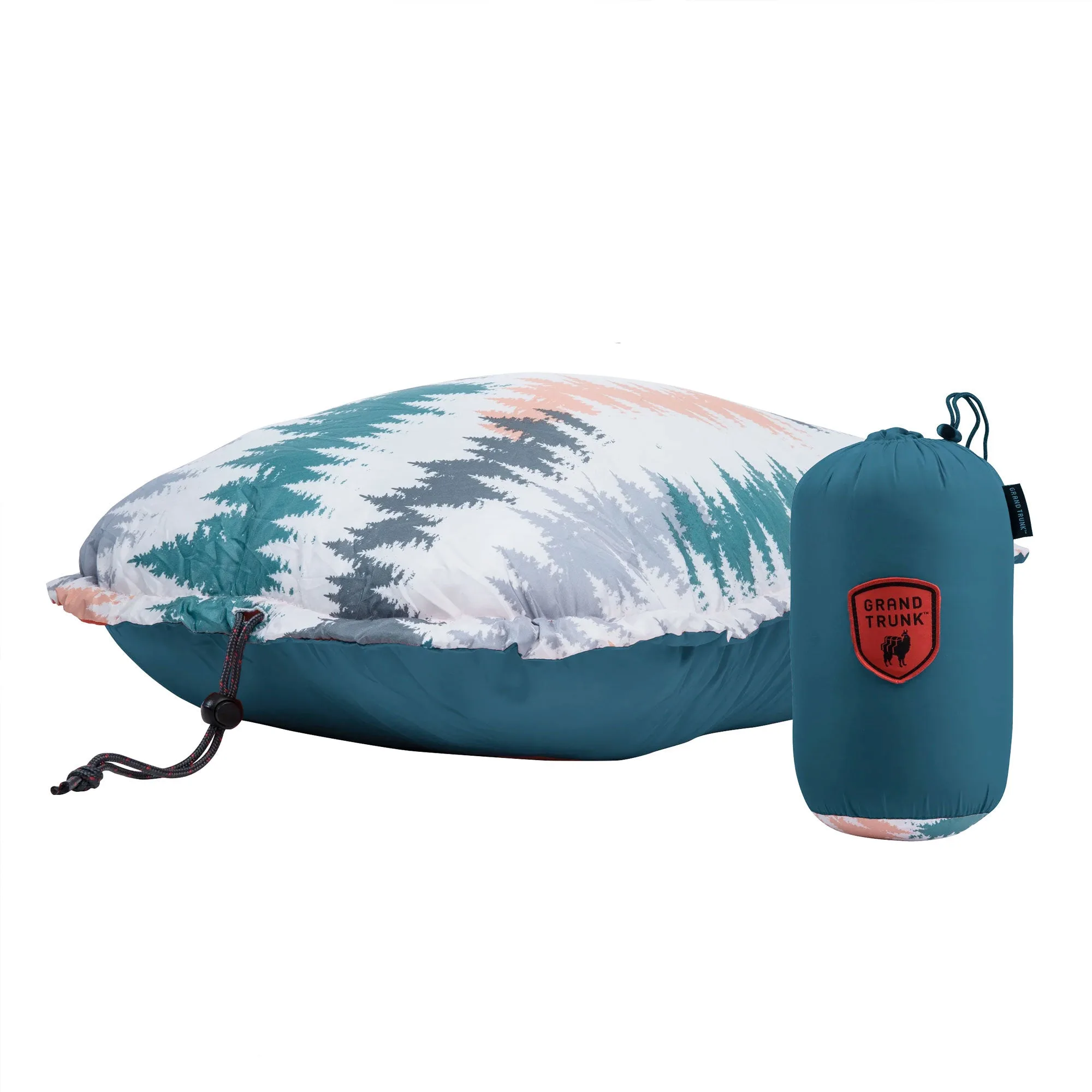
The Puffy Adjustable Travel Pillow has a drawstring that changes loft, which matters here. Loosen it for back sleeping so your head does not tilt forward. Tighten it for side sleeping so your neck stays aligned with your spine.
- Common mistake: stacking the pillow too high and waking with a kink in your neck.
Step 3: Add a second pillow under your knees
A pillow under your knees is the most overlooked hammock sleep tip. When your legs hang straight in a hammock, your lower back flattens and can ache. A small pillow or stuff sack under your knees creates a slight bend that takes tension off your lumbar spine. You can use a second travel pillow or roll a soft layer of clothing.
If you sleep on your side, place the knee pillow between your knees instead. That keeps your hips stacked and prevents your top leg from dropping, which twists your lower back.
- Checkpoint: your knees should feel slightly bent, not propped up high.
Step 4: Adjust loft and attachment for your sleep position
Loft is the height of the pillow once it is filled. Too much loft pushes your head forward; too little leaves your neck unsupported. Use the drawstring to find the middle ground, then test it by lying still for five minutes before you commit to sleep. If the pillow slides toward your feet, use the webbing loop on the stuff sack to clip it to your hammock ridgeline or suspension.
The Puffy Adjustable Travel Pillow includes a stuff sack with webbing for attaching to luggage or a bag, and the pillow itself is machine washable. That attachment point is useful in a hammock because it keeps the pillow from migrating overnight.
- Machine washable shell and hollow fill polyester make this pillow easy to keep fresh on long trips.
Step 5: Test your setup before you need it
Do a short nap or a 20-minute lie-down in your full sleep setup before a trip. Wear the clothes you plan to sleep in, use your actual top quilt or sleeping bag, and place both pillows. This is when you notice if your neck pillow is too firm or if your knee pillow rolls away.
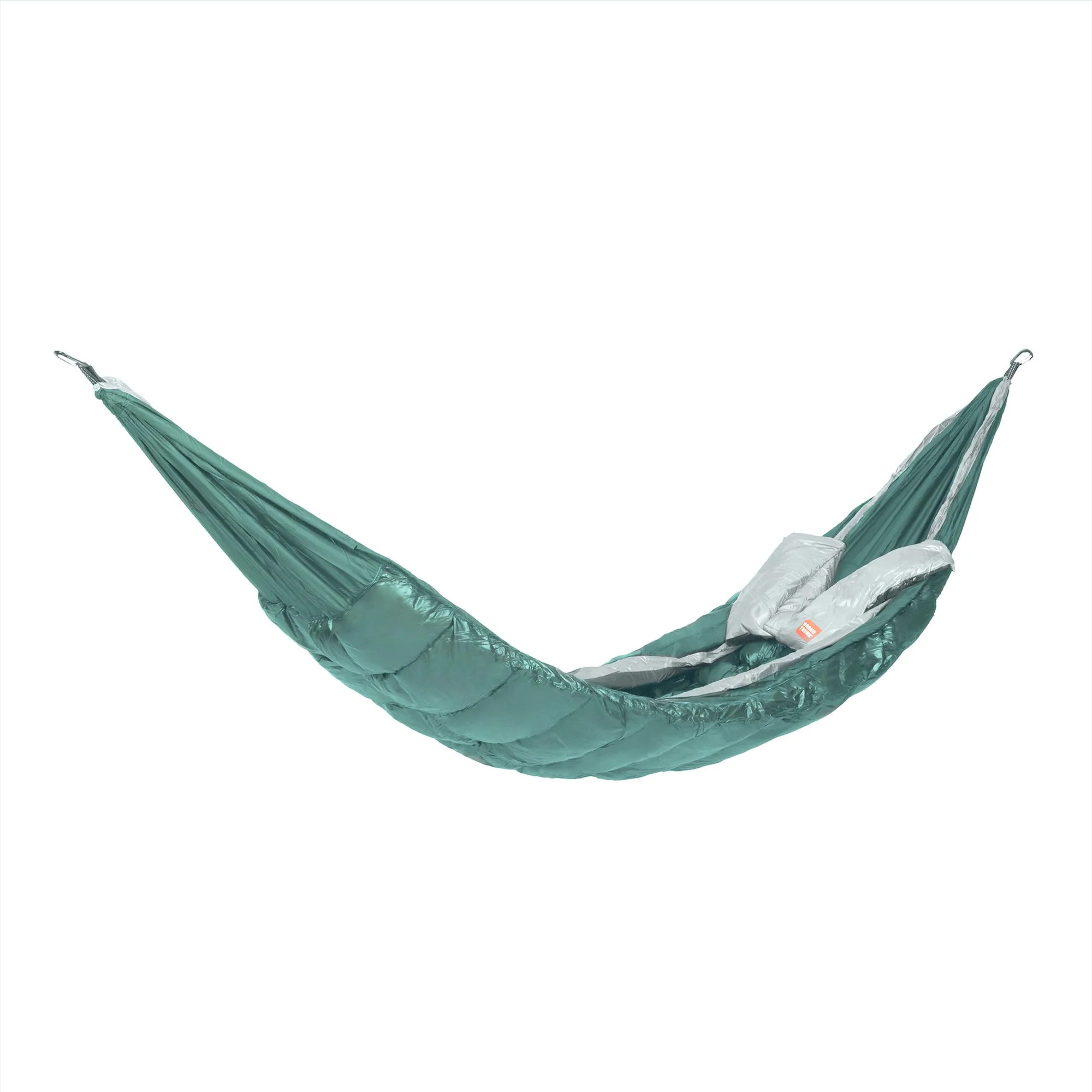
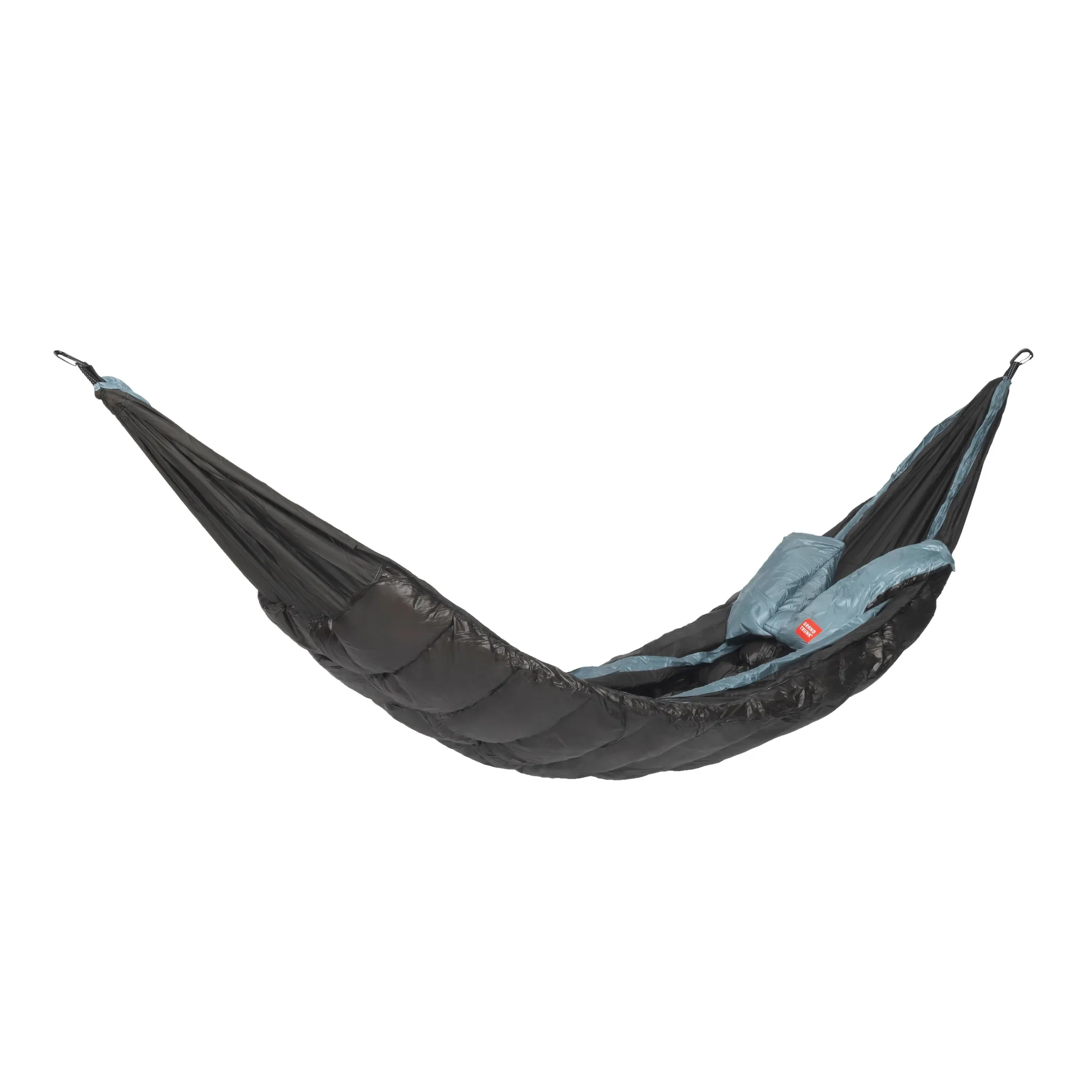
If you use a sleeping bag hammock, the integrated insulation changes how you lie. The Evolution 20 Down Sleeping Bag Hammock combines a down sleeping bag with a hammock, so there is no underquilt or overquilt to bunch up. That means your pillow does not have to fight a loose quilt at your shoulders, but you still want neck and knee support.
Evolution 20 Down Sleeping Bag Hammock
- Checkpoint: if you toss and turn for 20 minutes, change one thing at a time, starting with pillow loft.
Hammock pillow setup steps at a glance
- Set the hang angle: Aim for about 30 degrees and lie down without a pillow to see where your body settles. Checkpoint: if the hammock feels like a trampoline or a deep bowl, fix the angle first.
- Place the neck pillow: Put the pillow under your neck with the top edge at the base of your skull, not under your head. Common mistake: too much loft tilts your chin up and strains your neck.
- Add the knee pillow: Use a second pillow or stuff sack under your knees on your back, or between your knees on your side. Checkpoint: a slight bend is enough; do not prop your knees high.
- Tune loft and secure the pillow: Loosen the drawstring for back sleeping, tighten it for side sleeping, and clip the stuff sack webbing to your hammock or ridgeline. Next step: test the full setup with a short nap before your trip.
Products that support better hammock sleep
- Puffy Adjustable Travel Pillow: Features an adjustable drawstring to alter loft, webbing on the stuff sack for easy attachment, and a machine washable polyester shell with hollow fill polyester. Pillow dimensions are 17 inches. The drawstring lets you change loft for back versus side sleeping, and the attachment webbing keeps the pillow from sliding down the hammock overnight.
- Evolution 20 Down Sleeping Bag Hammock: Integrates a down sleeping bag with a hammock, providing warmth without an underquilt or overquilt and allowing range of motion. Because the insulation is built in, you can focus your pillow setup on neck and knee support instead of managing a shifting quilt.
- Evolution 20 Synthetic Sleeping Bag Hammock: Synthetic fill for a 20 degree rating with an integrated baffled insulation under-quilt. Hanging kit and straps are not included. If you prefer synthetic fill, this version still removes the need for separate quilts, but you must add a suspension system separately.
Better sleep in a hammock comes down to two supports and one adjustment. Set your hang angle, put an adjustable pillow at your neck, add one under your knees, then tune the loft until your spine feels neutral. Do that, and a camping pillow for hammock use stops being an afterthought and becomes the reason you wake up rested.