Why icing sugar is the base of royal icing
Royal icing is a classic decorating medium made primarily from icing sugar (also called confectioners' sugar) and egg whites or meringue powder. The fine, powdery texture of icing sugar dissolves easily and creates a smooth, pipeable paste that hardens to a crisp finish. Whether you're flooding cookies, piping borders, or writing messages, the quality of your icing sugar directly affects the result.
For best results, choose a pure icing sugar without added flavors or colorings. Tate & Lyle's Icing Sugar, for example, is made from icing sugar (97%) and maize starch, which helps prevent caking and keeps the sugar free-flowing. This makes it a reliable choice for royal icing because the starch helps absorb moisture and stabilize the mixture.
What the Tate & Lyle record confirms
-
Tate & Lyle's Icing Sugar - 17.63oz (500g): Tate & Lyle's Icing Sugar is perfect for making cake icings, glazes & frostings. It can also be used to dust the tops of your baked goods. This confirms that the product is suitable for royal icing, as it's specifically designed for icings and frostings.
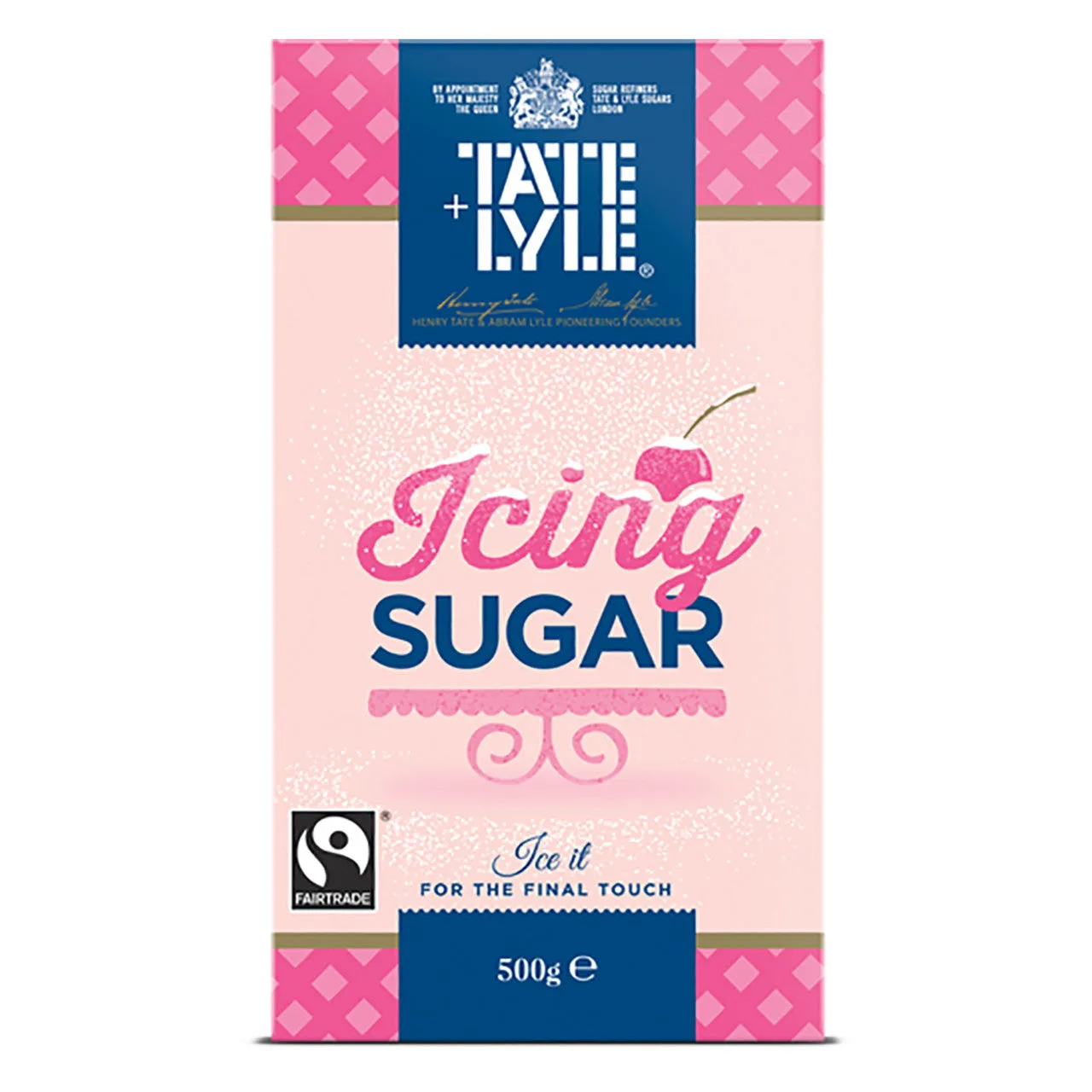
Tate & Lyle's Icing Sugar - 17.63oz (500g)
-
Tate & Lyle's Icing Sugar - 17.63oz (500g): Ingredients: Icing Sugar (97%), Maize Starch. The small amount of maize starch helps prevent clumping, which is important for a smooth royal icing consistency.
-
Tate & Lyle's Icing Sugar - 17.63oz (500g): Net Weight: 17.63 ounces (500 grams). A 500g pack is a practical size for several batches of royal icing, whether you're decorating a few cookies or a whole cake.
How to make royal icing with icing sugar
These steps outline the general method for making royal icing. The exact proportions can vary depending on your recipe, but the process is consistent.
- Sift the icing sugar: Sifting removes any lumps and aerates the sugar, which helps create a silky-smooth icing. Even if your icing sugar appears lump-free, sifting is a good habit.
- Combine with liquid and meringue powder: Gradually add the sifted icing sugar to a mixture of meringue powder and water (or egg whites). Mix slowly to avoid creating air bubbles that can weaken the icing.
- Beat to the right consistency: Beat the mixture until it becomes thick and glossy. The icing should hold a soft peak when you lift the beater. If it's too stiff, add water a few drops at a time; if too runny, add more sifted icing sugar.
- Adjust for your decorating task: For piping outlines or writing, keep the icing stiffer. For flooding (filling large areas), thin it with a little water until it flows and settles smoothly.
- Use immediately or store properly: Royal icing dries quickly, so keep it covered with a damp cloth or plastic wrap while you work. Store unused icing in an airtight container in the refrigerator for a few days; stir well before using again.
Tips for using icing sugar in royal icing
Consistency is the biggest challenge when working with royal icing. Start with a slightly thicker mixture and thin it gradually—you can always add liquid, but it's harder to fix an icing that's too runny. Also, be mindful of humidity; icing sugar absorbs moisture from the air, which can make your icing softer and slower to set. On humid days, you may need to add a little extra icing sugar to compensate.
When dusting baked goods with icing sugar, use a fine-mesh sieve and apply it just before serving to avoid the sugar dissolving into the surface. For royal icing, always use fresh ingredients and avoid getting any grease or oil into the mixture, as that can prevent the icing from setting properly.
What the catalog does not specify
The supplied product record does not include a specific royal icing recipe, exact measurements, or preparation instructions. The steps above are general guidance based on common practice, not manufacturer instructions. For precise ratios and techniques, consult a trusted recipe or decorating guide. The record also does not confirm whether Tate & Lyle's Icing Sugar is certified gluten-free, though maize starch is naturally gluten-free; if you have dietary concerns, check the product packaging for allergen information.