Quick answer
Cook your tomatoes until soft, load them into the Kilner Sauce Mill Jar Set, and turn the mill steadily so the pulp falls into the 1-litre jar while skins and seeds stay behind. Work in small batches and keep the mill turning in one direction for the smoothest result.
Why the sauce mill beats a blender for tomato sauce
A blender breaks seeds and skins into the sauce, which leaves a speckled texture and a slightly bitter edge. The Kilner Sauce Mill Jar Set separates them as you press, so you get the clean, seedless consistency that homemade tomato passata is known for. That makes it a better choice for smooth sauces, purees, and baby food than a standard jug blender.
Prep the tomatoes so the mill does not clog
The mill works best with soft, cooked produce. Raw or underripe tomatoes are firm and fibrous, so they resist pressing and can block the screen. Simmer them first, then let them cool slightly before milling. If you are making fruit puree with the same set, cook or soften the fruit the same way.
Know the limits of the set before you start
The set includes a 1-litre glass jar and a sauce mill attachment, but the catalog does not list a separate screen size or a maximum batch capacity. Treat the 1-litre jar as your working guide and mill in batches rather than overfilling. For very large harvests, plan to repeat the process rather than forcing everything through at once.
Step-by-step: milling smooth tomato sauce
- Cook the tomatoes until soft: Simmer washed, roughly chopped tomatoes until they collapse and release their juices, then cool for a few minutes. Common mistake: milling raw tomatoes, which strains the mechanism and leaves a gritty sauce. A tomato that squashes easily under a spoon is ready for the mill.
- Set up the jar and mill: Place the glass jar on a stable surface and fit the sauce mill attachment according to the set's instructions. Check that the screen and moving parts sit securely before adding food. Common mistake: assembling loosely, which lets pulp escape around the edges. Give the mill a gentle turn before adding tomatoes to confirm it moves freely.
- Load in small batches: Spoon cooked tomatoes into the mill a little at a time rather than filling it to the top. Common mistake: overloading, which forces you to press hard and can push seeds through the screen. Keep the hopper about half full for steady, even milling.
- Turn the mill steadily in one direction: Crank or turn the mill at a consistent speed and let the mechanism do the work. Common mistake: reversing direction or spinning too fast, which leaves pulp unprocessed and clogs the screen. If the handle feels stiff, stop and clear the screen instead of forcing it.
- Separate and reserve the waste: Let skins and seeds collect at the end of the mill and discard or compost them. Common mistake: scraping the waste back into the sauce, which undoes the seedless result. Check the waste once; if it still looks wet and pulpy, pass it through a second time.
- Finish and store the sauce: Season the smooth sauce as you like, then use it straight away or transfer it to clean jars for storage. Common mistake: leaving sauce at room temperature for hours before chilling. Cool and refrigerate promptly, and label the jar with the date.
Product facts
-
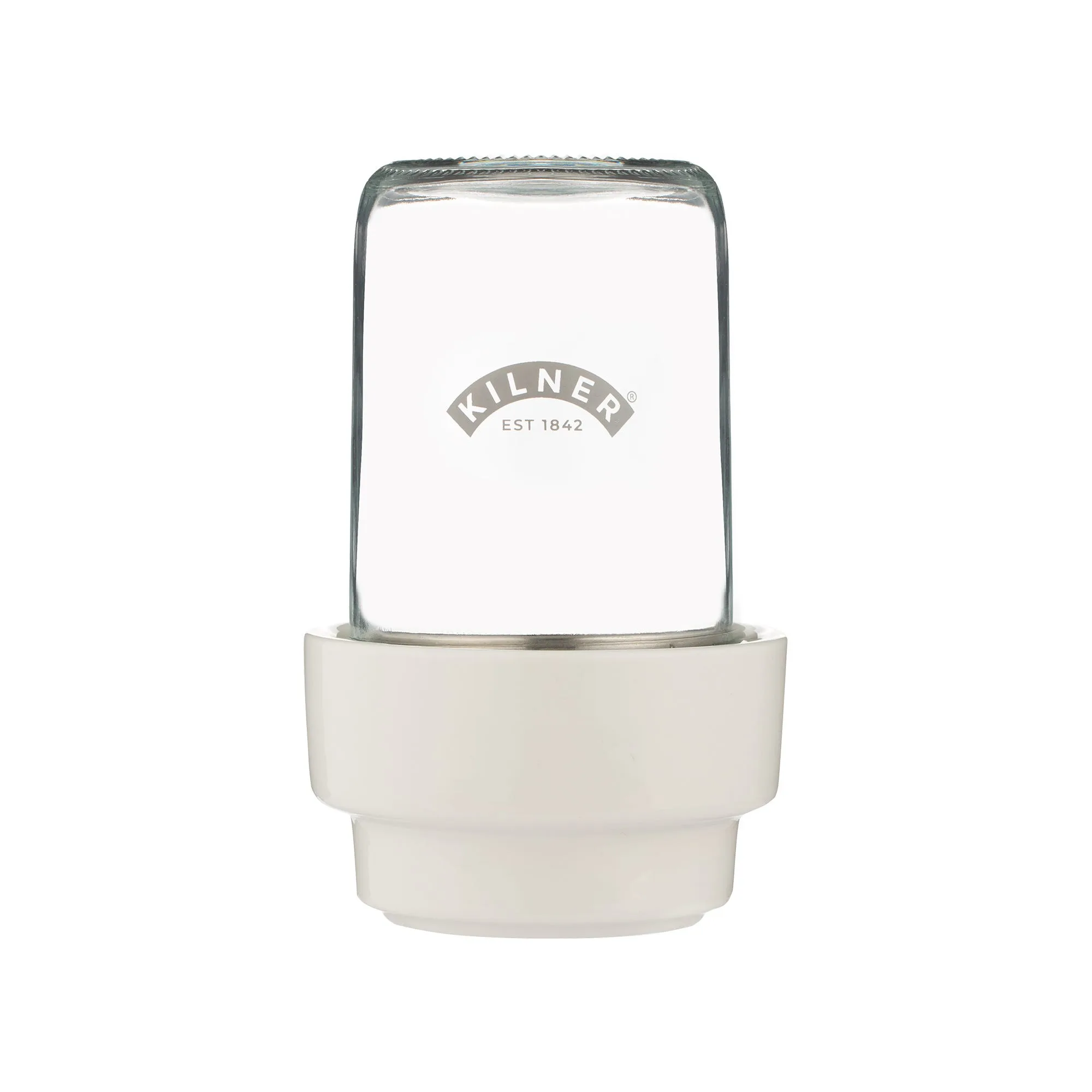
Kilner Sauce Mill Jar Set: The set pairs a 1-litre glass jar with a sauce mill attachment for pressing and straining fruits and vegetables. The jar catches the sauce directly, so you can mill and store in the same container without transferring to another bowl.
Kilner Sauce Mill Jar Set