Quick answer
Use a large peanut ball like the Find That Hippo Large Peanut Ball in Morning Blue for seated bouncing, supported rolling, and balance challenges that build core strength and body awareness in kids ages 3 and up.
Why the peanut shape matters for balance
Unlike a round ball, the peanut shape has two stable lobes that prevent the ball from rolling sideways too easily. This gives children more confidence to sit, bounce, and shift weight without fear of tipping over. The wider base also makes it easier for adults to spot and support during early sessions.
When to choose a peanut ball over a traditional balance ball
A peanut ball is ideal for toddlers and preschoolers who are still developing trunk control. It works well for sensory seekers who need deep pressure input, and for children who feel anxious on a round ball. However, older kids who already have good balance may prefer a round ball for more dynamic movement challenges.
Step-by-step guide: Safe peanut ball exercises for kids
- Step 1: Inflate to the right firmness: Inflate the ball until it is firm but still has about 10-15% give when pressed. A ball that is too hard feels unstable; one that is too soft does not provide enough bounce support. For most kids, a medium firmness works best. Check the ball with your hand before each session. If it feels rock-hard or squishy, adjust the air.
- Step 2: Start with seated bouncing: Place the ball on a non-slip surface. Have the child sit centered on the ball with feet flat on the floor. Hold their hips or hands for support. Encourage gentle bouncing while keeping their back straight. Start with 2-3 minutes to avoid overstimulation. Common mistake: letting the child slump forward. Keep the spine aligned for core engagement.
- Step 3: Add supported rolling: With the child lying belly-down on the ball, hold their legs or torso and gently roll them forward and backward. This provides deep pressure input that calms the nervous system and improves body awareness. Watch for signs of anxiety. If the child tenses up, slow the motion and talk them through it.
- Step 4: Progress to weight-shifting games: While seated, ask the child to lift one foot off the floor for 3 seconds, then switch. Or place a toy to the side and have them reach for it without falling. This trains dynamic balance and trunk rotation. If the child cannot lift a foot without toppling, go back to supported bouncing for another week.
- Step 5: Supervise and limit session time: Keep sessions between 5-10 minutes for younger children and up to 15 minutes for older ones. Always stay within arm's reach. The peanut ball is not a toy for unsupervised play. Stop immediately if the child seems dizzy or overexcited. Sensory play should be fun, not overwhelming.
Product facts
-
Large Peanut Ball - Morning Blue: The Find That Hippo Large Peanut Ball in Morning Blue features a unique peanut shape that provides more stability than a traditional round balance ball. This added stability helps children build confidence and coordination gradually, making it a safer entry point for balance play.
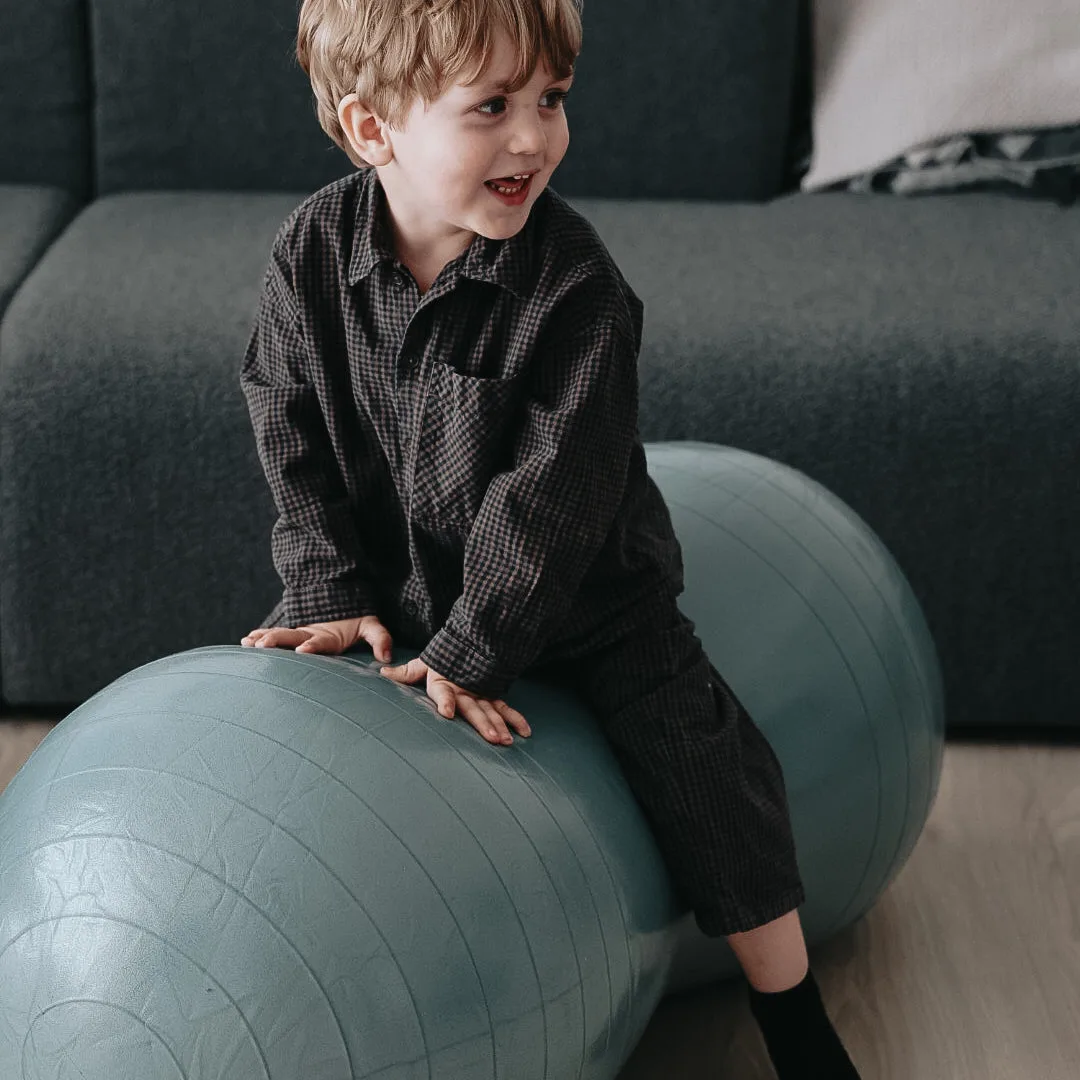
Large Peanut Ball - Morning Blue