Why a hand palette changes your volume set rhythm
A lash hand palette puts your lash tiles on the back of your hand instead of on a fixed workstation. That means your lash tray, glue ring, and tile move with you as you work across a set. For volume lash sets, where you repeatedly pick up, fan, and place lashes, that reduced reaching can keep your hands closer to the eye area and help you stay in a steady rhythm.
The Storyboard Eyelash Hand Palette from The Eyelash Emporium is designed for exactly this kind of use. It is a hand-mounted palette, and the listing confirms an adjustable strap, so you can fit it to your hand before you begin. The catalog does not supply a step-by-step application protocol, so the guidance below focuses on setup and workflow decisions you can control.
What the Storyboard palette listing confirms
-
Storyboard Eyelash Hand Palette - One Size with Adjustable Strap (HAND-PAL): Storyboard Eyelash Hand Palette - One Size with Adjustable Strap (HAND-PAL) The adjustable strap is the key fit feature: you can tighten or loosen the palette on your hand before starting a set.
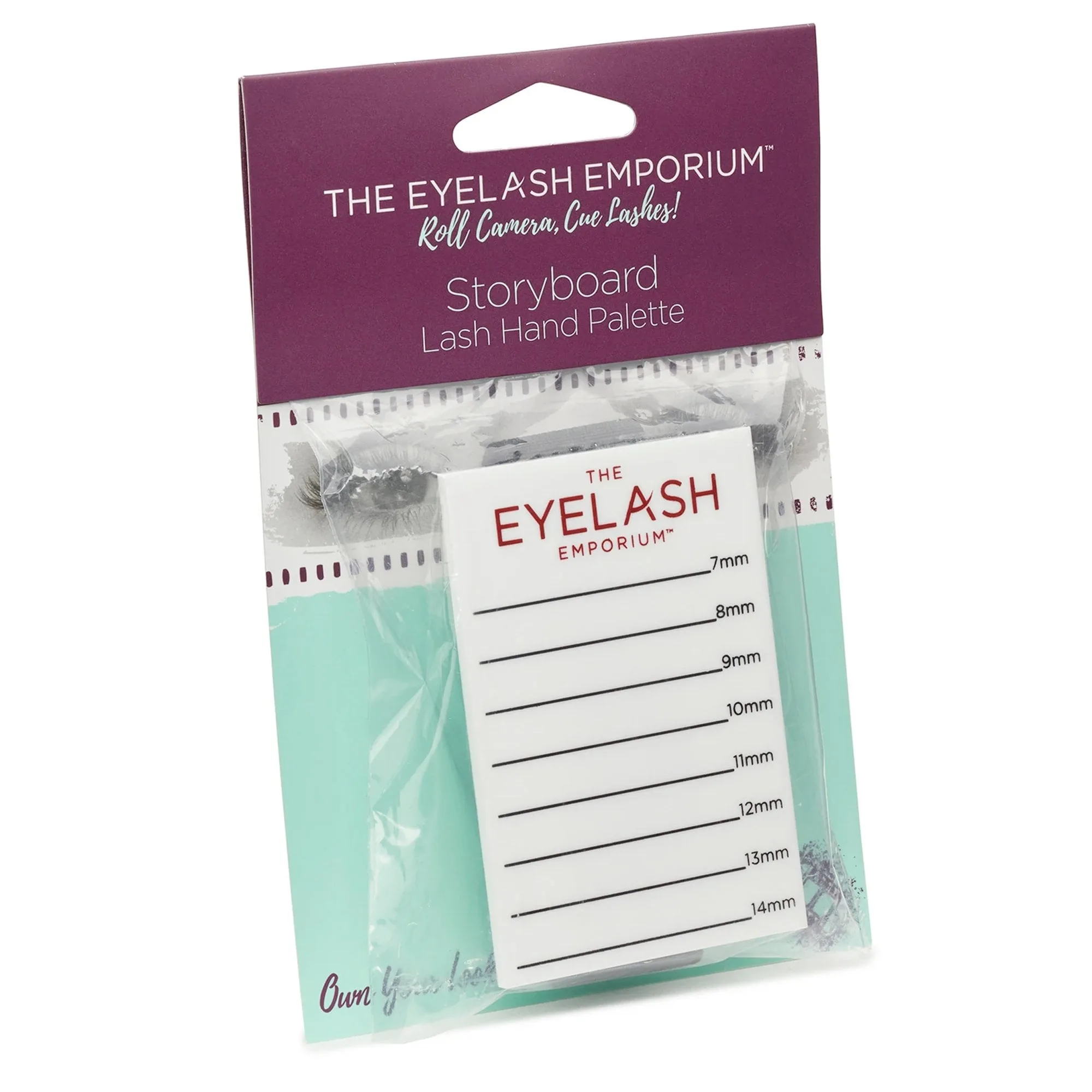
Storyboard Eyelash Hand Palette - One Size with Adjustable Strap (HAND-PAL)
-
Storyboard Eyelash Hand Palette - One Size with Adjustable Strap (HAND-PAL): The Eyelash Emporium range is described as designed to enhance your natural eyes beyond normal standards. This confirms the palette comes from a lash-focused brand, but it is marketing language rather than a performance claim you should rely on for speed.
Set up the hand palette before your first lash
The listing does not include manufacturer setup instructions, so treat these as practical checkpoints rather than a prescribed protocol. Adjust anything that does not feel secure before you pick up a lash.
- Fit the adjustable strap first: Slide the palette onto your non-dominant hand and tighten the strap until the palette sits flat and does not rotate when you flex your wrist. The listing confirms an adjustable strap but does not specify a required tightness, so use your own comfort and stability as the guide.
- Choose your working hand: Most lash artists keep the palette on the hand that holds the tile while the dominant hand handles tweezers. Decide this before you load any lashes so you do not have to reset mid-set.
- Load your lash tiles: The listing does not confirm which tile sizes or lash types fit the palette, so check your own tiles against the palette surface before committing to a full set. Place the tiles you need for the current section rather than loading every lash at once.
- Check your reach and visibility: With the palette on, bring your hand to the position you would use at the client's eye. If the palette blocks your view or catches on your glue ring, adjust the strap or reposition the tiles before you begin.
Volume lash workflow with a hand palette
The catalog does not supply a volume fan-making method or a timing standard. The points below are workflow decisions that apply to any hand palette, not manufacturer instructions.
- Keep one tile per fan size: If you build fans in more than one width, separate them on the palette so you are not sorting through mixed lashes with tweezers. The listing does not confirm how many tiles the surface holds, so test your layout before a full set.
- Position the palette for the section you are working: As you move from inner to outer corners, rotate your hand so the tile you need stays closest to your tweezers. This is the main ergonomic reason to use a hand palette instead of a fixed tile.
- Keep glue off the palette surface: The listing does not confirm whether the palette surface is glue-resistant, so keep your glue ring or dish separate and avoid dripping adhesive onto the tiles. Wipe any stray glue according to your own adhesive supplier's guidance.
- Pause and reset between sections: If the strap loosens or the tiles shift, stop and reset rather than working around a moving palette. A loose palette is the most likely reason a hand palette slows you down instead of speeding you up.
Fit and comfort checkpoints during the set
The adjustable strap is the only fit feature the listing confirms, so your main checkpoints are strap tension, hand fatigue, and tile stability. If your hand starts to ache, loosen the strap slightly and see whether the palette still stays in place. If it rotates, tighten it a little. There is no catalog-specified tension, so find the setting that keeps the palette stable without restricting circulation.
The listing also does not confirm the palette's material, weight, or dimensions. That means you cannot rely on the catalog to tell you whether it will feel heavy over a long set. Try it on a practice session before using it on a client, and note whether the strap leaves marks or the palette surface feels slippery with your tiles.
Where the catalog stops and your own checks begin
The Storyboard listing confirms the product name, the adjustable strap, and the brand's lash-focused positioning. It does not supply preparation steps, cleaning instructions, tile compatibility, or a maximum load. Those gaps matter for a volume lash set because a palette that shifts or holds tiles poorly can cost you time.
Treat the palette as a holder for your existing workflow rather than a replacement for your normal hygiene and adhesive routines. Follow your own lash extension training and your adhesive manufacturer's instructions for glue handling, and check the palette's condition before each use. If the strap no longer holds or the surface becomes difficult to keep clean, replace it rather than working around the problem.