Quick Answer
Use the Magic File with light pressure and a consistent direction to smooth nub marks and uneven surfaces on your Gunpla. Its special material keeps cutting ability far longer than ordinary sandpaper, so you can rely on it for many builds.
Why Magic File Stands Out for Gunpla Sanding
Regular water-resistant sandpaper loses its cutting ability after a few uses, forcing you to replace it often. The Magic File solves this with a kneading agent in a special material, so the cutting ability lasts much longer. This makes it a practical choice for Gunpla builders who want consistent results without constantly buying new sheets.
The Magic File is also strong—breaking it vertically requires considerable force—so it can withstand the pressure of sanding without tearing or wearing out quickly. This durability means you can focus on your technique rather than worrying about your tool failing mid-session.
When to Use Magic File vs. Other Sanding Tools
Use the Magic File for final smoothing and detail work on nubs, seams, and curved surfaces. It's ideal for reaching small areas where larger sanding blocks might be awkward. For aggressive material removal, such as removing large gates or reshaping parts, a coarser file or sandpaper may be more efficient.
Because the Magic File is flexible, it conforms to contours, making it excellent for rounded parts like shoulder armor or rifle barrels. However, for perfectly flat surfaces, a rigid sanding block may give you a more even result.
Step-by-Step: Sanding Gunpla with Magic File
- Prepare the part: Cut the part from the runner with nippers, leaving a small nub. This reduces the amount of sanding needed and prevents stress marks on the plastic. Leave a small nub to avoid gouging the part.
- Sand with light pressure: Hold the Magic File flat against the nub and sand in one direction with light, even pressure. Let the file do the work—pressing hard can create uneven dips. Check that the surface feels smooth before moving on.
- Follow the contour for curved parts: For curved surfaces, flex the Magic File slightly to match the part's shape. Sand in short strokes, following the curve to avoid flat spots. Keep the file moving to avoid heat buildup on thin parts.
- Finish with a fine grit: After using the Magic File, switch to a fine-grit sandpaper (like 800-1000) to polish the area. This removes any remaining marks and prepares the surface for painting or topcoat. Wipe the part clean to check for any remaining scratches.
Featured Product
-
Magic File: The Magic File has a kneading agent in a special material, so its cutting ability lasts a long time, unlike ordinary water-resistant paper that loses effectiveness after several uses. You can sand multiple Gunpla kits without replacing the file frequently, saving money and keeping your workflow consistent.
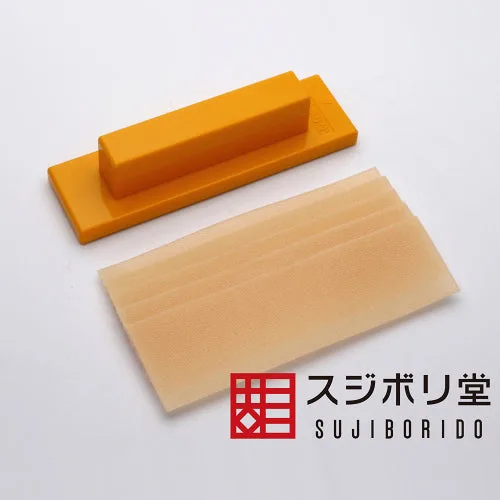
Magic File