Quick answer
Fold a magnetic bookmark over the top corner of the page you want to mark, with one magnet flat against the front of the page and the other flat against the back. Slide it down until the fold sits snug against the page edge, then close the book. Keep the fold aligned with the page edge rather than the spine, and avoid stacking it over another bookmark, which weakens the grip.
Magnetic bookmarks are the quiet workhorses of a reading habit. They stay put in a tote bag, they do not slide out when you fall asleep mid-chapter, and they hold their place without a paper clip digging into the page. That said, the way you fold them onto a page makes a real difference in how well they hold and how long the magnet keeps its strength.
This guide walks through a simple process you can repeat every time you pick up a book, from choosing the right fold for a thick hardcover to storing the bookmark when you are between reads. It also covers the small habits that keep printed artwork from scuffing, using real MangoIllustrated bookmarks as examples of what to look for.
Step 1: Choose the right fold for your book
Magnetic bookmarks work by pinching a page between two magnets. On a standard paperback or trade paperback, fold the bookmark over the top corner of the page so the crease lines up with the page edge. The magnets should sit flat against the front and back of that single page, not the cover. If you fold it over the cover instead, the magnet has to grip through a thick board and the bookmark will slide.
For hardcovers, the same rule applies: mark a page, not the cover. If the page is thin, the magnets may feel loose at first, but they will still hold once the book is closed. A bookmark like the I Literally Have No Idea What I'm Doing bookmark, which measures 2 in x 6 in with rounded corners and a soft touch matte finish on both sides, is sized for standard novels and will not catch on the page as you turn it.
- Common mistake: folding the bookmark over the cover or several pages at once. That spreads the magnets too far apart and the bookmark slips out.
- Checkpoint: give the bookmark a gentle tug. If it slides, refold it so only one page sits between the magnets.
Step 2: Position it for easy page turning
Place the bookmark so the top edge sits slightly above the page block. That extra half-inch gives you something to grab when you reopen the book, especially if you read in bed or on a crowded train. If the bookmark sits flush with the page edge, you will end up flipping through pages to find your spot.
For thicker books, angle the bookmark slightly toward the outer corner rather than straight down the center. This keeps the fold from pressing into the spine and reduces stress on the binding. A bookmark with a matte laminate, like the My Energy is Expensive magnetic bookmark, holds its shape well because the laminate protects the cardstock from bending at the fold.
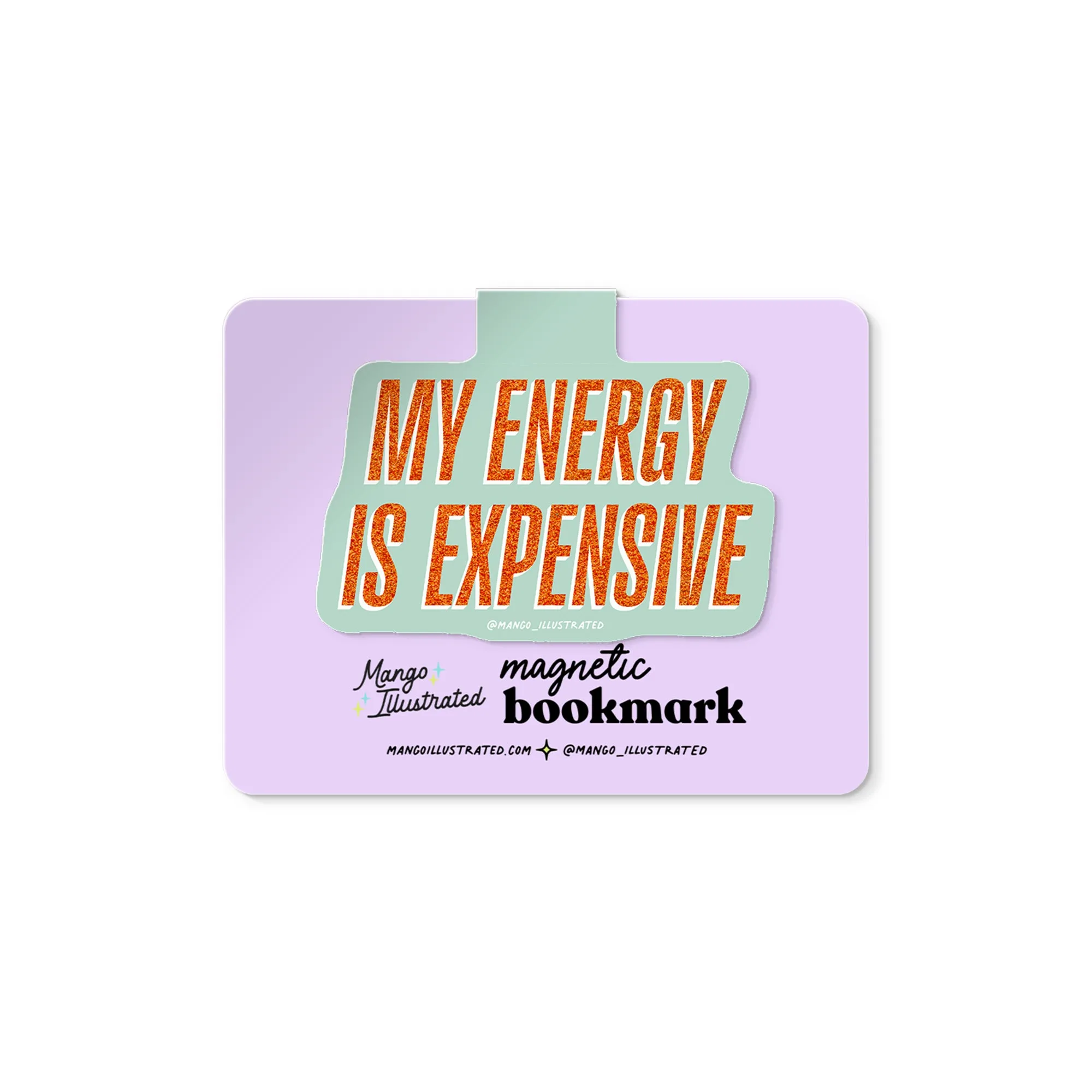
My Energy is Expensive magnetic bookmark
- Common mistake: centering the bookmark so it disappears into the page block. Leave a visible tab above the pages.
- Checkpoint: close the book and look at the top edge. You should see the bookmark peeking out on the side you can reach easily.
Step 3: Keep the magnets clean and dry
Magnetic bookmarks do not need much maintenance, but they do collect lint, dust, and the occasional crumb from your reading snack. Every few weeks, wipe the magnet surfaces with a dry, soft cloth. If something sticky gets on them, a barely damp cloth followed by a dry one is enough. Avoid soaking the bookmark or running it under water, since moisture can seep between the laminate and the cardstock.
The same care applies to the printed side. A soft touch matte finish, like the one on the Book doodles bookmark, can pick up fingerprints over time. A quick wipe with a microfiber cloth keeps the illustration clear without scratching the surface.
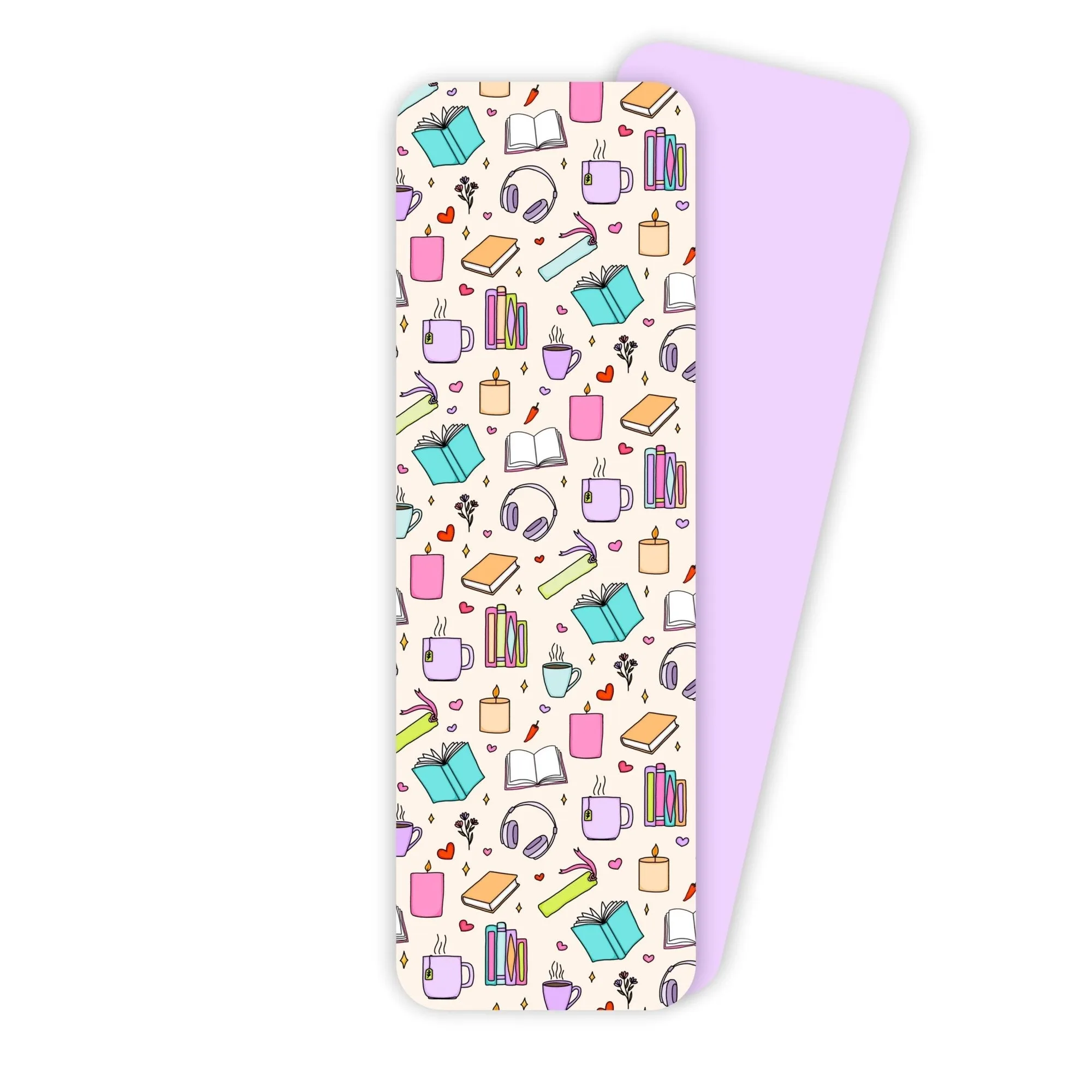
Book doodles bookmark
- Common mistake: using alcohol or household cleaners on the laminate. These can dull the finish or break down the adhesive layers.
- Checkpoint: after cleaning, let the bookmark air dry completely before folding it back into a book.
Step 4: Store it flat when it is not in use
When you finish a book, resist the urge to leave the bookmark clamped to a shelf or a metal surface. Long-term tension on the fold can weaken the magnet over time. Instead, store magnetic bookmarks flat in a small tin, a pencil pouch, or a dedicated bookmark sleeve. If you keep several in rotation, stack them loosely so the magnets are not pulling against each other for months.
If you are between books and want to keep a bookmark handy, clip it to the front cover of your current read or lay it flat on your nightstand. The goal is to avoid leaving it folded around a thick object for weeks, which is the most common way these bookmarks lose their snap.
- Common mistake: storing magnetic bookmarks stuck to a refrigerator or metal shelf. The constant magnetic pull can reduce holding power.
- Checkpoint: once a month, test the fold. If the magnets no longer meet with a light click, they have been stored under tension too long.
Step 5: Match the bookmark to the reading situation
Not every bookmark suits every book. A slim magnetic bookmark is ideal for a novel you carry in a bag, but if you read oversized art books or cookbooks, a larger bookmark or a different style may be more comfortable. Magnetic bookmarks also work well for planners and journals, where you want to mark a page without adding bulk.
For readers who switch between several books, keep a small set of magnetic bookmarks in different designs. That way you can assign one to each book and avoid the shuffle of moving a single bookmark around. It also means you always have a spare when one is drying after a wipe-down.
- Common mistake: forcing a small bookmark onto a thick textbook. The magnets will not close properly and the bookmark may crease.
- Checkpoint: if the bookmark does not sit flat against the page, choose a larger size or a different bookmark style for that book.
Your magnetic bookmark routine in five steps
- Fold over one page: Open to the page you want to mark and fold the bookmark over the top corner so one magnet sits on the front and one on the back of that single page. Checkpoint: the magnets should meet with a soft click, not a loose gap.
- Leave a visible tab: Slide the bookmark down until the fold is snug, then nudge it up so about half an inch sticks out above the page block. This makes it easy to find your spot without flipping through pages.
- Wipe it down monthly: Use a dry, soft cloth to remove lint and dust from the magnet surfaces. For sticky spots, use a barely damp cloth and dry immediately. Avoid soaking the bookmark or using harsh cleaners on the laminate.
- Store it flat: When the bookmark is not in a book, lay it flat in a tin or pouch rather than clamping it to a metal surface. This prevents long-term tension that can weaken the magnet.
- Rotate your bookmarks: Keep a few magnetic bookmarks in different designs so each book has its own and you always have a dry spare. A simple rotation keeps your bookmarks clean and your place easy to find.
Magnetic bookmark details worth knowing
- My Energy is Expensive magnetic bookmark: Made from thick cardstock with durable matte laminate on the outside and inside, and measures 2.5 x 1.8 in. The laminate protects the fold from daily wear, while the compact size suits paperbacks and smaller journals.
- I Literally Have No Idea What I'm Doing bookmark: Measures 2 in x 6 in with rounded corners and a soft touch matte finish on both sides. The longer shape gives you more to grab when reopening a book, and the rounded corners reduce page snags.
- Book doodles bookmark: Measures 2 in x 6 in with rounded corners and a soft touch matte finish on both sides. A good option if you want a bookmark that lies flat in a thick novel without adding bulk.
Using a magnetic bookmark well comes down to a few small habits: fold it over a single page, leave a tab you can grab, keep it clean and dry, and store it flat when you are done. Do that, and a well-made bookmark will hold its place through every chapter and every reread.