Quick Answer
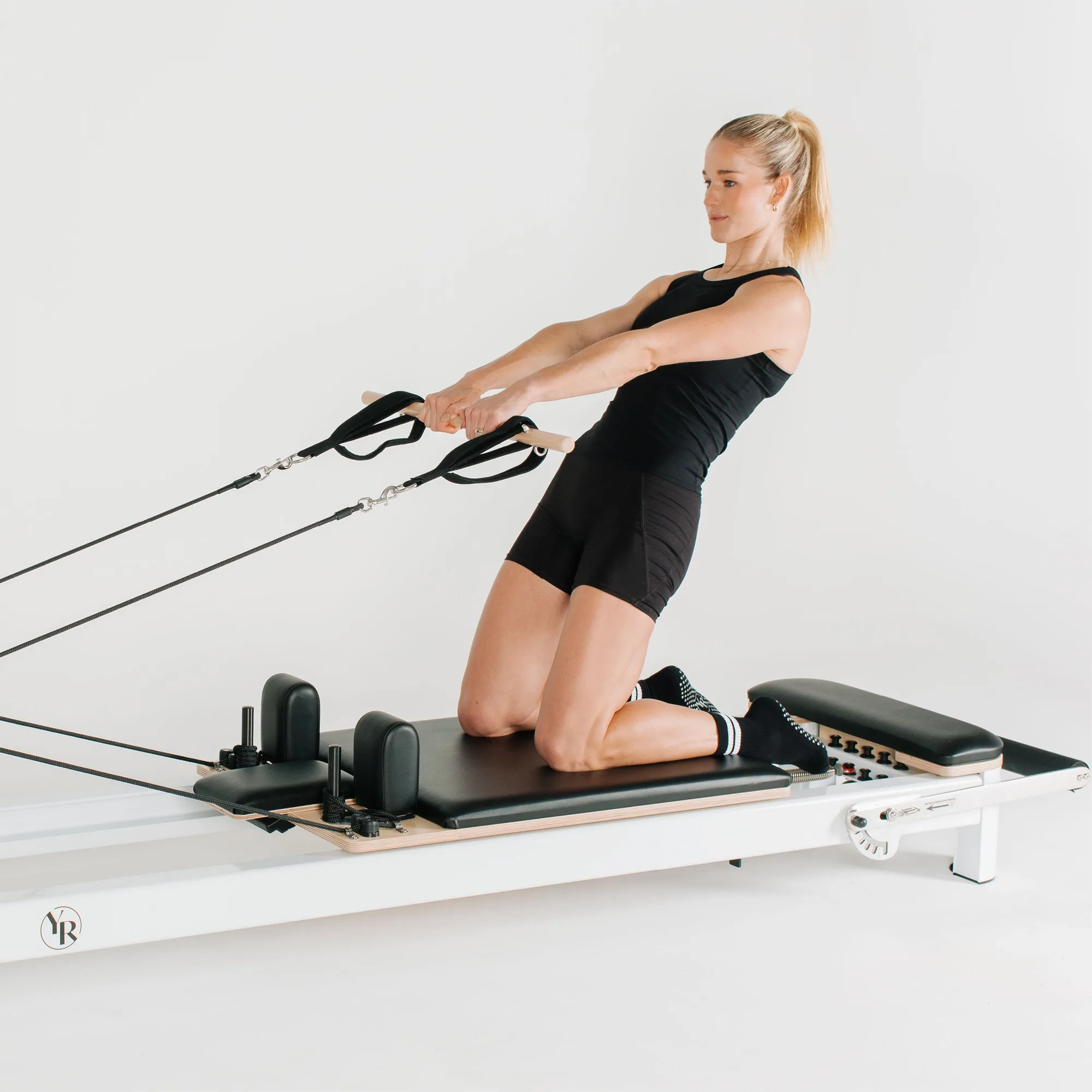
A maple pole helps you refine balance and alignment during Pilates by providing a tactile reference point. Use it on a mat or reformer for exercises that challenge stability, such as standing leg work or seated spine twists. The smooth wood surface lets you focus on control without slipping.
Why a Maple Pole for Balance Work
Unlike straps or bands, a rigid pole gives immediate feedback on posture and weight distribution. Maple wood offers a smooth, durable surface that won't splinter or flex, so you can trust it for precise cues. This makes it especially useful for exercises where you need to keep your shoulders square or your hips level.
Getting Started: Grip and Setup
Hold the pole with a relaxed grip—fingertips wrapped around, not clenched. For most balance exercises, place the pole horizontally across your upper back (like a barbell) or vertically in front of your chest. On a reformer, position the pole so it does not interfere with the carriage movement.
Step-by-Step: Maple Pole Balance Exercises
- Standing Hip Hinge with Pole: Stand with feet hip-width apart. Hold the pole horizontally behind your back, one hand at each end. Keeping your spine long, hinge forward from the hips until your torso is parallel to the floor. The pole should stay in contact with your sacrum, upper back, and back of your head. Common mistake: rounding your lower back. Keep the pole touching all three points to maintain a flat spine.
- Single-Leg Balance with Vertical Pole: Hold the pole vertically in front of your chest with both hands, palms facing each other. Lift one foot off the floor and find your balance. Slowly rotate the pole to one side, then the other, keeping your standing leg stable and your core engaged. Checkpoint: your shoulders should stay level. If the pole tilts, you are leaning—correct by engaging your obliques.
- Seated Spine Twist on Reformer: Sit tall on the reformer carriage with the pole resting across your shoulders. Hold the ends with a light grip. Keeping your hips still, rotate your torso to one side, then the other. The pole helps you track the rotation range evenly. Common mistake: moving your hips to twist further. Let the pole be your guide—if it shifts off your shoulders, you are rotating from the wrong joint.
Product Highlight: Maple Pole
- Maple Pole: Constructed from maple wood for a smooth, durable finish. Compatible with most reformers for versatile use. The smooth maple surface prevents snagging on clothing or equipment, and its durability means it will hold up to daily practice without warping or cracking.
- Maple Pole: Ideal for stretching, balance work, and targeted muscle engagement. Lightweight and easy to handle during workouts. Because it is lightweight, you can easily adjust your grip mid-exercise without breaking form, which is critical when you are balancing on one leg or on a moving carriage.