Quick answer
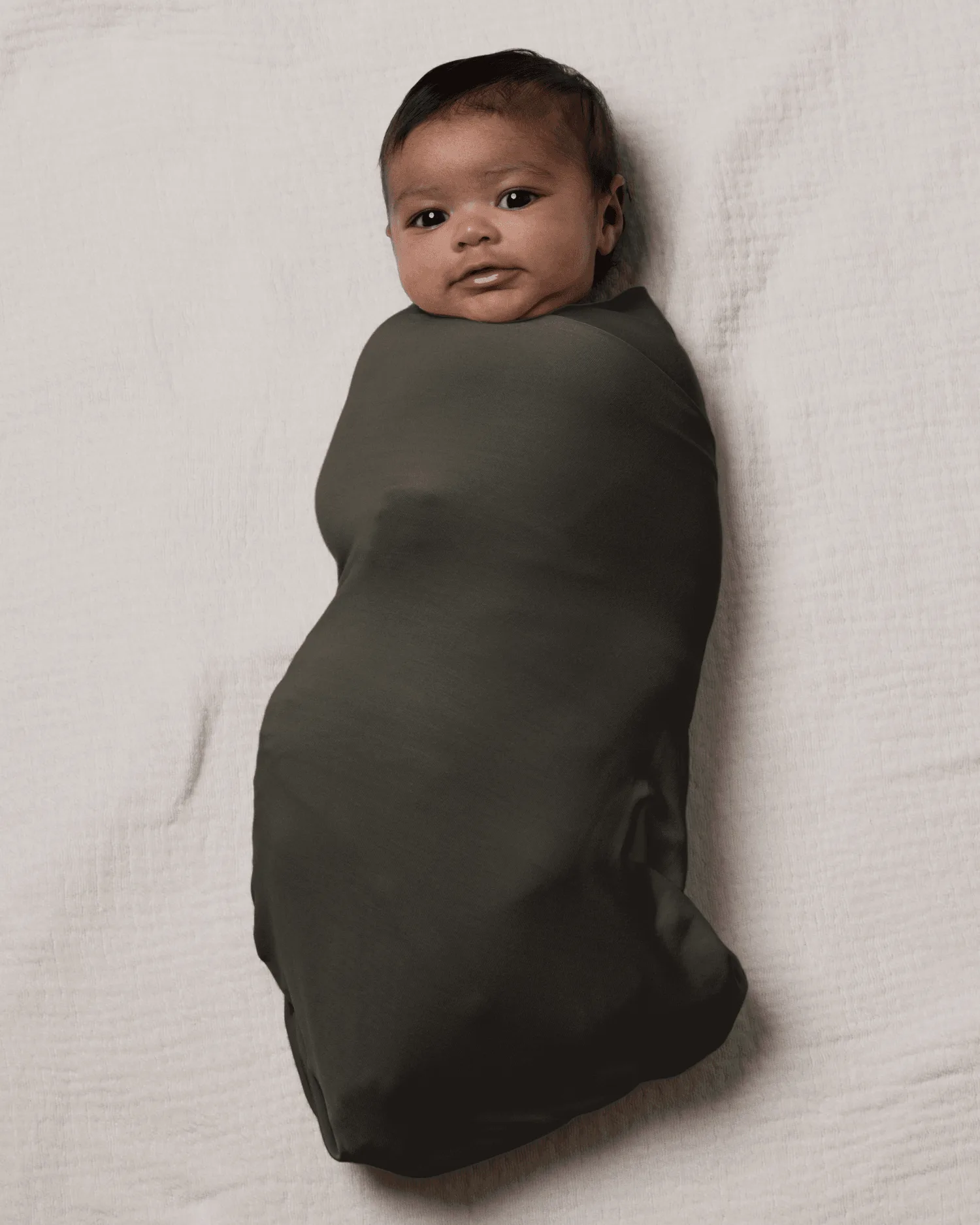
Lay a muslin baby wrap in a diamond, fold the top corner down, place your baby with shoulders on the fold, then wrap one side across the chest and tuck it under the opposite arm. Finish the second side the same way, keeping the hips loose and two fingers of space at the chest. Stop swaddling once your baby shows signs of rolling.
Swaddling is one of the few newborn skills you can learn in an afternoon and use every night for months. A muslin baby wrap is a good place to start because the fabric is breathable, molds to your baby's shape, and doubles as a pram cover, nursing shield, and tummy-time mat later on.
The techniques below are ordered from the simplest wrap to a couple of variations for wriggly babies. Each step includes the mistake that most often undoes it, so you can self-correct instead of starting over.
Before you start: set up the wrap and the room
Work on a flat, firm surface at waist height so you are not bending over a cot mattress. Spread the muslin into a diamond with the prettiest side facing down, then fold the top corner toward the center so the folded edge sits roughly at your baby's shoulder line. A wrap around 47 by 47 inches gives most newborns enough fabric to tuck without bulk.
Keep the room between roughly 68 and 72°F and dress your baby in a single layer underneath. Muslin is breathable, but it is still a layer. If you are unsure whether your baby is too warm, feel the back of the neck rather than the hands or feet, which often run cool.
- Have a spare wrap within reach for night changes so you are not hunting for one at 3 a.m.
- Skip swaddling over a thick sleep sack; choose one or the other.
Why muslin works well for swaddling
Muslin is a plain-weave cotton fabric, and the bamboo-and-cotton blends used in baby wraps tend to be softer and more breathable than dense flannel. That matters because overheating is a known risk factor in infant sleep, and a wrap that traps heat works against you. The open weave also means the wrap dries quickly after a spit-up or leak.
The tradeoff is stretch. Muslin has a little give, which makes it forgiving to wrap but also easier for a determined baby to work loose. If your baby escapes every swaddle, you can double-wrap with a second muslin or switch to a firmer technique rather than pulling the fabric tighter against the chest.
- Wash new muslin wraps before first use to soften the weave.
- Line-dry or tumble on low; high heat can shrink the wrap out of a usable size.
The five techniques, step by step
Start with the basic diamond wrap, then move to variations only if you need them. The armpit tuck suits babies who kick their legs free, the one-arm variation helps during the transition away from swaddling, and the legs-free wrap is the version to use once your baby is close to rolling. The fifth technique is simply knowing when to stop.
Whichever you choose, the checkpoint is the same: two fingers should slide easily between the wrap and your baby's chest, and the hips should have room to bend up and out. Tight across the chest and loose at the hips is the rule.
- Practice on a doll or a rolled towel before you try it on a fussy baby.
- If your baby is calm and drowsy but still awake when you finish, the swaddle is doing its job.
Common mistakes and how to fix them
The most frequent error is wrapping too tightly around the chest in an attempt to stop startles. That restricts breathing and can make a baby fight the wrap harder. The second is leaving the legs straight and tightly bound, which puts pressure on the hips. A swaddle should feel like a gentle hug, not a bandage.
The third mistake is continuing to swaddle after your baby shows signs of rolling. Once that happens, arms need to be free so your baby can push up and turn their head. If your baby is breaking out repeatedly, check the fabric size and fold before assuming the technique is wrong.
- If the wrap leaves red marks on the skin, it is too tight.
- If your baby wakes within minutes, try the armpit tuck before adding more layers.
Reusing your muslin wrap beyond the swaddle
A muslin baby wrap earns its place in the bag long after the newborn stage. Use it as a lightweight pram cover, a discreet nursing shield, a clean surface for nappy changes, or a soft layer over a play mat. The same breathable weave that suits swaddling also makes it a reasonable summer blanket for a toddler.
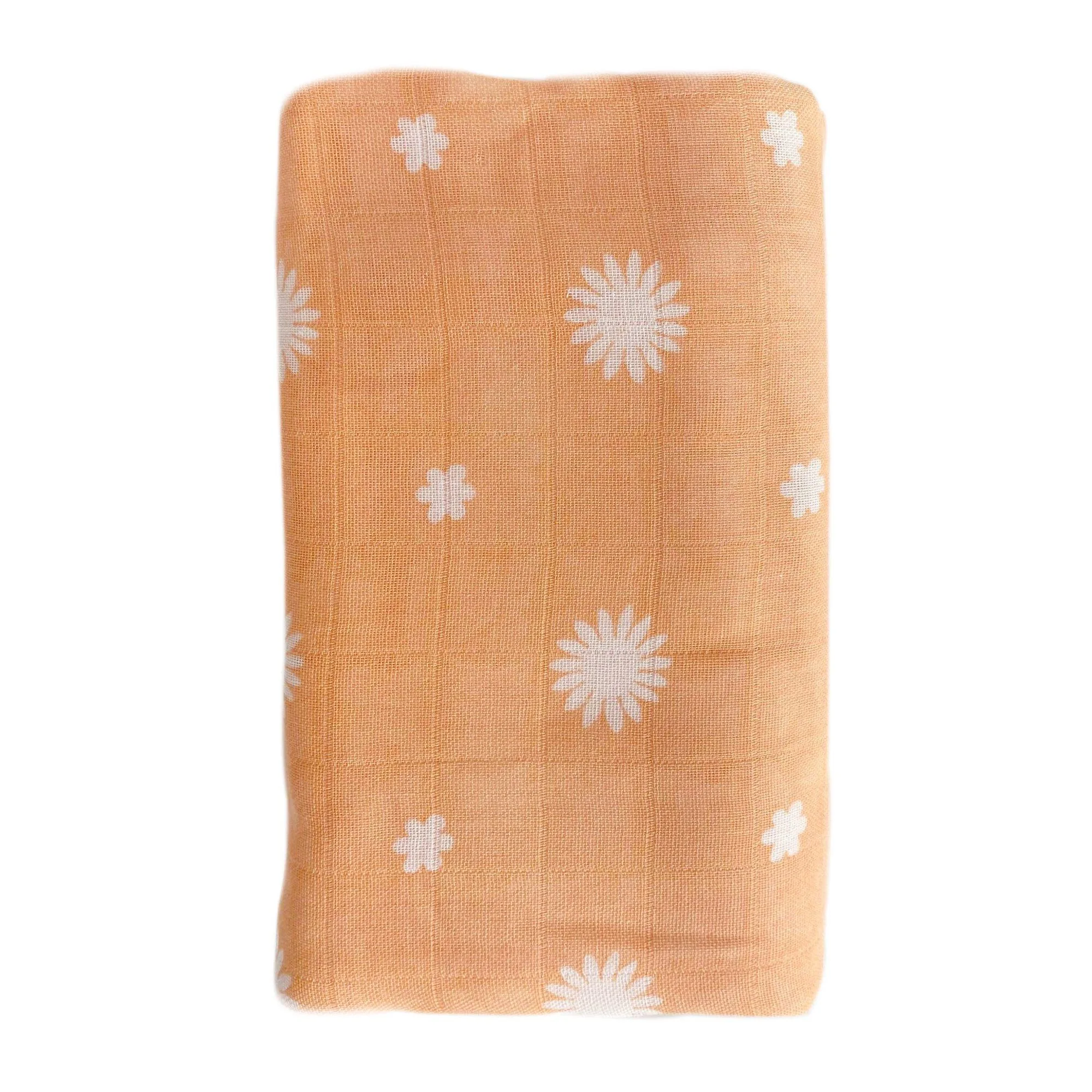
If you are buying more than one, choose a print you will not tire of, since the wrap will be visible in most of your early photos. A wrap with a bit of pattern also hides the everyday stains that plain white shows immediately.
- Keep one wrap in the nappy bag and one at home so you are never caught short.
- A wrap that has been used as a changing mat should go straight into the wash.
Your swaddle routine, in order
- 1. Lay the wrap and fold the top corner: Spread the muslin into a diamond, patterned side down, and fold the top corner toward the center so the folded edge rests near your baby's shoulders. Checkpoint: the folded edge should sit at shoulder height, not at the neck.
- 2. Place your baby on the fold: Set your baby face-up with shoulders on the folded edge and arms relaxed at the sides or crossed over the chest. Mistake to avoid: laying the fold too high, which rides up over the chin.
- 3. Wrap the first side: Bring one side corner across the chest and tuck it firmly under the opposite arm and back, keeping the fabric smooth rather than bunched. Mistake to avoid: pulling so tight that you cannot slide two fingers under the chest.
- 4. Wrap the second side: Bring the remaining corner across in the same way, then tie the two lower corners in a small knot at the front or tuck them neatly at the side. Checkpoint: the hips should still bend up and out, with room for legs to move.
- 5. Check fit, temperature, and stop signs: Slide two fingers under the chest, feel the back of the neck for overheating, and confirm your baby is not showing signs of rolling. If your baby is rolling or trying to, stop swaddling and leave the arms free.
Muslin wrap facts worth knowing
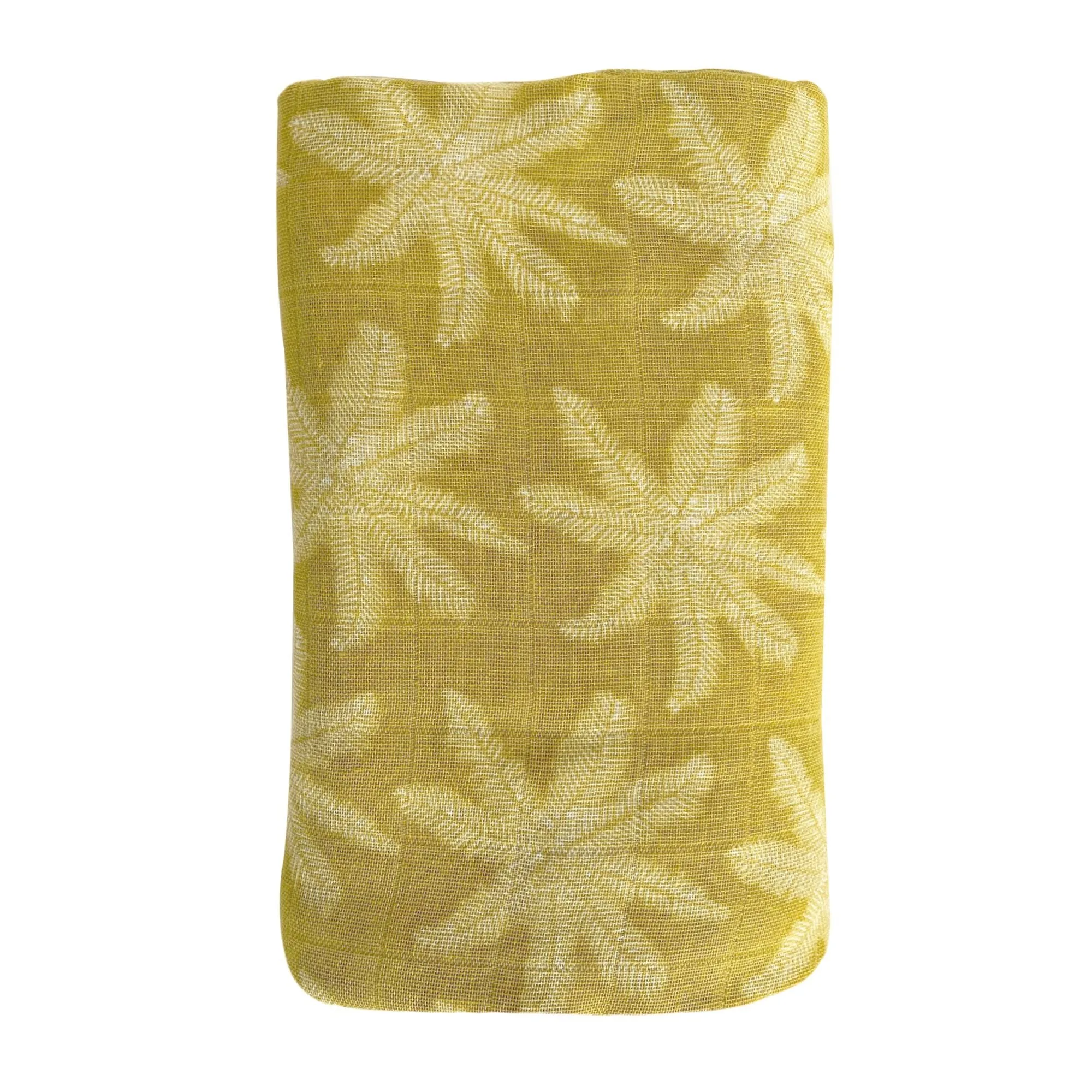
- Bamboo + Cotton Muslin Swaddle Wrap Pear - Palm Print: Made from eco-friendly, ultra-soft bamboo and cotton muslin in a pear palm print, and described as useful as a baby swaddle, comforter and security blanket, nursing accessory, and changing mat. One wrap covers swaddling and several other newborn jobs, which is why it is worth learning the technique properly rather than buying a single-purpose blanket.
- Fennec Fox Soft Toy 11" / 28 cm: Designed by OB in Australia with a soft colour palette inspired by Byron Bay, made with high-quality materials and master craftsmen. Once your baby outgrows the swaddle, a soft toy like this becomes the familiar comfort object that helps replace the wrap at bedtime.
Learn one wrap well, check the chest and hips every time, and stop swaddling the moment your baby starts rolling. A muslin baby wrap is forgiving enough to practice on, and useful enough to keep in the bag long after the newborn stage ends.