Quick Answer
To use a nasal cannula with ear cushions, place the prongs in your nostrils, loop the tubing over your ears so the cushions rest comfortably behind each ear, and adjust the sliding collar under your chin for a snug but not tight fit.
Why Ear Cushions Improve Comfort During Oxygen Therapy
Standard nasal cannula tubing can rub against the ears and cause skin irritation over hours of use. Ear cushions—soft pads attached to the tubing—distribute pressure more evenly behind the ears, reducing soreness and helping the cannula stay in place without frequent readjustment.
The McKesson Adult Nasal Cannula with Ear Cushion uses a no-pad design that still provides a cushioning effect through its contoured tubing. This makes it a practical choice for long-term oxygen therapy at home or in a care facility, especially for patients with sensitive skin.
Choosing the Right Fit for Your Needs
Nasal cannulas are typically one-size-fits-most, but fit can vary based on face shape and tubing length. The McKesson model features 7-foot crush-resistant tubing, which offers flexibility for moving around while reducing the risk of kinking that could block oxygen flow.
If you find the prongs too long or too short, or if the tubing pulls on your ears, try adjusting the sliding collar under your chin first. This simple step often resolves most fit issues without needing a different product.
Step-by-Step Guide to Wearing a Nasal Cannula with Ear Cushions
- Position the Prongs: Gently insert the two straight prongs into your nostrils. They should point slightly upward, following the natural curve of your nasal passages. Do not force them in—the prongs should sit comfortably without pressing against the nasal wall. If the prongs feel too long or cause discomfort, try a smaller size or a different cannula design.
- Loop Tubing Over Each Ear: Bring the tubing over the top of each ear so the ear cushions rest behind the ear, not on the cartilage. The cushions should lie flat against the skin where the ear meets the head. Avoid placing them on the ear lobe or too high on the skull. Common mistake: placing cushions on the ear cartilage can cause pressure sores. Adjust until they sit behind the ear comfortably.
- Adjust the Sliding Collar: Slide the plastic collar (often called the cinch or adjuster) up or down under your chin until the tubing fits snugly but does not pull on the prongs or ears. The collar should sit at the hollow of your chin, not on the jawbone or throat. A collar that is too tight can restrict head movement; too loose and the cannula may slip off. Check that you can turn your head freely without the prongs shifting.
- Connect to Oxygen Source and Set Flow Rate: Attach the cannula tubing to your oxygen concentrator, tank, or wall outlet. Turn on the device and set the flow rate prescribed by your healthcare provider (usually 1–6 L/min for low-flow oxygen). You should feel a gentle stream of oxygen from the prongs. Never adjust the flow rate without a doctor's order. Too high a flow can dry out nasal passages or cause discomfort.
- Check for Comfort and Security: Breathe normally and check that the cannula stays in place when you talk, cough, or move your head. The ear cushions should not slide or pinch. If the tubing feels heavy or pulls, route it over your ears again and adjust the collar. For nighttime use, ensure the tubing is not tangled around your neck or bed rails. Recheck fit after 30 minutes of use. Skin redness or pain means the cushions need repositioning or a different cannula style may be needed.
Product Spotlight
-
Nasal Cannula with Ear Cushion McKesson Adult Straight Prongs 7 Foot Tubing Low Flow Rate: Adult McKesson Nasal Cannula with Ear Cushion Set has straight prongs, 7-foot crush-resistant tubing, and a no-pad design. It is for single patient use and not made with natural rubber latex. The crush-resistant tubing helps maintain consistent oxygen flow even if you move or lie on the tubing, and the latex-free construction reduces allergy risk for sensitive users.
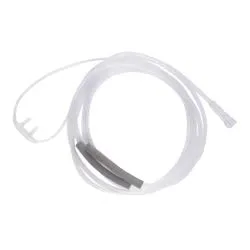
Nasal Cannula with Ear Cushion McKesson Adult Straight Prongs 7 Foot Tubing Low Flow Rate