Quick Answer
Use OC spray with UV dye by choosing the right formulation (stream for distance, gel for wind), aiming for the eyes and nose, and verifying exposure later with a UV light.
Stream vs Gel: Which OC Formulation Fits Your Situation
Stream OC spray travels in a narrow jet, giving you reach up to 10-12 feet and less drift in light wind. It works well outdoors or when you need distance from a threat. Gel OC comes out as a sticky blob that clings to the face, reducing blowback and making it harder for the attacker to wipe off. In tight indoor spaces or windy conditions, gel gives you better control. Both ASP Defender LE 1.4 options include UV dye, so you can mark and later identify an assailant regardless of which you pick.
Why UV Dye Matters for Evidence and Identification
UV dye is a forensic tool that stays visible on skin and clothing under a black light for hours or even days after deployment. If you ever need to report an incident to law enforcement, the dye provides traceable evidence linking the attacker to the scene. It also helps you confirm that the spray reached the intended target, which can be critical for your own safety assessment after an encounter.
Step-by-Step Guide to Using OC Spray with UV Dye
- Choose the Right OC Formulation for Your Environment: Assess your surroundings before drawing your spray. Outdoors or when you need distance, select a stream formula like the Defender LE 1.4 Stream w/UV. Indoors or in windy conditions, choose a gel formula like the Defender LE 1.4 Gel w/UV to avoid blowback. Common mistake: using stream in a confined space can cause the spray to bounce back at you.
- Grip and Aim Correctly: Hold the canister with your thumb on the actuator and your index finger along the side for stability. Extend your arm and aim for the attacker’s eyes and nose—the most sensitive areas. Keep the nozzle at least 2-3 feet away to ensure proper dispersion. Checkpoint: practice drawing and aiming with an inert trainer to build muscle memory.
- Deploy in a Short Burst: Press the actuator firmly for a 1-2 second burst. A longer burst wastes product and increases the chance of blowback. After deploying, step back and create distance while assessing the attacker’s reaction. Common mistake: spraying too long can exhaust your canister and reduce your ability to defend again.
- Move to Safety and Notify Authorities: Once you have created space, retreat to a safe location and call 911. Inform the dispatcher that you used OC spray with UV dye so responding officers can use a UV light to identify the suspect later. Checkpoint: do not attempt to detain the attacker yourself—your priority is personal safety.
- Preserve Evidence with a UV Light: After the incident, use a UV (black) light to check your own skin and clothing for dye transfer. If you have a witness, ask them to scan the area for dye marks on the attacker. Document any findings with photos for your report. Common mistake: assuming the dye is permanent—it can wash off with soap, so document evidence as soon as possible.
Products Mentioned
-
NEW Defender LE 1.4 OC, Stream w/UV: The Defender LE 1.4 OC, Stream w/UV is designed and tested by ASP’s law enforcement team, made in the USA. Stream formulation gives you a focused jet that reaches farther, making it a solid choice for outdoor or open-area defense.
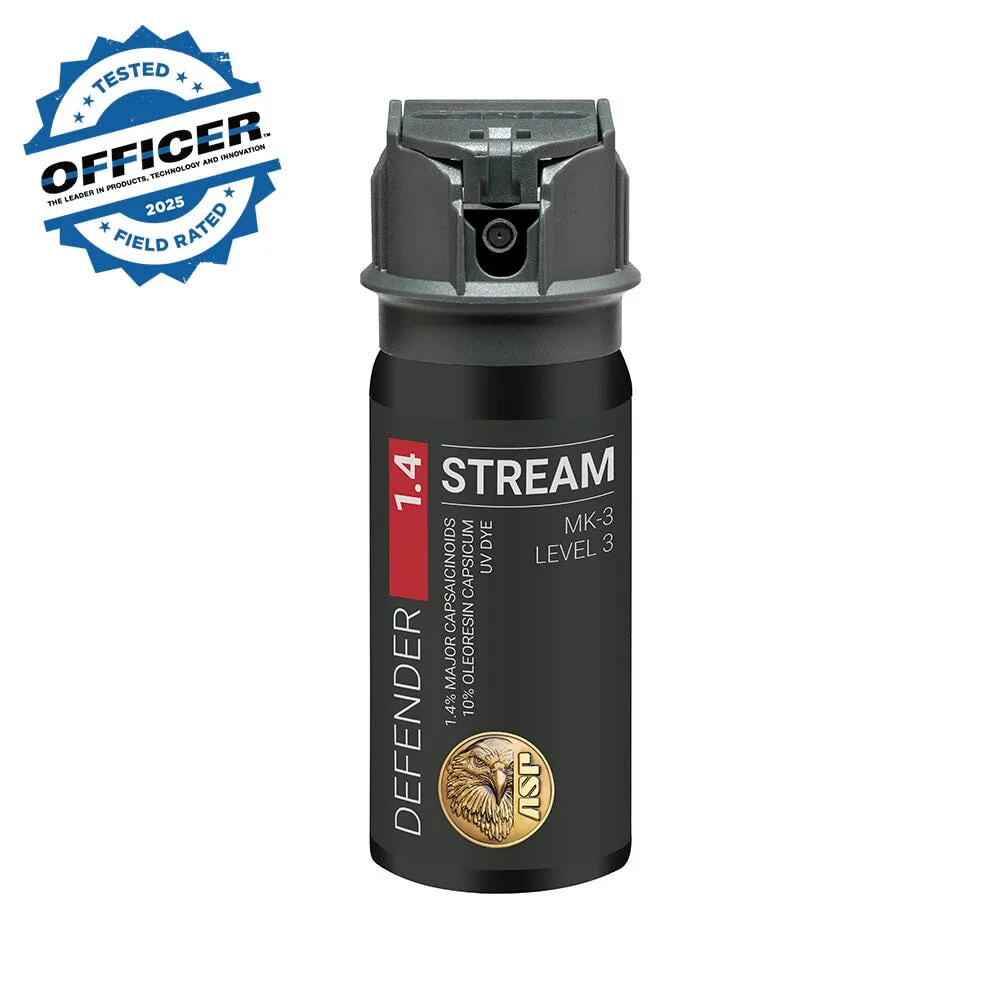
NEW Defender LE 1.4 OC, Stream w/UV
-
NEW Defender LE 1.4 OC, Gel w/UV: The Defender LE 1.4 OC, Gel w/UV is also designed and tested by ASP’s law enforcement team, made in the USA. Gel clings to the face and resists wind, reducing blowback risk in confined or breezy environments.
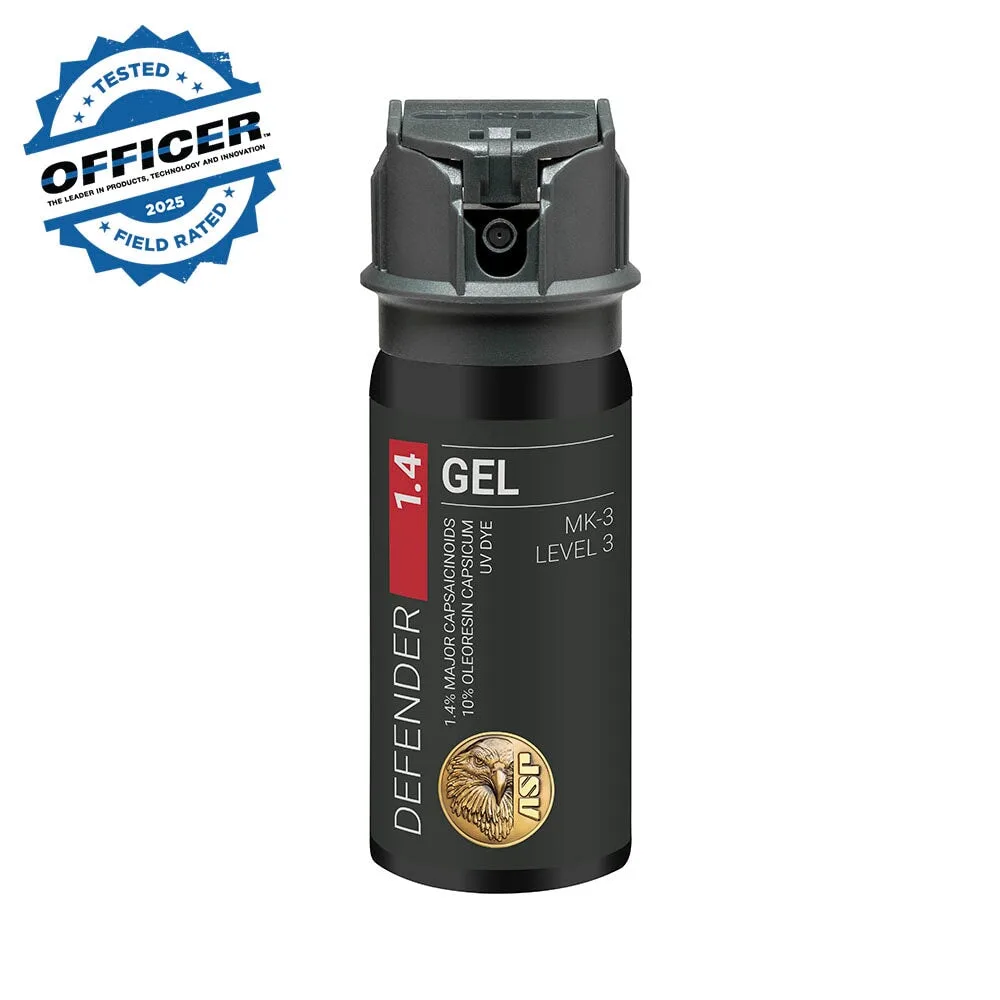
NEW Defender LE 1.4 OC, Gel w/UV