Quick answer
Use ocean stacking cups as open-ended bath sensory toys, water play stacking cups, and sand play toys. Start with a shallow bin or tub, model pouring and stacking, then drain and dry every cup fully after play. The biggest mistake is storing them wet or letting water sit in stacked cups, which can lead to mold and odor.
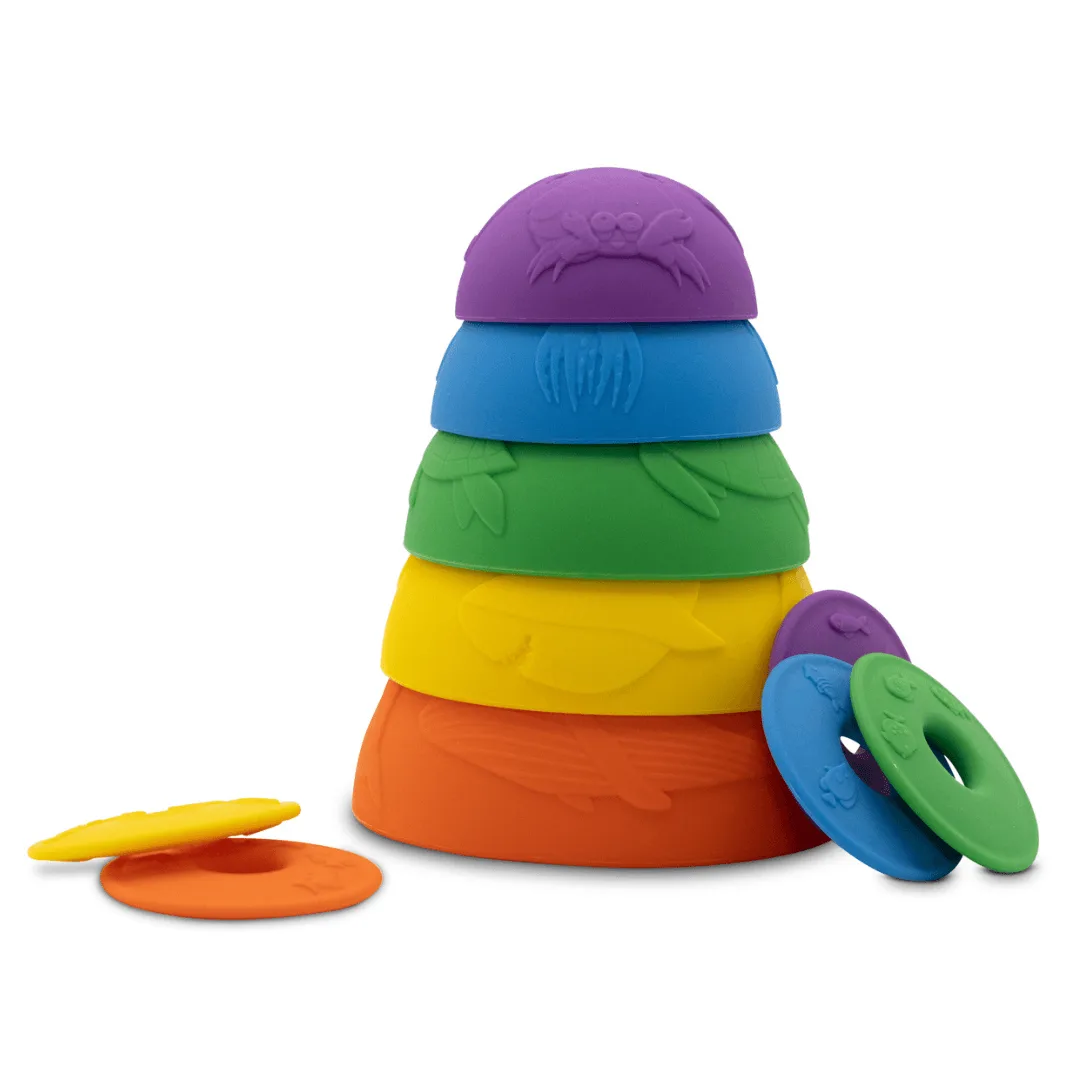
ocean stacking cups
Ocean stacking cups are one of the most versatile toys you can keep in rotation. They work as stacking cups bath toys, as water play stacking cups at a sink or water table, and as sand play toys at the beach or in a sandbox. The same simple design supports pouring, scooping, stacking, and pretend play, which is why they hold attention across a wide age range.
This guide gives you a repeatable process for each setting, plus the checkpoints that keep the toys clean and safe. It focuses on the ocean stacking cups play you can set up in minutes, with no special equipment beyond a bin, water, and a towel.
Why ocean stacking cups work in so many play settings
Stacking cups are simple by design: a set of cups that nest, stack, and hold material. That simplicity is the point. In water, they become pouring and measuring tools. In sand, they become scoops and molds. On a table, they become a tower-building challenge. Because the toy does not dictate one correct outcome, toddlers can lead the play and you can follow.
This flexibility also makes them practical. A single set covers bath time, water table time, and outdoor sand time, so you are not rotating three separate toys. If you want a silicone option that doubles as a teether, the Rainbow Stacker and Teether Toy is a good example of a stacking toy that moves between chewing, stacking, and water play.
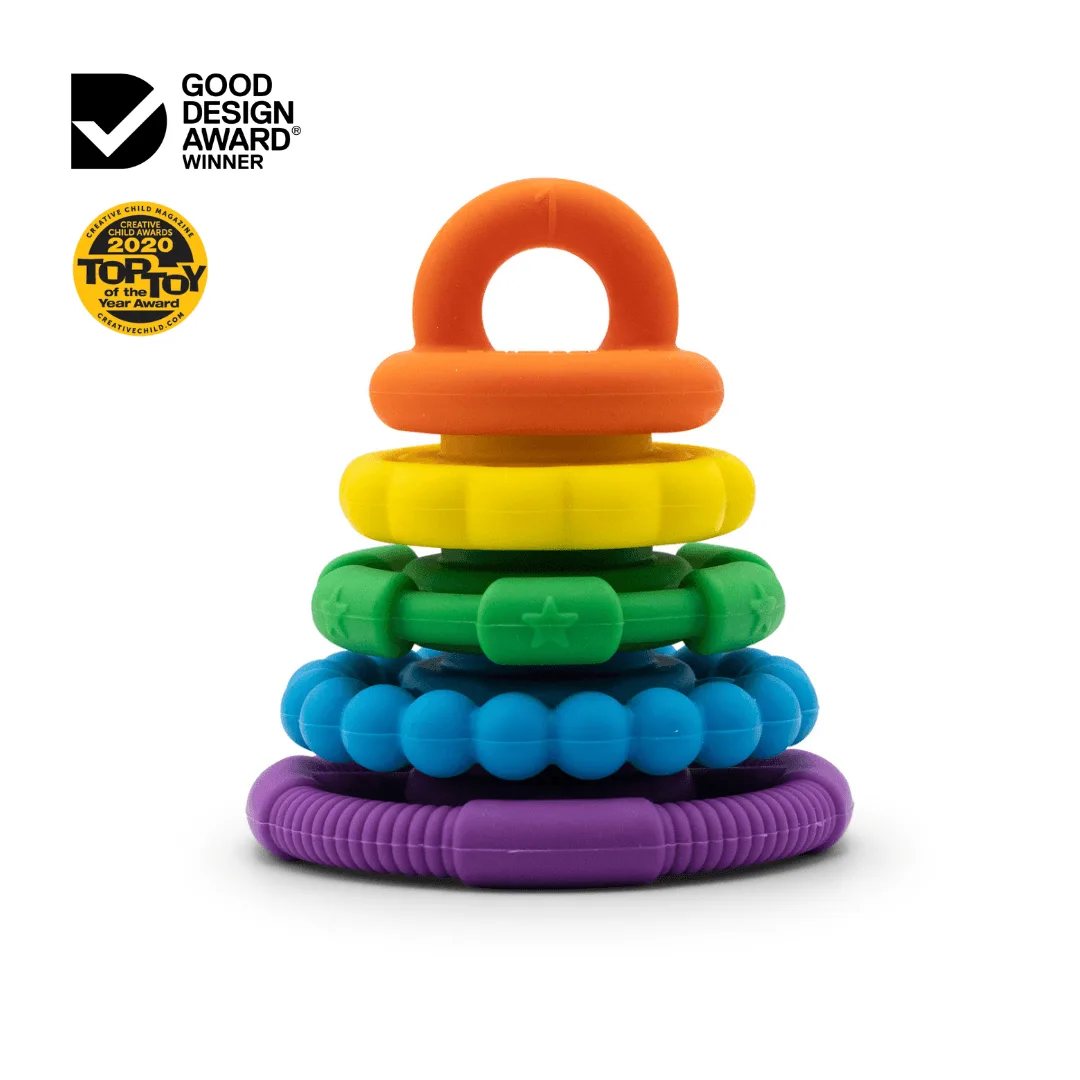
Rainbow Stacker and Teether Toy
- Choose a set with smooth edges and no small parts that can trap water.
- Keep one set for water and one for sand if you want to avoid grit in the bath.
Set up a bath or water play station
For bath play, add two to four cups to the tub rather than the whole set. Fewer cups mean less clutter and easier drying. Show your child how to fill a cup, lift it, and pour. Then let them copy. Narrate what you see: full, empty, heavy, light, splash. This turns a simple bath into a language-rich sensory activity without extra toys.
For a water table or sink, place a shallow bin on a towel and fill it with two to three inches of water. Add cups and one or two other bath sensory toys if you like. The shallow depth keeps the activity manageable and makes cleanup fast.
- Checkpoint: the water should be shallow enough that your child can sit or stand safely.
- Common mistake: filling the tub too deep or adding so many toys that cups get lost and stay wet.
Use stacking cups as sand play toys
In sand, the same cups become scoops, molds, and building blocks. Pack damp sand into a cup, turn it over, and lift to make a shape. Dry sand is better for pouring and scooping practice. Bring a small brush or a spare cup of clean water for rinsing before the toys go back in the bag.
Sand play is also a natural fine-motor workout. Scooping, filling, and dumping build hand strength and hand-eye coordination. If your child is still mouthing toys, stay close and rinse cups before they go near the face.
- Common mistake: packing cups away with damp sand still inside, which traps grit and moisture.
- Checkpoint: shake out each cup and rinse before storing.
Clean and dry after every session
Water and sand both leave residue. Rinse cups in warm water, use a soft brush on any textured areas, and set them upside down on a drying rack so water can escape. If your cups are silicone and dishwasher-safe, follow the manufacturer's instructions. Never stack wet cups together; trapped water is the main cause of mold and musty smells.
For a deeper clean, wash with mild soap and warm water, rinse thoroughly, and air dry completely before storing. If you use the cups as teethers too, treat them like any other silicone teether and clean them after each use.
- Checkpoint: every cup is fully dry inside and out before it goes back in the storage bag.
- Common mistake: storing cups in a sealed bin while still damp.
Adapt the play as your child grows
For babies, start with one or two cups and focus on grabbing, mouthing, and knocking over a stack. For toddlers, add counting, color naming, and simple challenges like 'can you make a tower taller than your hand?' For older children, introduce pretend play: a cup becomes a boat, a shell, or a scoop in a pretend ocean.
If you want to extend the theme, pair cups with a small set of ocean animal figures or a sensory bag. The Peekaboo Sensory Bag is a portable option for calm-down time after active water play, since it engages sight, touch, and sound without any mess.
- Keep sessions short for babies and follow their cues.
- Rotate cups in and out so the toy stays interesting.
Your ocean stacking cups play routine, step by step
- 1. Pick the right set and setting: Choose a stacking cup set with smooth edges and no small parts that trap water. Decide whether today is bath, water table, or sand play, and set up only that station. Checkpoint: the play area is safe, shallow, and within arm's reach.
- 2. Start with a short modeling round: Fill one cup, pour it out, and stack two cups. Then hand the cups to your child and let them copy or improvise. Narrate actions like full, empty, pour, and splash. Common mistake: directing the play instead of letting your child lead.
- 3. Add one challenge at a time: Introduce counting, color naming, or a simple goal such as building the tallest tower. For sand, show how to pack and turn over a cup to make a shape. Checkpoint: your child is still engaged; stop before frustration builds.
- 4. Rinse and dry every cup: After play, rinse cups in warm water, use a soft brush if needed, and set them upside down to dry completely. Never stack wet cups together. Common mistake: storing cups damp in a sealed bag, which causes mold and odor.
- 5. Store and rotate: Once fully dry, store cups loosely or in a breathable bag. Rotate them out for a week and back in to keep the toy feeling new. Next step: check the cups monthly for cracks, sticky residue, or lingering smells and replace if needed.
Jellystone Designs products that fit this play
- Rainbow Stacker and Teether Toy: Good Design Award Winner 2021; the stacking rings double as soothing teethers, and older children practice hand-eye coordination by stacking the rings. A single toy covers teething, stacking, and water play, so you can use it in the bath or water table and then let a baby chew on the rings afterward.
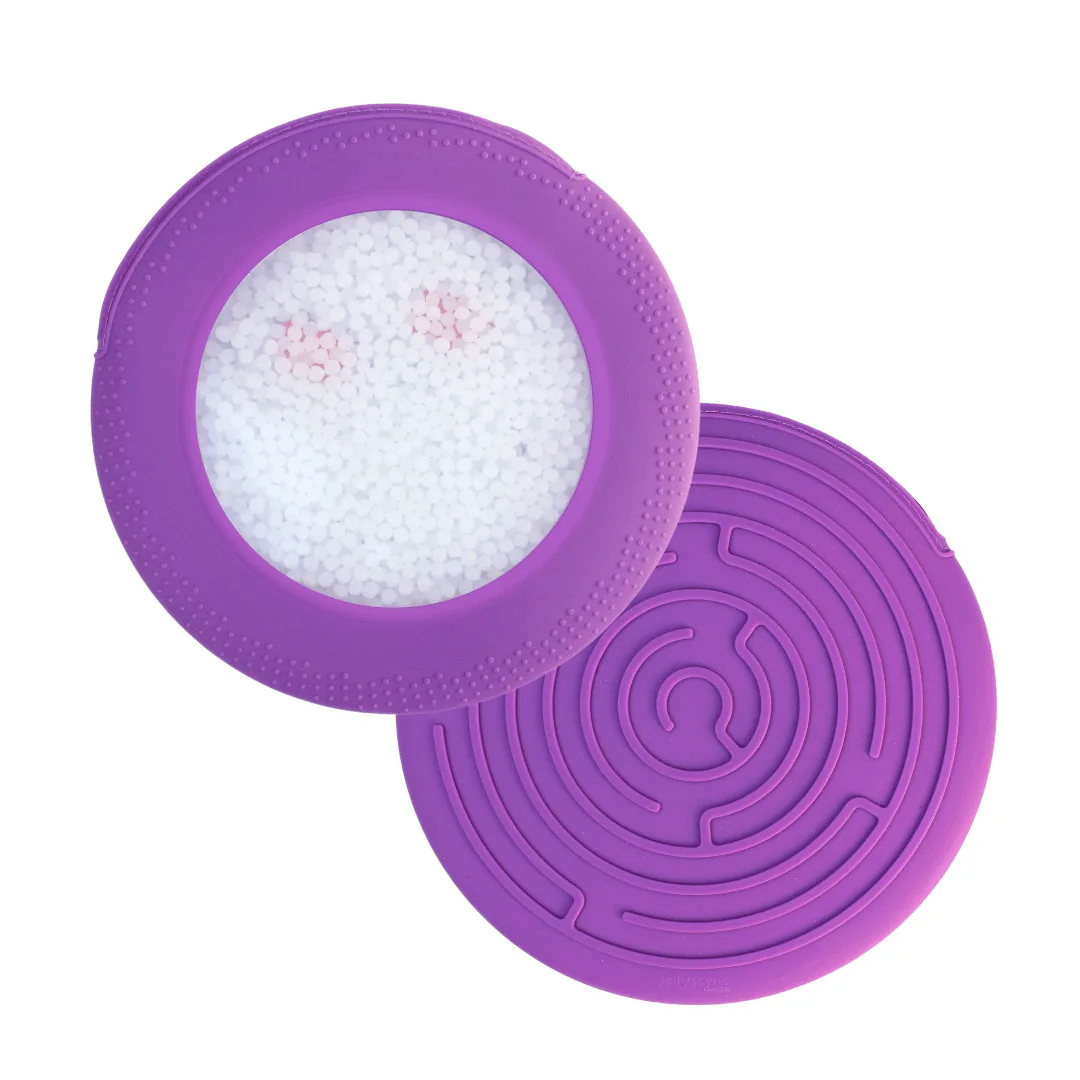
- Peekaboo Sensory Bag: Filled with weighted beads and themed figurines; designed to engage sight, touch, and sound while helping to calm and relax, and it comes totally sealed. A mess-free option for after water or sand play, when you want a calming sensory activity without another cleanup.
Ocean stacking cups earn their place because they work in the bath, at the water table, and in the sand with almost no setup. Keep the routine simple: play, rinse, dry completely, and store. Do that, and one set of stacking cups for toddlers can cover years of water play stacking cups, sand play toys, and bath sensory toys without turning into a mold problem.