Quick answer
Use the Peach Blossom Journal as a two-minute daily check-in: set a fixed time, write one honest sentence about the day, add a single prompt if you want more depth, and keep the journal where you will see it. The A5 size and 120 college-ruled pages give you room for months of short entries, so consistency matters more than length.
Set up your journal in five minutes
Before you write a single entry, make the journal easier to open. Write your name and the start date on the first page, then leave the next two pages blank for a simple index you can fill in later. On the following page, write three words that describe why you want to reflect daily—honesty, calm, or clarity, for example. That page becomes your reset button on days when the habit feels pointless.
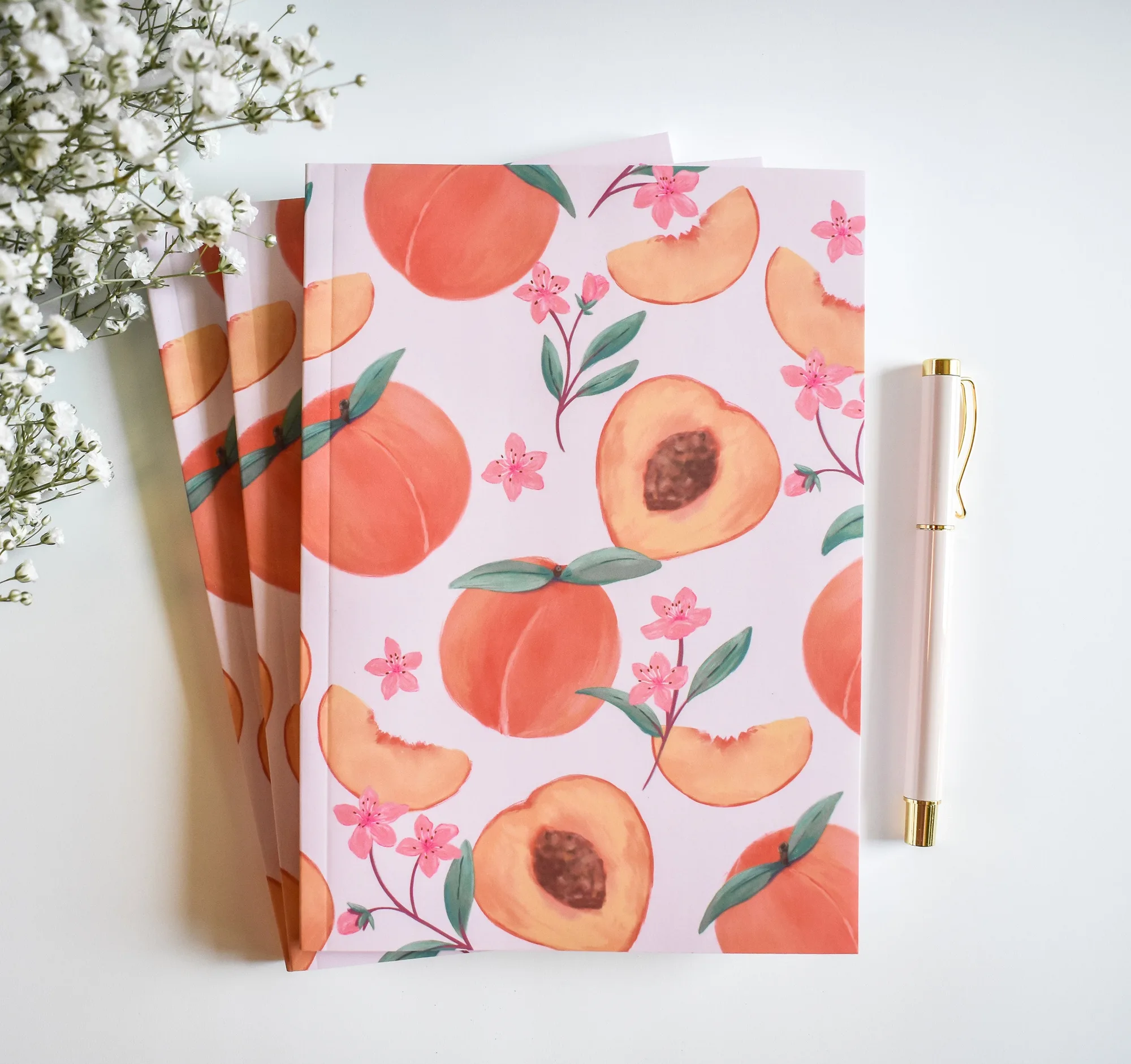
The Peach Blossom Journal has a soft cover and a pale pink floral design, so it slips easily into a tote or stays flat on a nightstand. Keep a pen clipped to the cover or tucked inside the first page. If you use stickers, add one small sticker to the cover or inside cover now—this is a visual cue that the journal is yours, not a chore.
Choose a realistic daily anchor
Daily reflection works best when it attaches to something you already do. Pick one anchor: morning coffee, the commute home, or the moment you get into bed. Write the anchor on a sticky note and put it on the journal cover. If you miss a day, do not double up the next day; just write one sentence and move on. The goal is a steady rhythm, not a perfect record.
For beginners, a two-minute timer removes the pressure to fill a page. Set the timer, write until it rings, and stop even if you have more to say. Leaving a sentence unfinished gives you an easy starting point tomorrow.
Use a three-line entry format
A simple three-line format keeps daily reflection journaling from turning into a blank-page stare. Line one: what happened today. Line two: how I felt about it. Line three: one thing I will do differently or appreciate tomorrow. This structure fits the college-ruled pages without wasting space and takes less than five minutes.
If you want to expand, add a fourth line for a reflective writing prompt. Keep a short list of prompts on the inside back cover so you never have to invent one on the spot. Good starters include: What drained me today? What surprised me? Where did I show patience?
Add stickers and small marks for tracking
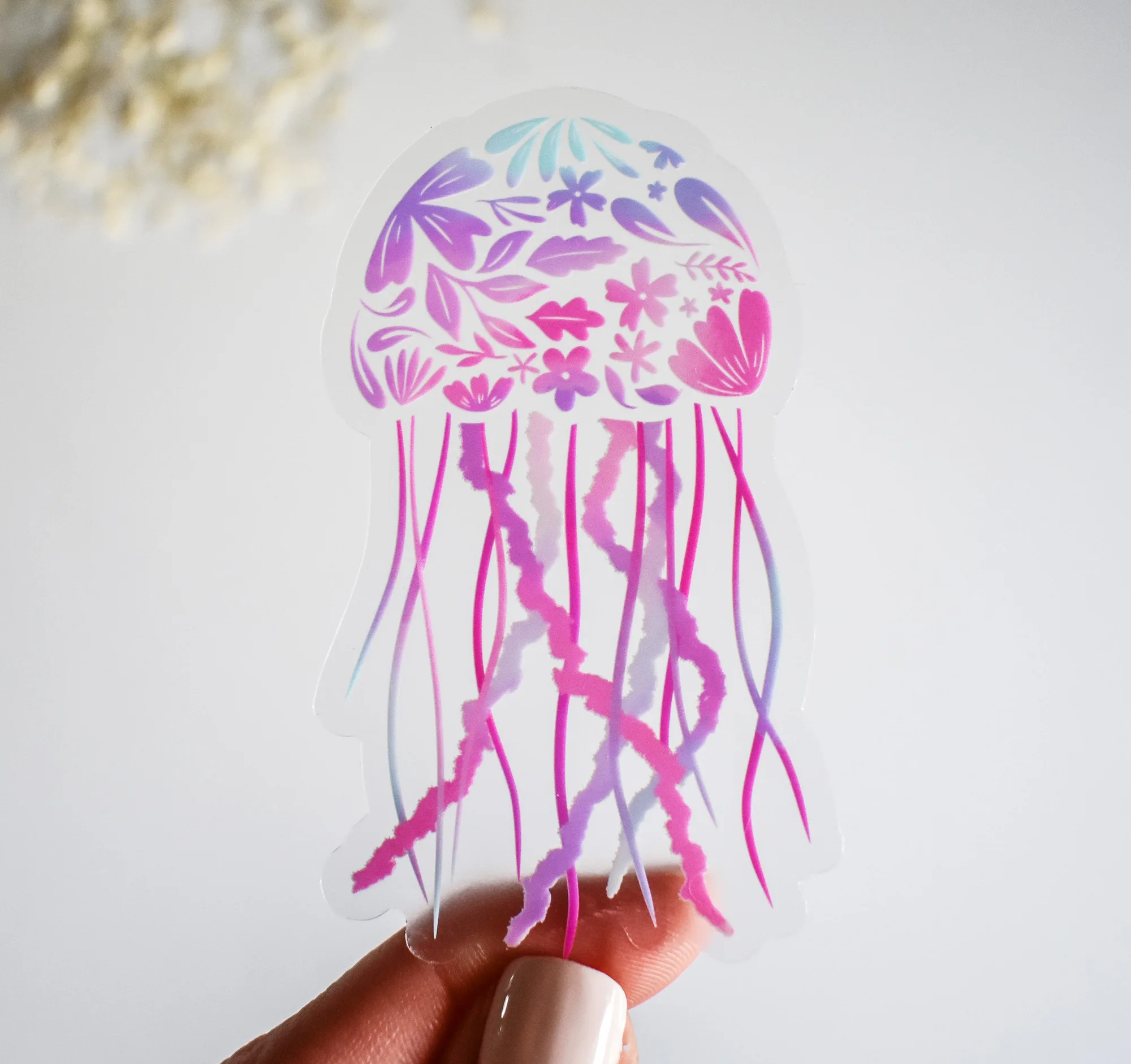
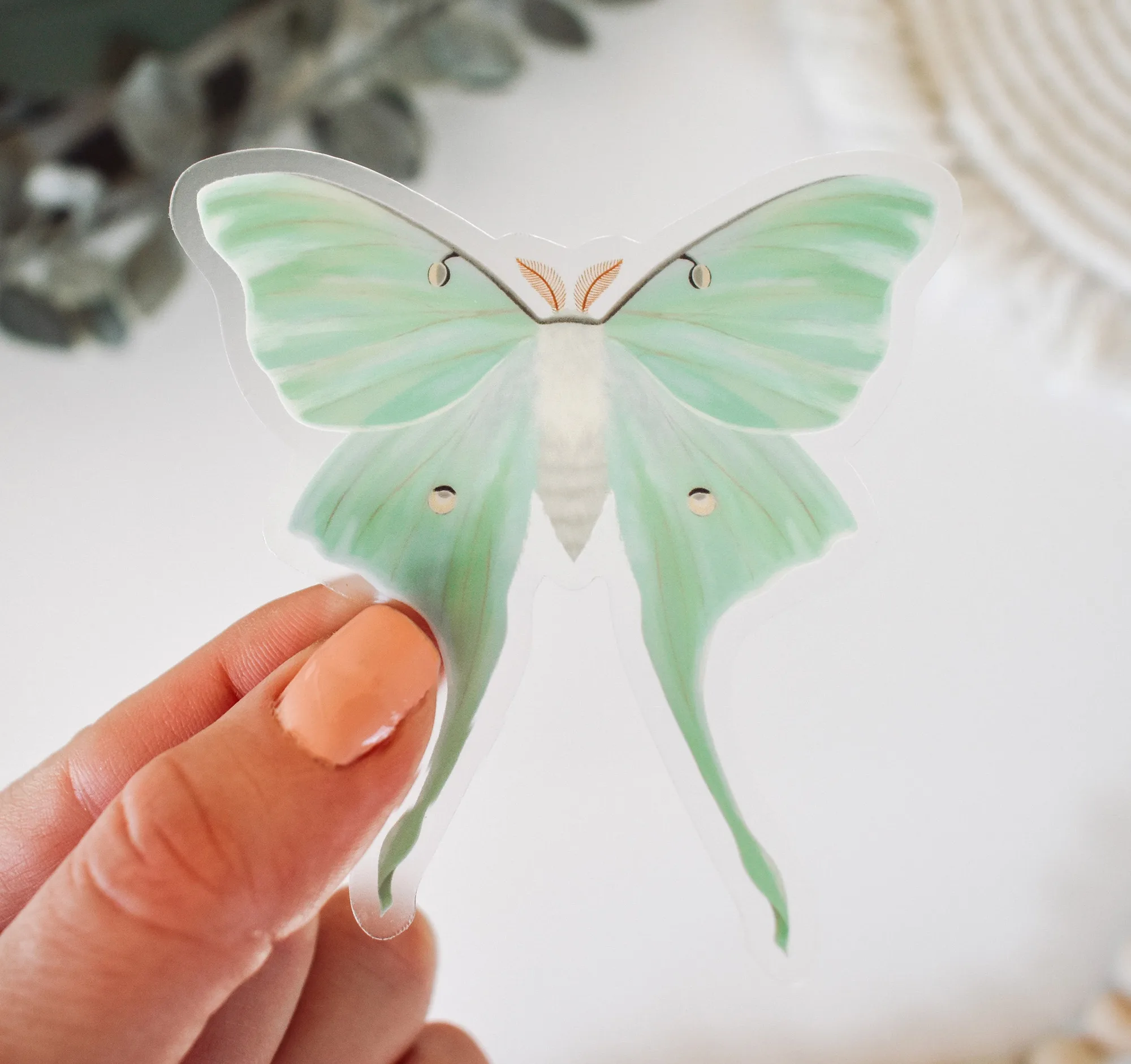
Tracking turns reflection into a visible habit. Use a small sticker or a simple dot in the top corner of each entry to mark the day. The Luna Moth Clear Vinyl Sticker and the Jellyfish Floral Clear Vinyl Sticker are both waterproof and UV resistant, so they hold up on a journal cover that gets carried around. Their clear vinyl has a white paper backing and appears clear once applied.
Do not cover the pages with stickers. Keep the inside of the journal mostly for writing, and reserve stickers for the cover or the index page. A sticker on the cover can also serve as a monthly marker if you change it at the start of each month.
Review weekly and adjust monthly
Once a week, read the last seven entries and circle one sentence that still feels true. That sentence becomes your weekly takeaway. At the end of the month, flip through the circled lines and write a half-page summary on the next blank page. This review step is what turns scattered notes into a floral journal routine you can actually learn from.
If the three-line format starts to feel stale, change one element: write in the morning instead of at night, switch to a single prompt, or add a small sketch. Keep the anchor and the timer the same so the habit stays stable while the content stays fresh.
Five-step daily reflection routine
- Step 1: Pick a fixed time and place: Choose one anchor you already do every day—morning coffee, lunch break, or getting into bed—and keep the Peach Blossom Journal within arm's reach of that spot. Checkpoint: if you have missed three days in a row, move the journal to a more visible place before changing anything else.
- Step 2: Write three lines without editing: Write what happened, how you felt, and one thing you will do or notice tomorrow. Keep the pen moving for two minutes; do not reread or correct grammar. Common mistake: treating the entry as a performance. No one else needs to read it.
- Step 3: Add one prompt when you want depth: If the three lines feel too thin, answer a single reflective writing prompt from your inside-cover list. One prompt is enough; more than two turns reflection into homework. Checkpoint: if you regularly skip prompts, shorten your list to three favorites.
- Step 4: Mark the entry with a sticker or dot: Place a small sticker or draw a dot in the corner of the page. Use the Luna Moth or Jellyfish Floral clear vinyl stickers on the cover as a monthly marker if you prefer not to decorate the pages. Common mistake: covering the ruled lines with stickers. Keep the writing area clear.
- Step 5: Review weekly and write a monthly summary: Circle one sentence from the past week that still feels true. At month's end, read the circled lines and write a half-page summary on the next blank page. Next step: if the routine feels stale, change one element—time of day, prompt, or pen—but keep the anchor and the two-minute timer.
Product facts that support this routine
- Peach Blossom Journal: A5 size (5.83" x 8.27"), soft cover, 120 college-ruled pages, full-color front and back covers. The A5 size is small enough to carry daily and the 120 ruled pages give you roughly four months of short entries, so you can test the habit without buying a second journal.
- Luna Moth Clear Vinyl Sticker: 3" wide x 3" tall vinyl sticker, waterproof and UV resistant, dishwasher safe, with a white paper backing that appears clear once applied. A durable sticker on the cover marks the journal as yours and survives being tossed in a bag or left on a sunny desk.
- Jellyfish Floral Clear Vinyl Sticker: 1.7" wide x 3" tall vinyl sticker, waterproof and UV resistant, dishwasher safe, with a white paper backing that appears clear once applied. The narrower size fits along a journal spine or inside cover without covering the floral design.