Quick Answer
To relax your pelvic floor with a pelvic serpent wand, start with a warm, private environment, use plenty of lubricant, and gently insert the curved tip to apply light, sustained pressure on tight spots for 30–90 seconds per area.
Why a Pelvic Serpent Wand Helps with Pelvic Tension
Chronic pelvic tension can show up as pain during intimacy, lingering tightness after childbirth, or discomfort that physiotherapy alone hasn't resolved. A curved wand designed for internal use lets you reach trigger points that fingers can't always access, making it a practical home tool between sessions with a pelvic health professional.
The key is to use it as a complement, not a replacement, for expert care. If you're under treatment for vulvodynia, vaginismus, dyspareunia, or scar sensitivity, check with your physiotherapist before starting so your routine aligns with your recovery plan.
Step-by-Step Guide to Pelvic Floor Relaxation
- Prepare your environment and body: Empty your bladder, wash your hands and the wand with mild soap and warm water, and find a quiet, comfortable spot where you can lie down with knees bent. Warm the wand slightly by running it under warm water (check the care instructions first) to make insertion more comfortable. Checkpoint: Never use the wand without lubrication, even if you feel naturally wet—pelvic floor muscles can be sensitive.
- Apply lubricant generously: Use a generous amount of water-based lubricant on the tip and along the shaft of the wand. Reapply as needed during the session to keep friction low and prevent irritation. Checkpoint: Avoid silicone-based lubes with silicone wands—they can degrade the material.
- Insert gently and find your starting point: Lie down with knees bent or use a supported squat. Insert the curved tip slowly, aiming toward your tailbone, and stop when you feel a mild stretch. Spend a minute just breathing deeply to let your pelvic floor relax around the wand. Checkpoint: If you feel sharp pain, stop and reposition or remove the wand—discomfort is a sign to slow down.
- Locate and release tight trigger points: Gently sweep the curved tip along the pelvic floor muscles, feeling for areas that feel tight, tender, or like a small knot. When you find one, apply steady, light pressure for 30–90 seconds while breathing into the area. The tissue should soften and the tenderness should ease. Checkpoint: Do not jab or press hard—pain is not the goal. If a spot stays very painful, back off and try again on another day.
- Finish with a cool-down and clean-up: Slowly remove the wand, then do a few gentle pelvic floor releases (like a reverse Kegel) to encourage a relaxed state. Wash the wand with soap and warm water, and let it air dry before storing it in a clean place. Checkpoint: Track which areas felt most tense and any changes over time—this helps you and your physiotherapist adjust your routine.
The Tool We Recommend
-
Yinn | The Pelvic Serpent Wand: The Yinn Pelvic Serpent Wand is made from medical-grade silicone and features a contoured shape designed to reach shallow and deep pelvic floor muscle layers. This design allows you to address both surface-level sensitivity and deeper trigger points, making it a versatile aid for pelvic tension relief.
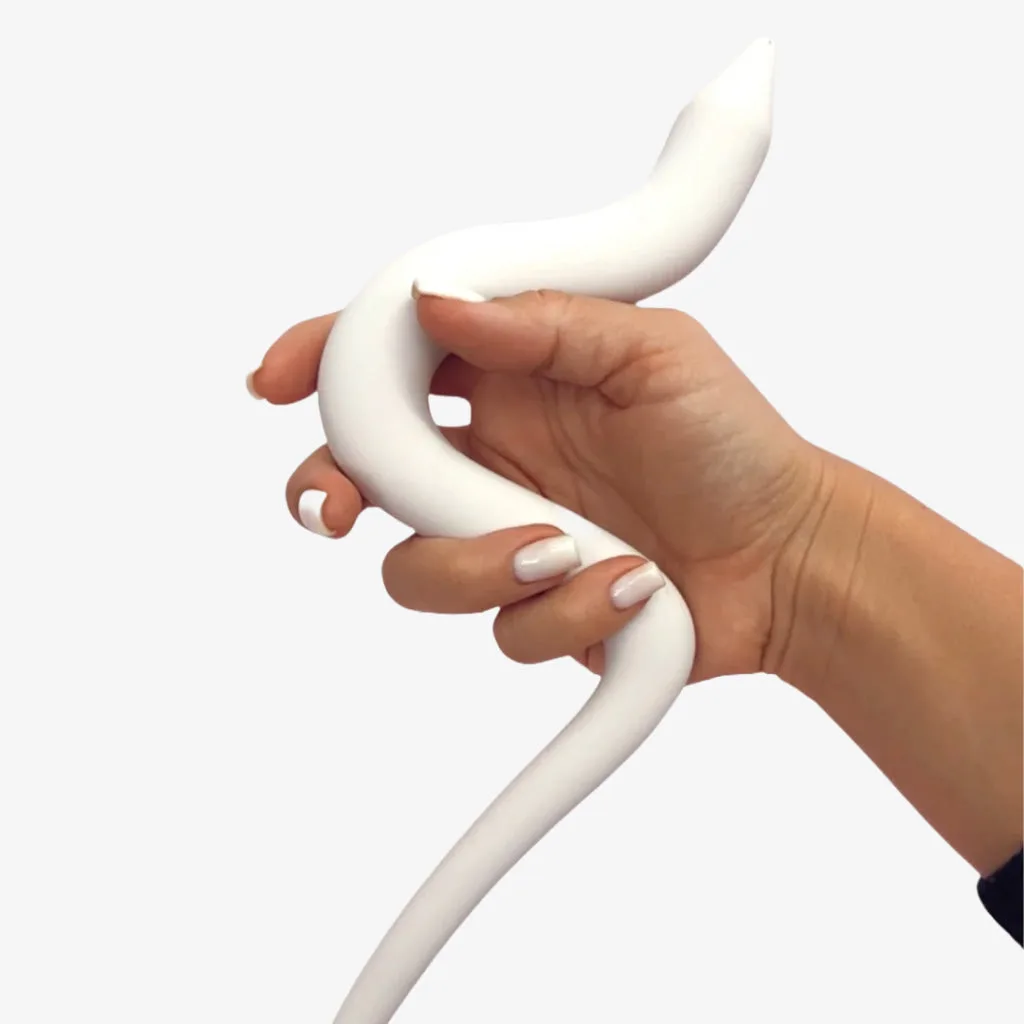
Yinn | The Pelvic Serpent Wand