Quick answer
Apply a Pimple Patch XL to clean, dry skin over large blemishes or clusters on your face or body. Leave it on for several hours or overnight, then peel off gently.
Why size matters for body breakouts
Standard pimple patches are designed for small, isolated spots on the face. Body breakouts—on the back, chest, shoulders, or jawline—often come in clusters or larger inflamed areas. An extra-large patch covers more surface area, so you treat the whole breakout zone at once rather than patching each spot individually.
The larger size also means better adhesion on curved or moving body parts. A small patch may peel off when you move or sleep; a bigger patch stays put because it has more surface contact with the skin.
When to use a Pimple Patch XL vs. a standard patch
Use the XL size when you have a breakout that is bigger than a pencil eraser, a cluster of several small pimples close together, or a spot on a body area that moves a lot (shoulder, chest, back). Stick with standard patches for single small whiteheads on the face where a smaller patch is less noticeable.
The trade-off is visibility. An extra-large patch is more obvious on your face, so many people prefer to use it overnight or during downtime at home.
How to apply a Pimple Patch XL in 5 steps
- 1. Clean the area thoroughly: Wash the breakout spot with a gentle cleanser and pat dry. Do not apply lotion, serum, or oil—the patch needs direct contact with clean, dry skin to stick and absorb fluid. Common mistake: applying the patch over moisturizer or active acne treatments. The hydrocolloid won't adhere well and may not absorb as effectively.
- 2. Choose the right spot and time: Place the patch over the entire breakout cluster or large blemish. For best results, apply it before bed so it can work for 6–8 hours uninterrupted. You can also wear it during the day if you don't mind the visible patch. Checkpoint: make sure the patch fully covers the inflamed area plus a small margin of healthy skin around it.
- 3. Peel and apply without touching the adhesive: Remove the backing film, hold the patch by the edges, and press it onto your skin. Smooth it from the center outward to push out air bubbles. Avoid touching the sticky side with your fingers. Common mistake: handling the adhesive side with dirty fingers introduces bacteria and reduces stickiness.
- 4. Leave it on for several hours or overnight: Keep the patch on for at least 4–6 hours. Overnight wear (8+ hours) gives the hydrocolloid material more time to absorb fluid and oil from the breakout. The patch will turn white or opaque as it works. Checkpoint: if the patch falls off early, the skin may not have been dry enough. Try again with a freshly cleaned, bone-dry surface.
- 5. Remove gently and follow up: Peel the patch off slowly from one edge. If it resists, dab a little warm water on the edge to loosen it. Do not yank or scrape. After removal, rinse the area with water and apply a lightweight, non-comedogenic moisturizer if needed. Common mistake: pulling the patch off too fast can irritate the skin or remove the top layer of a healing pimple.
Product spotlight
-
Pimple Patch XL – 10 Extra-Large Hydrocolloid Patches for Face and Body: PatchAid Pimple Patch XL is made for large blemishes, clusters, and breakouts that need more coverage. It works on your face, back, chest, shoulders, or jawline. You don't need to cut or layer multiple small patches—one XL patch covers the whole breakout area in a single application.
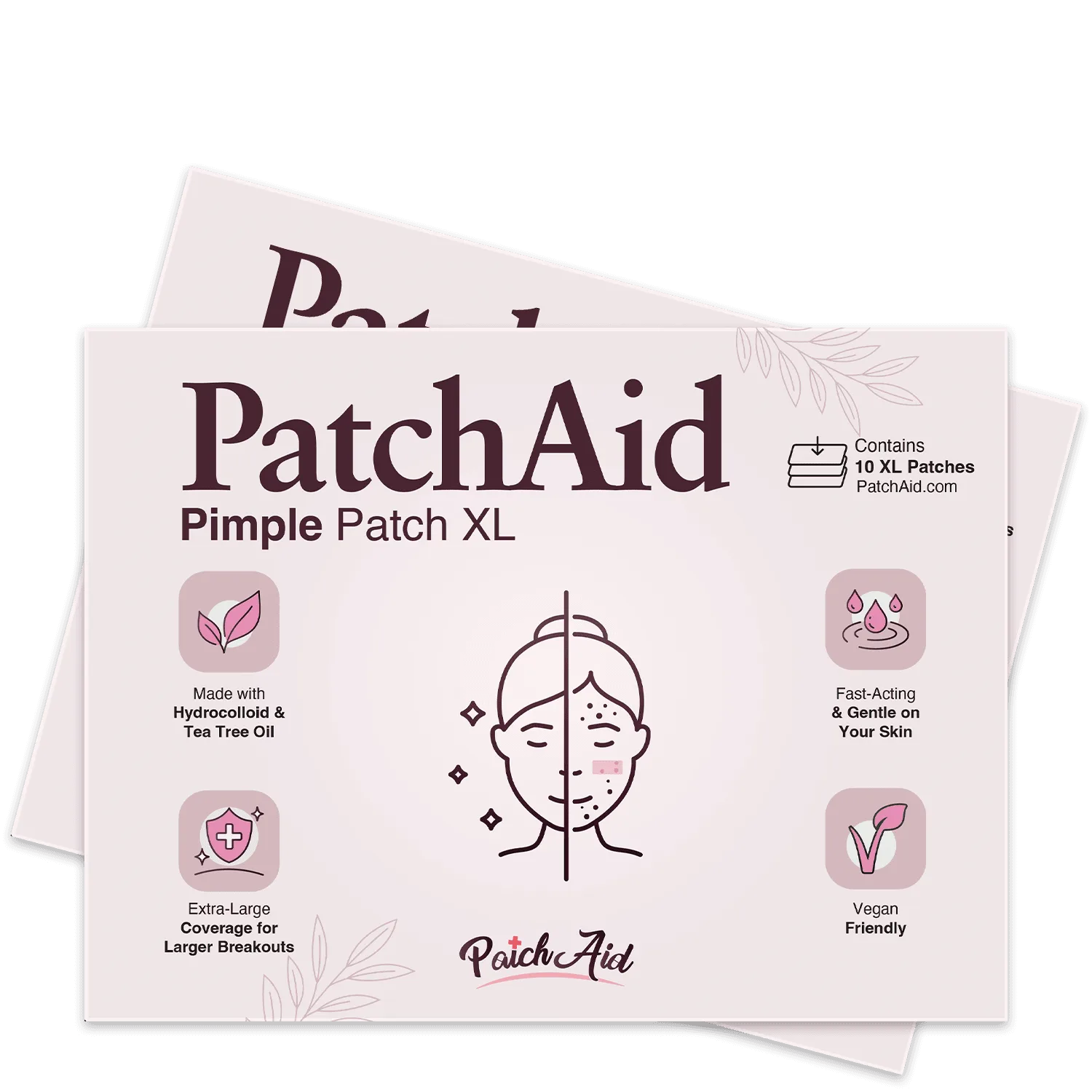
Pimple Patch XL – 10 Extra-Large Hydrocolloid Patches for Face and Body