Quick answer
Treat the Purpose Meets Play Toolkit as your weekly planning spine: pick one learning goal, choose the matching scripted activity, set up the learning center once, then observe and note what children do. The scripted lessons do the heavy lifting, so your job is to prepare the space and watch closely.
Why this toolkit changes your planning routine
Most play-based classrooms already have plenty of toys. The gap is usually planning: linking what children do at a center to a specific skill or standard. The Purpose Meets Play Toolkit is built for that gap, with scripted lessons that turn everyday play into intentional learning.
The trade-off is that scripted lessons work best when you preview them before the children arrive. Reading the script cold during playtime makes it harder to follow children's leads. Block ten minutes the day before to read the activity and gather only the materials it names.
Set up the learning center once, then leave it
A common mistake is rebuilding the center every day. Children need repeated visits to deepen play, so set up the learning center at the start of the week and keep the core materials in place. Rotate one or two props midweek if interest drops, but avoid a full reset.
If your room has limited space, choose a corner that can stay set up for several days. The toolkit is designed as an all-in-one learning center, so you do not need to scatter materials across the room.
Where the toolkit fits and where it does not
This is a preschool and childcare resource, not a toddler-first product. The scripted lessons assume children can follow multi-step play scenarios, so for a toddler room you will need to simplify activities and shorten the script. That is a planning decision, not a flaw in the kit.
If your program already has a strong play-based framework, the toolkit supplements it rather than replacing it. Use the scripts as a starting point and adapt the language to your classroom's routines.
Your weekly routine with the toolkit
- Choose one learning goal for the week: Pick a single standard or skill you want to target, then find the scripted activity in the toolkit that matches it. Write the goal where you can see it during planning. Checkpoint: if two goals compete, choose the one that fits the materials you already have out.
- Read the script before setup day: Read the full activity the day before you introduce it. Note any materials the script calls for and gather them in one bin so setup takes minutes, not a scavenger hunt. Checkpoint: if the script references materials you do not have, substitute a similar item now rather than during play.
- Build the learning center and leave it standing: Set up the center once at the start of the week using the toolkit's materials. Keep the layout stable so children can return to it and build on yesterday's play. Checkpoint: resist the urge to tidy the center into a new arrangement midweek; stability supports deeper play.
- Introduce the activity with the script, then step back: Use the scripted language to launch the play, then let children lead. Stay nearby to observe and note what they say and do, but avoid correcting their play to match the script. Checkpoint: if you find yourself directing every move, you have moved from facilitator to instructor; step back.
- Note one observation per child: Jot a short note about what each child did or said during the center. Keep it to one line per child so the habit sticks. Checkpoint: observations feed your next week's goal, so file them where you plan.
- Review and adjust for next week: At the end of the week, look at your notes and decide whether to repeat the activity, extend it, or move to a new script. Repeating is fine if children are still engaged. Checkpoint: if interest dropped by day three, plan one prop rotation rather than a full activity change.
Product facts
-
Purpose Meets Play Toolkit: The Purpose Meets Play Toolkit includes scripted lessons designed for early childhood classrooms. Scripted lessons reduce prep time, but you still need to read them before the session to follow children's responses.
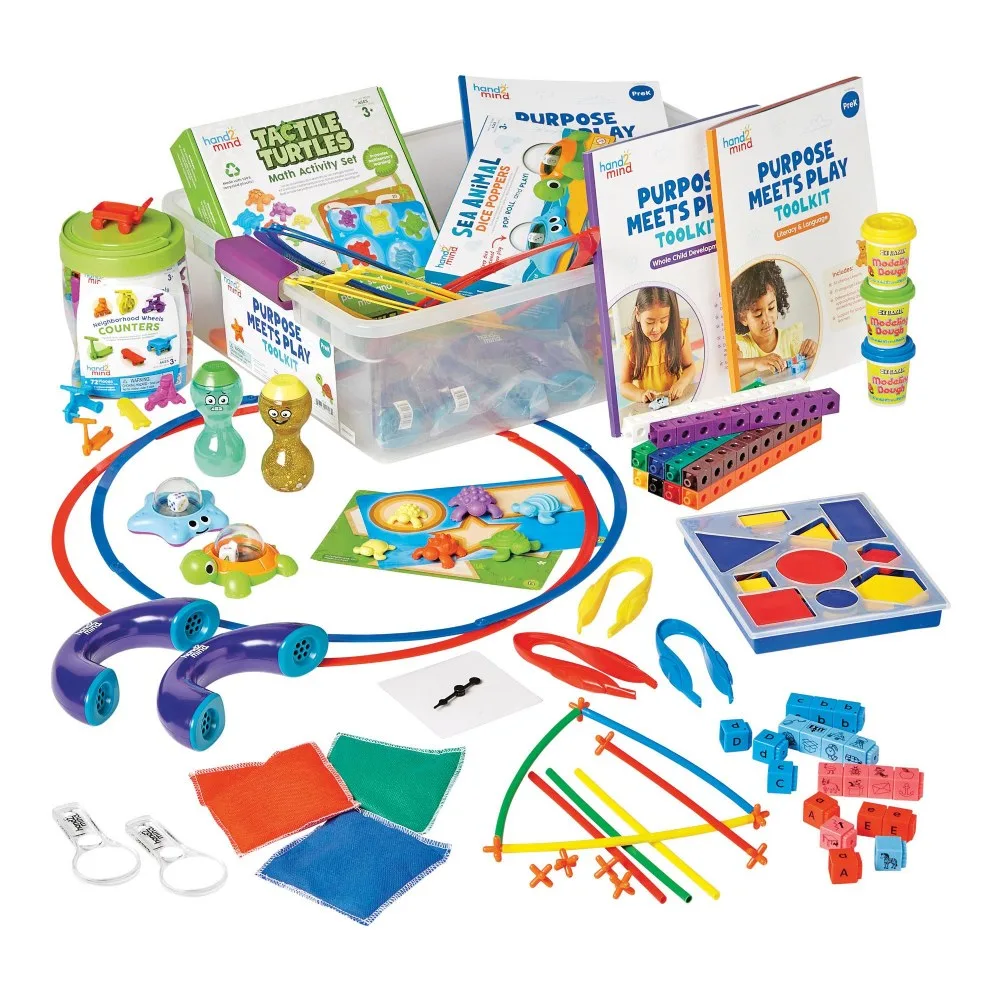
Purpose Meets Play Toolkit