What the Raptor Rescue Is Built For
The Leatherman Raptor Rescue trauma shears are designed for real-world emergency care, trusted by professionals worldwide. They fold for easy carry and include a utility holster for quick access. Before using any tool in an emergency, you should understand its capabilities and limitations based on the supplied information.
Deploying the Shears Quickly
The Raptor Rescue folds into a compact shape and comes with a utility holster. To deploy, pull the shears from the holster and unfold them. The holster keeps the tool accessible during critical moments, so practice this motion until it becomes smooth. The shears include a strap cutter and a ring cutter, which are separate tools on the same frame.
Using the Scissors for Cutting Seatbelts and Straps
The premium scissors are the primary tool for cutting through seatbelts, clothing, and webbing. Here's a general technique based on the tool's design.
- Position the material: Place the seatbelt or strap between the scissor blades, as close to the pivot as possible for maximum cutting leverage.
- Cut with steady pressure: Close the blades with a smooth, firm squeeze. The scissors are designed to cut through tough materials commonly encountered in emergency settings.
- Clear the material: Open the blades fully to release the cut material before making the next cut. Avoid cutting multiple layers at once unless necessary.
Using the Strap Cutter
The strap cutter is a dedicated notch on the tool designed to quickly sever webbing or straps. Hook the strap into the notch and pull upward. This is faster than using the scissors for straight cuts on narrow straps, such as backpack straps or tactical webbing.
Using the Ring Cutter
The ring cutter is intended for cutting through metal rings, such as those found on keychains or some types of jewelry. Place the ring into the cutter's notch and squeeze the handles together. This tool is specifically designed for this task, but the supplied information does not specify the maximum ring thickness or material compatibility.
Using the Oxygen Tank Wrench
The oxygen tank wrench is a built-in feature that allows you to open or close oxygen tank valves. This is a standard task in emergency medical settings. To use it, align the wrench with the valve and turn. The supplied information confirms this tool is included but does not specify the valve sizes it fits.
Using the Glass Breaker
The glass breaker is a pointed carbide tip at the base of the tool. To break tempered glass (like car side windows), place the tip against the glass at a corner or edge, then strike firmly. Do not use it on laminated glass (windshields) as it may not break effectively. The supplied information confirms the glass breaker is included but does not specify testing or safety guidelines.
What the Supplied Information Confirms
-
Raptor® Rescue: The Leatherman Raptor Rescue trauma shears combine five essential tools: premium scissors, strap cutter, ring cutter, oxygen tank wrench, and glass breaker. Knowing each tool's purpose helps you choose the right one during an emergency without fumbling.
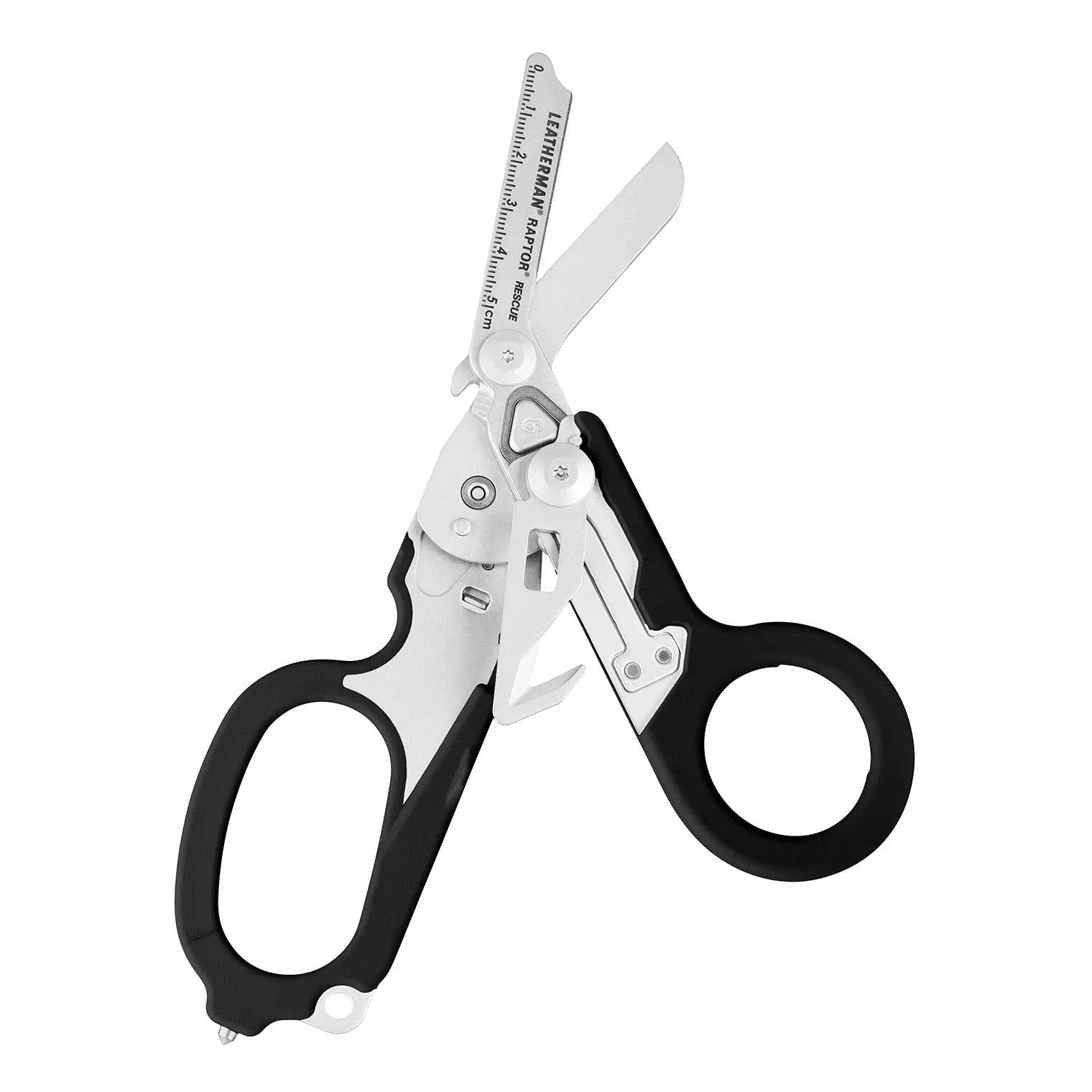
Raptor® Rescue
-
Raptor® Rescue: Raptor Rescue folds for easy carry and includes a utility holster for quick access during critical moments. Carry and deployment are part of effective use; practice drawing from the holster before an emergency.
-
Raptor® Rescue: Built in the USA and backed by a 25-year warranty, these compact scissors were developed with input from field professionals. The warranty and professional input support confidence in the tool's durability, but do not replace proper training.
Limitations You Should Know
The supplied information does not include step-by-step operating instructions, recommended cutting angles, or specific safety warnings. For example, it does not specify the maximum thickness of material the scissors can cut, the exact valve size the oxygen tank wrench fits, or how to clean the tool after use. Treat the tool as a capable emergency aid that works best when you have basic training in its use. Always follow your organization's protocols and receive proper first aid or EMT training.